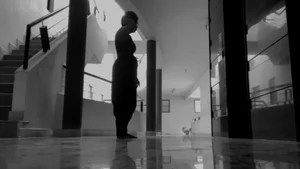
What would the death ritual be for an art object?: The fragment and the imagination completing the fragment
This is the Essay I submitted for the module ‘Museums, Galleries, Exhibitions II’ in the academic year 2023-2024. Grades, feedback, and my reflections are at the end.
“Do Gazans truly die when their body is not whole or cannot be found and when they cannot be properly grieved?” - by Mariam Mohammed Al Khateeb[1]
Preamble: In the essay titled ‘At What Point Does One Euthanise An Art Object?: Constantly Reconstructing the Memory of Art Objects on Life Support,’ trying to draw a parallel between Hisashi Ouchi (a man exposed to 17 sieverts of radiation in a nuclear fuel processing plant in Tokaimura, Japan), and the Parthenon fragments in the British Museum, it discussed how these antiquity objects are temporalized through their socio-political and cultural relevance, forcing them to be kept alive in a state of perennial conservation and preservation: life support. The essay attempted to elucidate how euthanasia or a good and dignified death is perpetually stalled by constantly creating mythologised narratives that force an attempt at actualising the mythologised narratives. Even the essay—in its effort to understand how these objects were being temporalized—participated in the act of keeping the objects relevant, forcing them away from death.
This essay, furthering the ideas of the previous essay, attempts to think about the notion of imagination that envelopes the fragment which succeeds in creating a totality. This is done by drawing a parallel between Shogo Misawa’s (Professor of Forensic Medicine at the University of Tsukuba) observations and inferences made during Hisashi Ouchi’s Coroner’s inquest and the narratives around the Parthenon Marble fragments in the British museum. Simultaneously, attempting to think about the ritual of death for an antiquity object like the Parthenon marbles, endeavouring to deal with questions like: What happens after euthanasia? How do we navigate the narratives manufactured when an artwork is taken off life support, when the post-mortem is conducted, and lastly, when the object is closed shut in a coffin? Most pertinent of all questions, what all goes in the artwork’s coffin to bring an end to the temporalization of the object, a full stop to the “infinite number of routes to be taken between fragments and hence an infinite possibility of readings”?[2]
One thing needs to be made clear from the outset of this essay, the core ideology this essay bases itself on is that—life support and death are two separate modes of existence in the life of an artwork that is defined by the nature of the object’s corporality. For the sake of this essay, any state of preservation, conservation, and restoration of the art object is noted as the object being alive. The object existing in any form, in storage or on display, is it being on life support, especially if it exists in nothing more than fragments.
——————————
“It is, after all, the fragment’s incompletion that engenders desire and its structure of projection that enables longing.” [3]
“… But after meeting Mr. Ouchi, my perspective changed. Regardless of their situation, patients don’t want to die and be relieved of their suffering. They want to persevere and get better.”[4]
Gitte Koksvik, in her article, talks about the new Ars Moriendi—the art of dying. Ars Moriendi is a genre of texts first published in the early 15th century, a popular practice from then on through the 18th century. The art of dying—Ars Moriendi—is about how one approaches death, predetermining one's fate after death while having retroactive implications on the character of one's life. It was a form of tame, controlled death. The control was exerted on how one approached death with no specific mastery over the time of death. There was a loosely outlined script for the procedure of a good death which made this whole process theatrical. In the 18th century USA Methodist communities, family and friends sat at the deathbed while posing enquiries about theological matters, revealing and defining the essential self of the dying person—a form of judgement day all on its own. This extended itself to suicide as well. The way a person committed suicide had a cultural implication of their social class, gender, and character in early modern England.[5]
There is a balance between art and technique in Ars Moriendi, both of which are inferred to be particular approaches to comprehending the world around us. There is an intangibility to art in this specific context, it is understood to be capable of elucidating the fullness of life through its existence. Technique—while referring to technology and tools, also relates to control. It is a way of looking at the world through which most things (if not everything) are controllable. Koksvik, who takes extensively from Shai Lavi, states that this is a technique-driven world in reference to her paper on assisted death in bio-medicalized societies. In a world that sees control as the ruling necessity for all things, a good death would also mean a hygienic (physically and emotionally) death. A death that is clean and acceptable not only for the person on their deathbed but also for society.[6]
While Koksovik talks about how the medicalisation of life processes acts as a form of secularisation, she also mentions ideas like purity, good, bad, control, clean, autonomy, and self-determination. According to her paper, Assisted death (AD) is understood to be the ultimate form of autonomy and self-determination which is ironic as it exists in a bureaucratic, bio-medicalised society where permission for AD needs to be sought and approved through multiple processes in countries where AD is legalised. In cases where active euthanasia is performed on a person unable to consent due to illness and injuries that have deteriorated beyond control, through the mechanics of technique as outlined above, the medical staff prefer a death that they can control. A death that is clean as an aesthetic (physical and emotional) is perhaps not the only death that current society accepts; Death that a person doesn’t just give into but fights as hard as they can to stave off is valorised, a separation that Koksovik makes but doesn’t explicitly delve into when she talks about the distinction between suicide and AD. This can be observed in the way a fragment is completed through narrative to create a totality. One example of this would be what Misawa states about Ouchi’s heart.[7]
When Misawa discovers that almost all of Ouchi’s organs had deteriorated beyond comprehension apart from a singular organ, Misawa states that his heart staying intact was a message from Ouchi. The first message was that Ouchi wanted to live; his intact heart was a testament to his determination to live. The second message was about radiation, its harmful effects, and what it could do to a body. This is a medical narrative that continues from before Ouchi’s death, specifically from when he was being treated for radiation sickness. The first point eludes to the medical practitioners’ perceived understanding of Ouchi’s determination to live when Ouchi himself could not confirm or deny it because of his inability to do so quite early on in the treatment. If Ouchi’s body is the fragment, the medical practitioners around him were creating a totality of the fragment through their imagination, perceptions, and desire for a specific memory of a totality. The second was a political agenda. Ouchi and his comrade’s death played a vital role in establishing policy for safe practices in the handling of radioactive material.[8]
Koksovik’s point regarding a clean and hygienic death, while holding clear merit, isn’t the whole of it. In her own paper, she states that life is seen as good and death as bad,[9] in which case the emotionally clean and hygienic death that is acceptable by society needs to be bearable and not only an agreeable aesthetic. The death needs to be seen as something that was resisted to the very best of one’s capacity for the emotional stability of the society that witnesses this death. It becomes an impulse that is indistinguishable from instinct versus societal training with deep historical roots. But there is a clear halt to the physical tangible completion of the fragment in a human body due to its ephemeral quality. There is a point of no return when it pertains to human bodies, however, there is no such point of return when it comes to art objects like the Parthenon marbles. They are stone, they can be broken but rebuilt in the image of a totality that is remembered, imagined, researched, and then cemented through history with the help of institutional authority.
Disagreeing with Koksovik’s statement that this is a technique-driven world, I would like to state that art and technique have grown to become unmanageable due to the erosion of certain restrictions and objective realities/goalposts of life, like death. For humans it is through the medicalisation of all processes of life, AI having the capacity to generate content in the image of the deceased person, and so forth. In the case of art objects, it is due to an inability to come to a consensus regarding what the death of an art object could be, the fragment that engenders desire for a totality, and technology with the capability to achieve this specific totality. To demonstrate this, two ideas need to be thought about together. One is the idea of death for art—often something more metaphorical than literal as it is thought about in the sense of philosophy rather than the art object itself. The second is the fragment and its role in making the object immortal in its truest sense as the fragment always has the ability “…to start itself up all over again.”[10] Finally, thinking on Adorno’s autonomous art, an art object cannot gain true autonomy while it exists as a physical entity among us. It will be drawn into politics because of its cultural value—something that is observed with the Parthenon marbles repeatedly throughout history—maybe the way it can gain true autonomy is through death, through having the capacity to leave our plane of existence in a definitive manner.
——————————
Raquel Cascales—trying to consolidate Arthur Danto’s thinking on The End of Art as an amalgamation of research done over 20 years which was presented in separate papers rather than an individual piece of work—says that there are three aspects to the end of art: 1. The ‘end of art’ in a Hegelian sense—art turns into philosophy due to the shift in the essence of art needing to be unpacked at an intellectual level and no more at a perceptual level. Over here art is no more under the influence of philosophy but is a philosophy on its own. 2. The ‘end of art’ in the form of a historical narrative—there will still be narratives but no “meta-narrative.” 3. The ‘end of art’ as the beginning of a post-historic period—Art doesn’t try to fit into theory to gain legitimacy, neither does theory validate particular practices. The post-historic era of art is defined by “plurality and freedom” from an artistic standpoint.[11]
However, this does not address the object itself, the same could be said about Adorno’s ‘Valery Proust Museum.’[12] The object continues to attain duration. It hangs in a suspended state while its end/death is discussed, becoming a different totality of the fragment.
Maebh Long in the paper ‘Fragmentation’ ends by saying that fragment as an interruption might be necessary in a world that is hyper-focused on a complete product. However, in the case of an art object, the fragment—a remainder of something split from a whole that is an “interruption, intellectual impasse, or death intervened”—is the true meaning of immortality when thought about through Peter Osborne’s temporalization. It is like that quote of Friedrich Nietzche that Long uses to describe the fragment: “too hard for the teeth of time and whole millennia cannot consume it, even though it serves to nourish every age.”[13] The art object nourishes every age through its changing meaning, for example: the art objects used in the understanding of Danto’s End of Art, or for Valery and Proust’s museum, or for Adorno’s Autonomous art, or (and I would be remiss if I did not mention them) the Parthenon marbles and the socio-political and cultural role they have played throughout time during the rise and fall of different empires. The fragments of the Parthenon have nourished every age even in their decrepit state, especially in their ruined state.
Below is an example of the totality created by a Parthenon fragment:
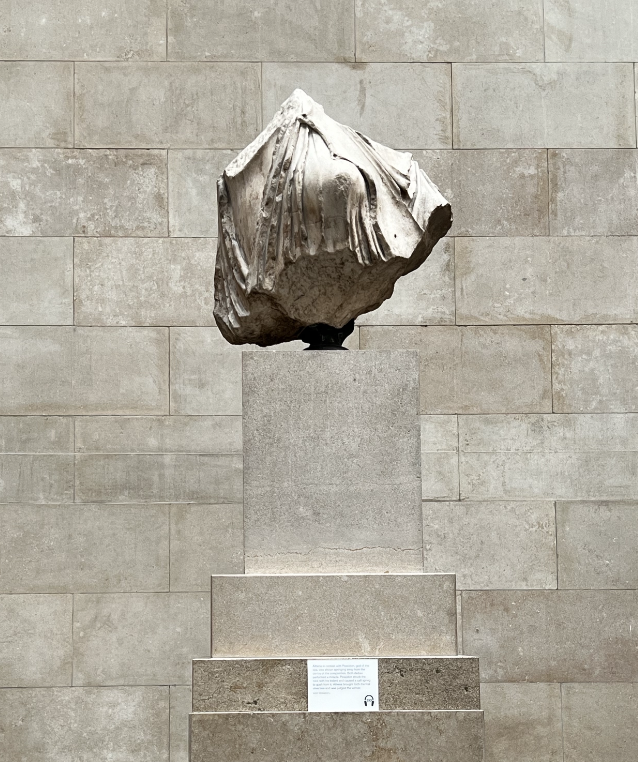
Figure 1. Kishore, Divya. Picture of a fragment, presumed to be Athena from the British Museum, 2023.
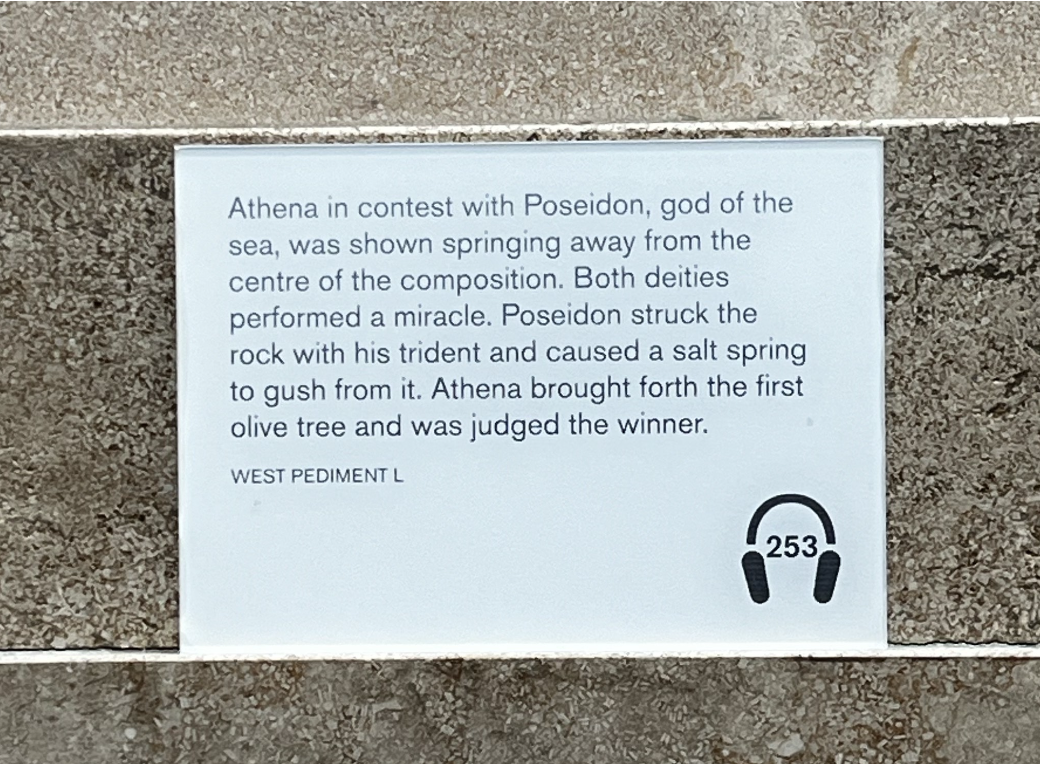
Figure 2. Kishore, Divya. Picture of the information accompanying the fragment from the British Museum, 2024.
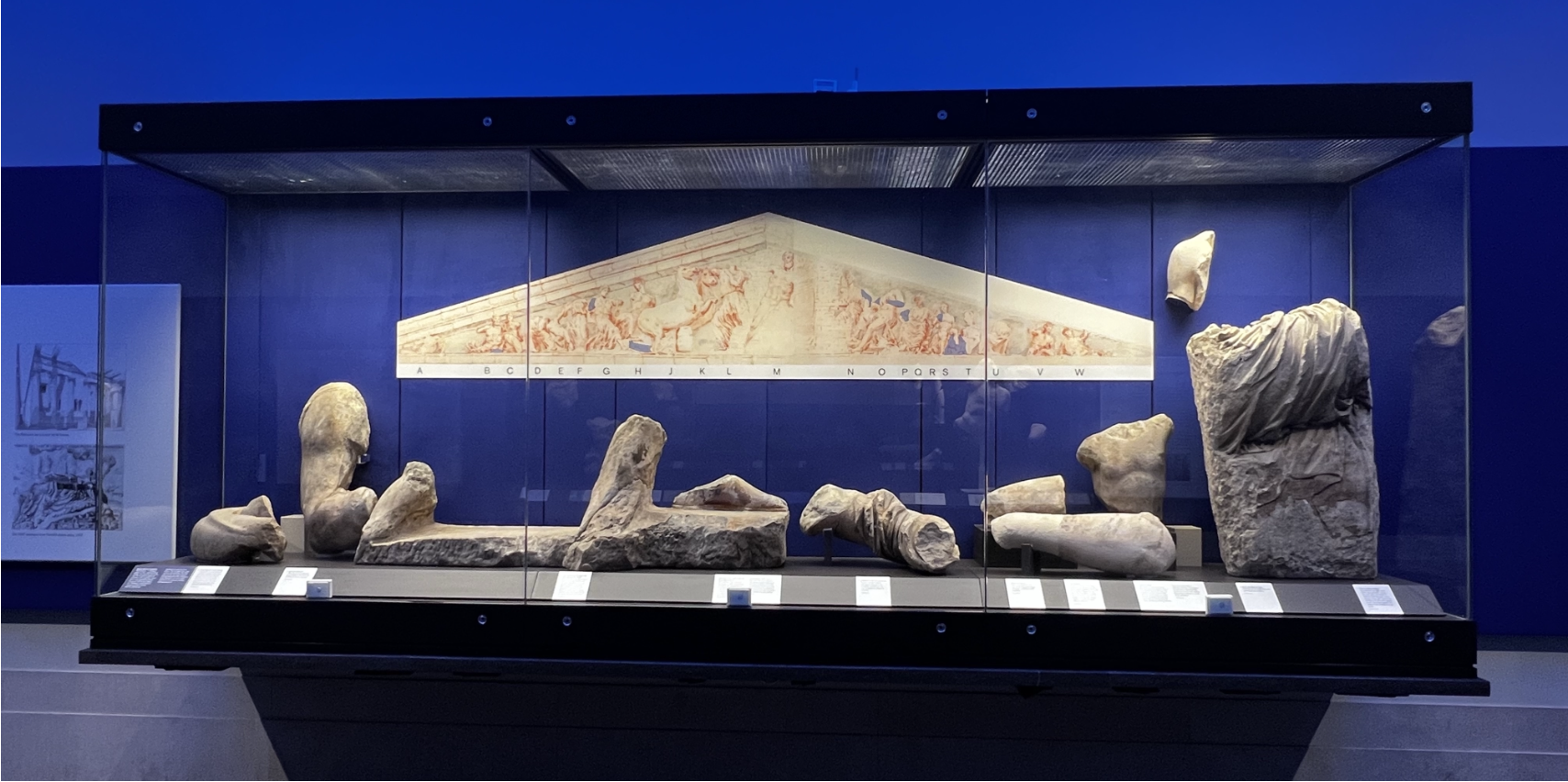
Figure 3. Kishore, Divya. Picture of the fragments from the west pediment from the British Museum, 2024.
There was a record of what these fragments might have looked like together through Jacques Carrey’s drawings from the 17th century. While many say that his sketches and drawings show that much of the structure was intact till then, I disagree. It is visible from the sketch presented in the British Museum that by then the structure was already a ruin; a fragment kindling desire for a totality of a past. It played well with politics too as the objects were crucial in establishing the British government as the continuation of a mighty seafaring country—Athens—the birthplace of democracy; the objects and democracy continuing their journey in Britain.[14] That fragment of Athena might be Athena or someone entirely different, but right now, it serves a purpose. It substantiates the story of the Parthenon, much like how Ouchi’s intact heart upheld Misawa’s hypothesizing.
The quote by Al Khateeb in the beginning of the essay was used to allude to a quote by Adorno: the “fragment is that part of the totality of the work that opposes totality.”[15] Similar to Danto’s end of art as a historic narrative.[16] There is no meta-narrative anymore, just a neverending chasm of narratives. When there is no certainty (for Al Khateen—a full body, for Ouchi’s medical team—his voice, for the Parthenon marbles—its full structure and its definite story), there are just never-ending mythologised narratives and attempts at mythologised narratives. There is no possibility of death, neither is there a possibility of autonomy. Autonomy here references Adorno’s autonomous art and Koksovik’s argument that AD is more complicated than just the ultimate act of self-determination and autonomy when it exists in the structures of bureaucratic society.
Adorno’s autonomous art is autonomous because it cannot be reduced to the concerns and necessities of society. It is a silent resistance of a total-exchange society. By existing just for itself, it critiques social norms and the idea of being socially useful. But, it can only do so if it doesn’t get dragged into propaganda which Adorno himself states.[17] How can the fragment not be dragged into agitprop, especially if it exists in the form of a fragment? Over here, fragment is not only a physical piece of a complete object, but a cog in a huge machine. For instance, a painting that does not exist in its social context becomes the basis for a conversation on what the death of an artwork would look like. The painting, though whole, is a fragment due to its detachment from the period it belonged to. If we expand the understanding of fragment as a conversation starting with a seed (an art object, an intact heart, an incomplete body) that grows various branches and roots through boundless modes of research, education, and curiosities—a fragment can be a complete object, just not a totality in the expanded sense. In this case, nothing can be a totality in the expanded sense, everything is just a form of proof in one’s research and education.
Maybe the only way the art object gains autonomy is by rescinding itself from a world that can nourish itself on a cornucopia of possibilities—which leads to the question this essay asks, what is the death ritual of the art object? And how does the art object gain true autonomy through a definitive death when the memory of a past can become a fragment of its own?
Roger Michel (a digital archaeologist) and his team are reconstructing the Parthenon marbles by making 3D replicas of them. Their idea is that they will give these replicas to the British Museum in exchange the British Museum returns the Parthenon marbles to Greece. Michel states that the objects in their current state teach nothing as they are far too inconsistent from what they were when originally made. Further stating that, as we have the technology now we can rebuild the structure in its exact original presentation. According to Michel, it is necessary for the museum to have the original material, however, Greece values these objects as sacred and that should be respected.[18]
That would be a form of death, closing the book on a long-standing chapter that has exhausted too many pages to start a new book with a current—de-colonial, anti-racist, anti-ableist—understanding of what the marbles looked like when they were originally made. Or, as Adorno states, “the only way to show one’s respect for culture is to decide to do without it and to boycott its festivals.” It’s time to write a new Ars Morendi that recognises that art and technique are not the only thing that need to balance each other, art and technique need individual restraints. As well as a recognition that not all can be controlled, we cannot know everything with any form of certainty, nor should we pretend to.
Instead of making the conjecture that the museum is like a mausoleum,[19] why not build the Parthenon marbles a mausoleum? A glorified coffin that confines these marbles, allows them to decay, and return to dust while we as a society collectively pledge not to dig them up to conduct a post-mortem. We promise to restrain our desire to complete the fragment while contending with the notion of death as bad and life as good. We choose to moderate the Ars Morendi’s art and technique of the art object. As well as letting go of the cultural value and legitimacy these objects offer our nation-states in favour of letting these injured, limbless, headless, scrubbed-clean objects rest.
The death ritual of an art object is to build an Ars Morendi that has a moderated art and technique that recognises the sacredness in and the necessity of a definitive death. And, making sure that the death is definitive by refusing to dig up the body for a post-mortem, as we as restraining our desire to open up the mausoleum to find fragments to piece together a past which feels irrefutable.
Footnotes
[1] Mariam Mohammaed Al Khateeb, ‘The Luxury of Death’, We Are Not Numbers, 10 June 2024, https://wearenotnumbers.org/the-luxury-of-death/.
[2] Maebh Long, “Fragmentation,” In Future Theory: A Handbook to Critical Concepts, ed. Patricia Waugh and Marc Botha (London: Bloomsbury Academic, 2021), 287.
[3] Long, “Fragmentation,” 283.
[4] NHK-TV “Tokaimura criticality Accident” Crew, A slow death: 83 days of radiation sickness, 126.
[5] Gitte Koksovik, “Freedom from Suffering, Individual Autonomy, and Dying as a Work of Art: Notes towards an Anthropology of Assisted Dying,” Idunn (May, 2018).
[6] Koksovik, “Freedom.”
[7] Koksovik, “Freedom.”
[8] NHK-TV “Tokaimura criticality Accident” Crew, A slow death: 83 days of radiation sickness, 120-122.
[9] Koksovik, “Freedom.”
[10] Peter Osborne, “Starting Up All Over Again: Time and Existence in Some Conceptual Art of the 1960s.” 92-106.
[11] Raquel Cascales, “The Development of the Sense of “the End of Art” in Arthur Danto,” Rivista Di Estetica, no. 68 (1 August 2018): 131–48, https://doi.org/10.4000/estetica.3542.
[12] Theodor W. Adorno, “Valery Prous Museum,” 175-185.
[13] Long, “Fragmentation,” 281-292.
[14] Debbie Challis, “The Parthenon Sculptures: The Emblem of British National Identity,” 33-39.
[15] Long, “Fragmentation,” 282.
[16] Cascales, “The Development”
[17] Theodor W. Adorno, Aesthetic Theory. Translated by C. Lenhardt (London: Routledge & Kegan Paul,1984), 320-352.
[18] Georgia Hitch and Marc Fennell. ‘“There Is a Sacredness about the Marbles”: Why Stephen Fry Thinks His Country Should Return the Parthenon Marbles.” ABC News, 16 June 2024. https://www.abc.net.au/news/2024-06-17/parthenon-elgin-marbles-greece-british-museum/103969352.
[19] Theodor, “Valery,” 175.
List of Images
Figure 1. Kishore, Divya. Picture of a fragment, presumed to be Athena from the British Museum, 2023. Photograph. Source: Picture taken by Divya Kishore while visiting the British Museum.
Figure 2. Kishore, Divya. Picture of the information accompanying the fragment from the British Museum, 2024. Photograph. Source: Picture taken by Divya Kishore while visiting the British Museum.
Figure 3. Kishore, Divya. Picture of the fragments from the west pediment from the British Museum, 2024. Photograph. Source: Picture taken by Divya Kishore while visiting the British Museum.
Bibliography
Hitch, Georgia and Marc Fennell. ‘“There Is a Sacredness about the Marbles”: Why Stephen Fry Thinks His Country Should Return the Parthenon Marbles.” ABC News, 16 June 2024. https://www.abc.net.au/news/2024-06-17/parthenon-elgin-marbles-greece-british-museum/103969352.
Adorno, Theodor W. Aesthetic Theory. Translated by C. Lenhardt, 320-352. London: Routledge & Kegan Paul, 1984.
Adorno, Theodor W. “Valery Proust Museum.” Prisms, 1982. https://doi.org/10.7551/mitpress/5570.003.0012.\
Cascales, Raquel. “The Development of the Sense of “the End of Art” in Arthur Danto.” Rivista Di Estetica, no. 68 (1 August 2018): 131–48. https://doi.org/10.4000/estetica.3542.
Challis, Debbie. “The Parthenon Sculptures: Emblems of British National Identity.” The British Art Journal 7, no. 1 (2006): 33–39. http://www.jstor.org/stable/41614663.
Koksovik, Gitte. “Freedom from Suffering, Individual Autonomy, and Dying as a Work of Art: Notes towards an Anthropology of Assisted Dying.” Idunn. Accessed 10 May 2024. https://www.idunn.no/doi/10.18261/issn.1504-2898-2017-03-04-06.
Long, Maebh. “Fragmentation.” In Future Theory: A Handbook to Critical Concepts, edited by Patricia Waugh and Marc Botha, 281-96. London: Bloomsbury Academic, 2021.
Mohammaed Al Khateeb, Mariam. “The Luxury of Death.” We Are Not Numbers (blog), 10 June 2024. https://wearenotnumbers.org/the-luxury-of-death/.
NHK-TV “Tokaimura criticality Accident” Crew. A slow death: 83 days of radiation sickness. Translated by Maho Harada. New York: Vertical, 2015. https://archive.org/details/ASlowDeath83DaysOfRadiation/page/n5/mode/2up.
Osborne, Peter. “Starting Up All Over Again: Time and Existence in Some Conceptual Art of the 1960s.” Essay. In The Quick and the Dead, edited by P Eleey, 91–106. Minneapolis: Walker Art Center, 2009.
Grades and Feedback
Grade: 76/100
Graded on: 3rd October 2024
Graded by: Yaiza Hernandex Velazquez
I have tremendously enjoyed reading you get back to this problem that you had already started to tackle in an earlier essay. You have forged your own research path with determination, seeking sources that helped you made sense of your initial intuition and, importantly, posing a question that, one posed, seems to demand an answer, why can't we let artworks die, what would an ars moriendi for artworks consist of?
I suspect (or even, hope) however, that this is not the last version of this essay and that yet more work will be done on this problem to get your thought to where it wants to be.
You are writing here more like a philosopher than an art historian or curator and I would advise that you really explore the philosophical debates around the death of artworks (and art itself) more fully, as I think much would be gained by this. It is not always easy to engage with philosophers (especially those of the German tradition), without some secondary literature, as they often make reference to previous authors assuming that knowledge in the reader. In Adorno, whom you cite and in Osborne, who cites Adorno, the unnamed debate is that between Hegel and Schlegel, one in which the idea of the fragment (a grating against a Hegelian totality) is central.
Having said this, your mobilisation of medical sources is fantastic and should not be abandoned in favor of a fully philosophical discussion, both should argue it out in the text as they do already to some extent.
Having said this, I have thoroughly enjoyed the ambition and determination of your thought and strongly encourage you to continue to develop this for publication. Very well done.
YHV
My Reflections
The writing of this entire essay was an absolute blur. This entire semester was a blur. I had a lot going on, and my mental health was quite… terrible. Additionally, Goldsmiths was going through a violently implemented redundancy programme that affected the Visual Cultures Department (my department) quite brutally. There was just a profound disinterest in participating in university-related work for me. Shaking out of it took a long time. Apart from all that, I had some other personal matters to attend to. Basically, it wasn't a great year; it lacked the emotional stability to inspire the writing process.
I had taken an EC for this essay, pushing the submission by a semester. It was done with the hope that I would feel better with a little rest and detachment. While I did feel a little better, it… I just needed more time and processing.
Anyways, going back to the essay itself. I think I mentioned this previously in one of my reflections, the act of writing an essay is not done in a silo. Existing, living still happens. The existing and living informs and supports the writing process, at least for me. But, existing and living can also fundamentally detonate the writing process. This essay presents solid theory; it is a good place to start. However, as a finished product, it is very lacking. Citationally, it is a complete mess. Grammatically, where are all my commas? I actually like the structure of the essay, but it can definitely be improved upon.
The essay is good, especially considering the mental space I was in. But I am not blind to its many deficiencies. I really would like to build on it. Whenever I get to my master’s, I would like to continue this work. Art philosophy and medical philosophy arguing it out is a particular fascination of mine. They inform each other when they both individually verb. It is especially obvious if one is a participant in the medical institution as a patient educated in the Arts and Culture. I like exploring that because I know it’s not explored enough.
Thank you, Yaiza, for supporting me through this bizarre but interesting essay idea.