How do we build sustainable care practices for all parties involved during facilitations?: Exploring power dynamics between the facilitators, the participants and the institutions
This is the Essay I submitted for the module ‘Curating, Education and Research’ in the academic year 2023-2024. It reflects on the project I had participated in as part of industry experience in Semester 2. Grades, feedback, and my reflections are at the end.
Note: I use Talila A. Lewis’s definition of Ableism in this essay, but I refer to her as TL Lewis. My deepest apologies to Talila and everyone reading this horrendous mistake. I have tried to correct this mistake, but if anyone sees Talila’s name misspelt, that is what happened.
“…
Development: pure individual creation; the new; change; progress, advance, excitement, flight or fleeing.
Maintenance: keep the dust off the pure individual creation; preserve the new; sustain the change; protect progress; defend and prolong the advance; renew the excitement; repeat the flight.”
Mierle Laderman Ukeles, from the “Care” Manifesto [1]
In her essay, Helena Reckitt discusses the implicit relationship between care and control concerning curating and its etymological roots—something often not appreciated for its role in maintaining crucial power dynamics. This is with reference to objects in the curator’s custody. However, it could also be explored in the context of facilitation. Curatorial practices are not as definitive or confined today as before; in this case, when care is underscored in a curator’s practice, the kind of care and the objects subject to this care remain uncertain. Despite the undefined nature of what care means in these practices, control remains an implicated element because of the historical, social, and cultural way care operates. Curators are a form of maintenance workers, a more exalted form in the context of a gallery due to the nature of their work that puts them in constant contact with specialist members of society. That is perhaps why curatorial practices that seem more artistically expansive are quick to be chastised because they do the labour that produces rather than reproduces. While confined to the role of exalted social reproduction, their role is to give care without the expectation of receiving any care from the various institutions in which they operate. Equitable inclusivity becomes a thing that is thought about outwardly (for the audience) and not inwardly (amongst the curatorial team).[2] This essay hopes to explore this premise using the workshops facilitated by the 2nd year BA curating students in collaboration with Deptford Peopls’s Heritage Museum (DPHM) and Young Mayors for Monumental Slang as a case study.
Monumental Slang is a project attempting to understand how young people in Lewisham occupy space and experience power dynamics in the borough. It is part of Deptford People’s Heritage Museum’s more significant project, The Monument is the Struggle. This project questions how histories of colonisation and enslavement get interpolated into urban infrastructures and social life.[3] Based on a 4-day workshop conducted with 11 young people from the borough by BA Curating Students, Deptford People’s Heritage Museum, and the Young Mayors, a curriculum is designed to gain an expansive understanding of the issues that affect young people in their daily lives. Simultaneously, the workshop aims to equip young people with the space, time, and tools to analyse how they might be (unintentionally or intentionally) resisting these power dynamics. These workshops facilitated during February 2024—their halftime break—would then be used to develop a curriculum and toolkit to be shared with the wider borough. This essay attempts to explore the dynamics of care throughout the four-day workshop.
As part of my placement, I was one of four BA curating students who facilitated the workshops. Everything mentioned in this essay is based on my participation in and recollection of the project. I want to start by creating a participant map, an institutional organisation chart and a rough project timeline to illustrate the various stakeholders present during the project and our diverse orientations to the project.
Participant map:
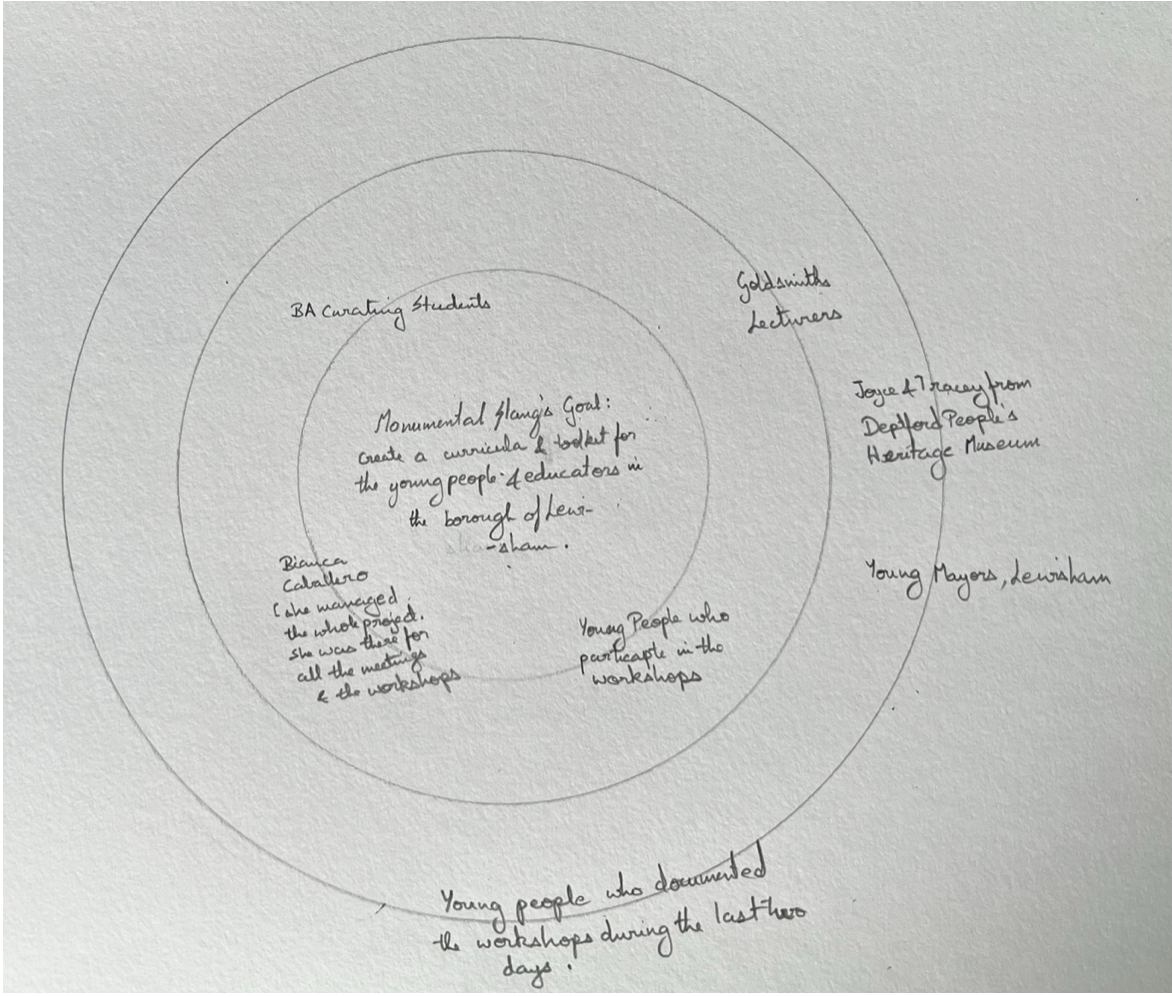
Fig 1. Divya Kishore. Picture of Participant map from Divya’s notes, 2024.
All involved in the project
Goldsmiths BA Curating Students:
Divya Kishore
Wilhemina Thompson
Charlotte Mourgue d’Algue
Layan Babkair
Goldsmtihs Lecturers:
Janna Graham
Lara Paquete Pereira
People we interacted with the most from Deptford People’s Heritage Museum during the project:
Janna Graham
Bianca Caballero
Joyce Jacca (was present on the second day of the February workshop and on the 31st of may)
Tracey Jarrett (was present on the 31st of may)
Young Mayor’s Archive, Lewisham (they came to speak about the archive on the second day of the February workshop)
Young people who participated in the workshops
Young people who documented the workshops during the last 2 days of the February workshops
The young people this curriculum is being designed for
The educators who will be doing these facilitations based on the curriculum and toolkit given to them by BA Curating students and DPHM.
Organisational Flow Chart:
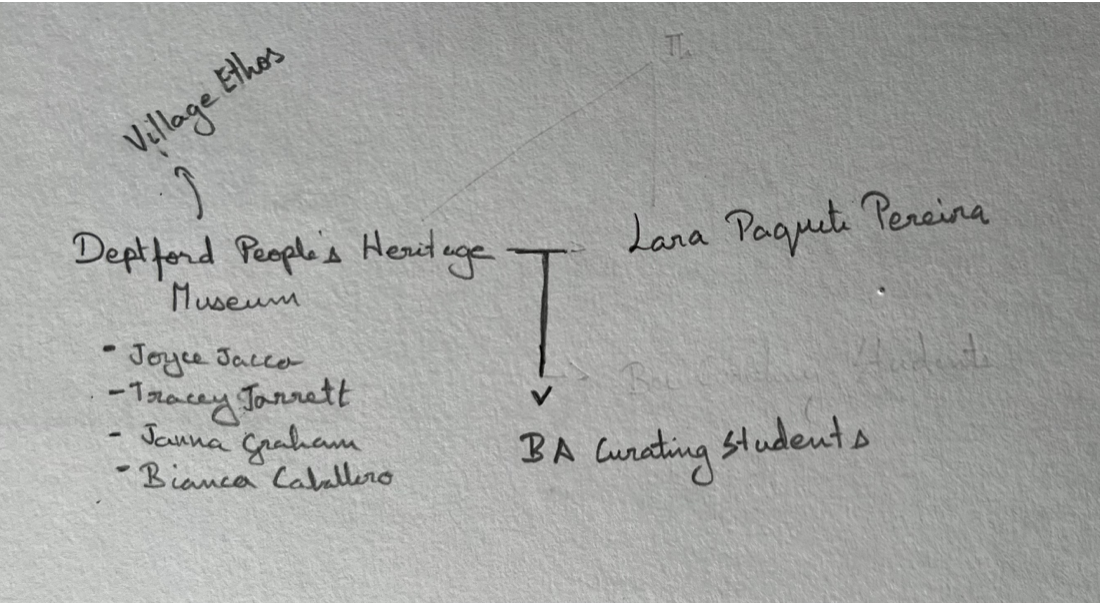
Fig 2. Divya Kishore. Picture of Organisational flow chart from Divya’s notes, 2024.
Deptford People’s Heritage Museum and Lara identified the problem and proposed the idea to develop a curriculum and a toolkit. BA Curating Students were recruited to design the workshop structure, facilitate the workshops, and make the curriculum with Bianca from DPHM.
Rough Timeline:
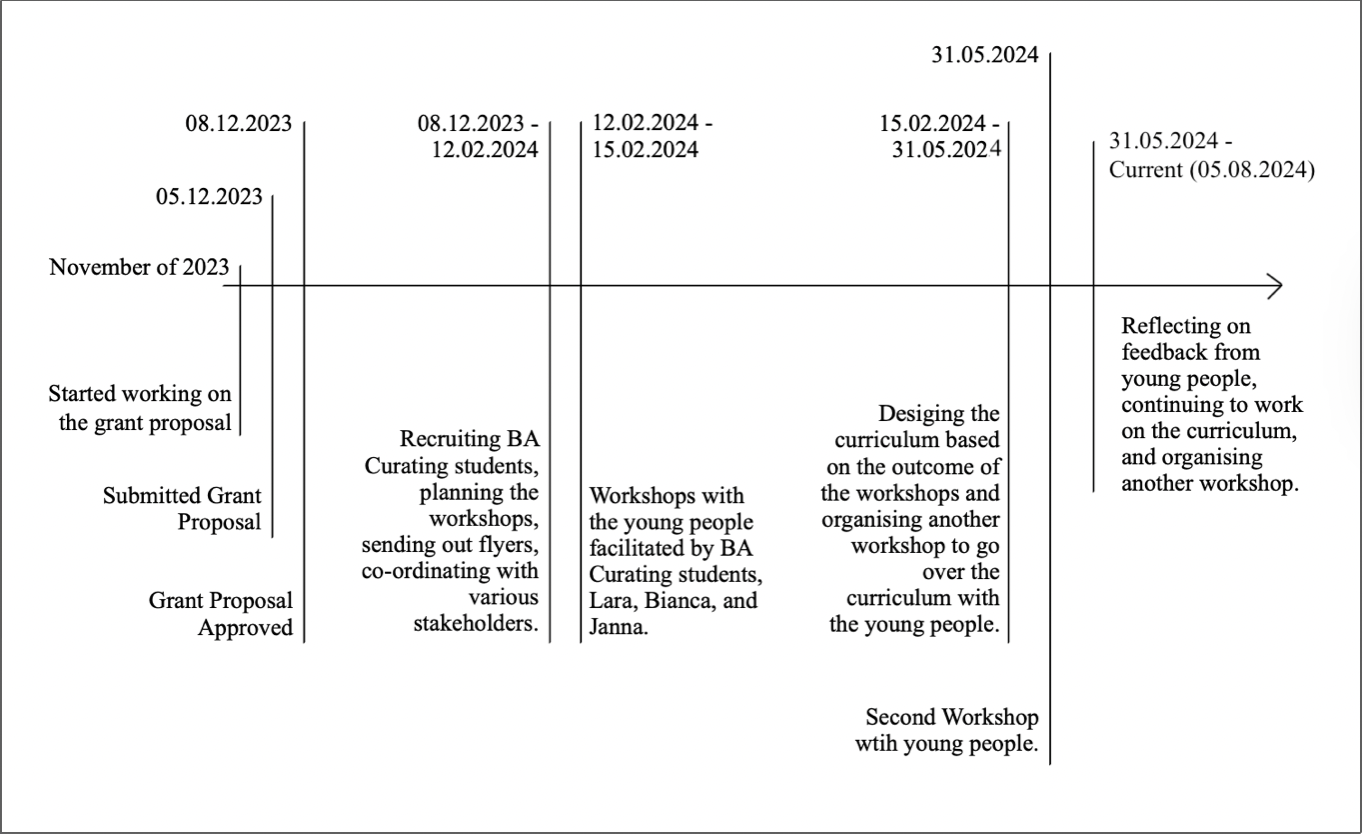
Fig 3. Divya Kishore. Picture of rough timeline made from Divya’s notes, 2024.
Michelle Bastian's essay explores how the clock isn’t a simple fact but a set of conventions that allows us to orient ourselves to things we consider essential in our daily lives. Different societies and communities orient themselves to keep track of time through methods other than the traditional clock. For example, fishing and maritime people keep time through the tides, geological and archaeological research keeps time through the variations between rock layers, and medical professionals orient to the bodies they care for.[4] Building on this logic, who are we (BA Curating students) orienting to within the context of the facilitation of Monumental Slang? How are we keeping time? What/who is being allowed the space for the labour of producing/development, and what/who is doing the maintenance work for this production/development?
When DPHM and Lara identified the problem and proposed an idea, they tried to align it with the placement portion of the 2nd-year BA Curating module: Curating, Education, and Research (VC52006A). In November, Wilhemina and I were approached to participate in this project, which could be our placement during the following term. After this, with the help of Janna and Bianca, we wrote and submitted the proposal to the GARA (Goldsmiths Anti-racist Action) Black Annual Fund in December so that we would have the funding for the workshops in February. This placement option was opened to the whole class in January when Layan and Charlotte joined us. Up until then, the project was keeping time by orienting itself with the flow of the Curating, Education and Research module. From then on, the project tried to keep time through when the young people from the Lewisham borough would be available for the workshop, what would entice them to participate, and how we, as facilitators, could maintain their attention and interest throughout the workshops. Even if there were smaller re-orientations, the young people of Lewisham were always our primary mode of orientation and timekeeping; even if DPHM was the institution that initiated this project, DPHM operates through a village ethos and flexible timelines. They, too, orientate themselves through other stakeholders for shared goals. This is illustrated through how the budget for the project was initially planned, as well as three other instances that happened while preparing for the February workshop and during the February workshop.
Original Budget breakdown submitted in the grant proposal:
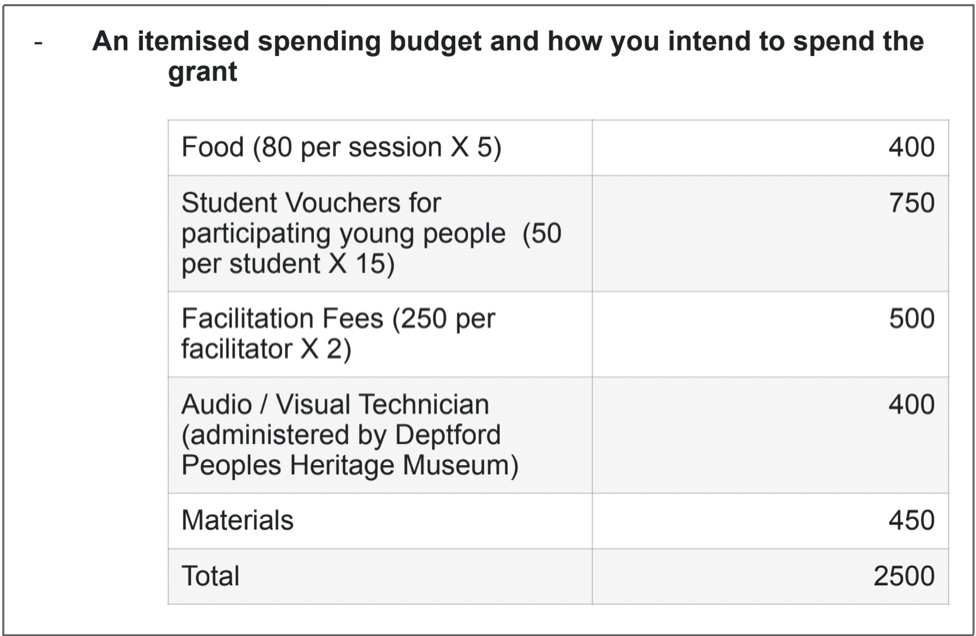
Fig 4. Divya Kishore. Screenshot of budget from grant proposal, 2024.
According to the original budget submitted in the grant proposal, the budget for food, snacks, and beverages was planned only to be consumed by the young people participating in the workshops. We wanted to be ethical in how these young people were reimbursed for their time while also considering providing for their bodies through food, snacks, and beverages. This was made into an activity by allowing them to choose what they would like to eat, the only conditions being the food needed to come from one place on that specific day and it needed to be from a local business. While trying to be fair and anti-ableist for the young people, we forgot to be fair and anti-ableist towards ourselves. I highlighted this just before the workshops, which were then worked on so that everyone in the room would be provided with healthy, nutritious food instead of just the young people.
However, due to the nature of the activity surrounding food, the young people in the room decided what to eat. It wasn’t clear if the facilitators were allowed to have an opinion about what would be consumed. It became a democratic process for the young people, and the facilitators in the room enabled this democratic process without a clear understanding of whether they could take part in it in a role beyond maintenance work. Over here, the facilitators were orienting to the bodies and needs of the young people participating in the workshops.
This could be illustrated by another instance on the third day of the workshop, which contrasts with what happened on the fourth day. On the third day of the workshop, the young people decided they wanted jerk chicken. Two young people who had sensory issues were unable to consume jerk chicken. As I was in charge of food and beverages throughout the workshops, I suggested we take these two young people to the closest Sainsbury’s and allow them to choose what they could and would consume instead of deciding for them. The next day (the fourth day), the young people wanted to eat Perfect chicken, but this wasn’t available, so I got the closest alternative, Morley’s. While the young people were enjoying this, the facilitators in the room spoke in their small group about how fast food like this was bad for their bodies the older they got. Apart from dipping into our personal funds, there was no way to accommodate this other than understanding conversation.
Another instance occurred at the end of the third day of the workshop regarding the timings for the fourth day. Lara asked the young people if they could come in early, giving them enough time to finish all the activities they had proposed on the third day. These activities (creative responses to the three concerns—education, mental health and well-being, and surveillance— they highlighted) were an amalgamation of the past three days. While Lara had enquired if the young people could come in early, it was not an explicit question asked of the facilitators. It was an assumption that the facilitators would be okay coming in early. Over here, the facilitators kept time by orientating themselves to the needs of DPHM and what the young people could do.
The last instance I want to highlight happened during one of the planning meetings. At this point, we had acquired information about the young people participants and the list of accommodations they needed, if they needed any. We were trying to decide on a venue for the workshops; Lara had suggested the Deptford Townhall Building, but it was brought up that the building was inaccessible. Lara mentioned that as none of us had mobility issues, we could proceed with the Deptford Townhall Building as a venue because it had ties to the GARA occupation in 2019. I then spoke up about how I had mobility issues and would not be able to participate if I needed to come into the building daily. There are two points I want to call attention to. First, this is an example of orienting to the accommodations of the young participants. Second, this is also an example of how facilitators, acting as care providers in this instance, are assumed not to have accommodations and needs of their own. Anti-ableist practices, within the context of curatorial and education practices, operate by the assumption that the young people in the care of the educator/facilitator/care provider require all the care and attention without recognising the humanness of the educator/facilitator/care provider.[5] Something that is observed in the way Goldsmiths lecturers are forced to function within the Goldsmiths, University of London institution. It is natural to internalise ableist practices towards oneself when the institution provides so little care for the lecturers/tutors while expecting them to provide unending care for the students within their purview. These instances were not mentioned to point fingers but to recognise the internalisation of ableist practices within our institutions and ourselves, which puts us in a precarious position of needing to forget our needs for the outcomes and goals required by the institution(s).[6]
According to T A Lewis's definition of Ableism, one doesn’t need to be disabled to experience ableism. Ableism is a deeply rooted “system of assigning value to people’s bodies and minds based on societally constructed ideas of normality, productivity, desirability, intelligence, excellence, and fitness. These constructed ideas are deeply rooted in eugenics, anti-Blackness, misogyny, colonialism, imperialism, and capitalism.”[7] In keeping with this definition of ableism, anyone who is different in any manner leaning away from ideas of “normality” can be subject to ableism. This could also extend to internalised ableism, even if this avenue of thinking is less travelled because ableism and internalised ableism immediately and disproportionately affect disabled people. In Ásta Jóhannsdóttir, Snæfríður Þóra Egilson and Freyja Haraldsdóttir's essay, ‘Implications of internalised ableism for the health and wellbeing of disabled young people,’ almost all, if not all, instances of ableism faced by the people who are disabled are because of the internalised ableism of the people around them,[8] something that the researchers discount in their essay. Ableism is a sickness that is embedded in the genetics of our society, penetrating every institution we are actively or passively a part of.
When one is anti-ableist in a society like this, they need to deal with ableism outside and inside themselves. As a facilitator for curatorial projects and workshops, it is easy to identify moments of giving care without receiving any; however, it is harder to recognise when we actively participate in roles where care is stripped from us. The latter requires us to recognise our own internalised ableism, where we might fear acknowledging—even only to ourselves—our difference in ability in a society that exists within capitalism’s “violence of competition”.[9] In this case, how do we build sustainable care practices for all parties involved during facilitations while considering the humanness of the people providing care?
Michelle Bastian suggests that instead of using “a clock that promises absolute commensurability and predictability (…) perhaps we might gain from exploring the kinds of clocks that could be produced when we “coordinate” ourselves with and through other relationalities within our world.” This was stated regarding climate change and how a turtle clock instead of an atomic clock might be more relevant in knowing how climate change is affecting the nature around us.[10] From this logic, maybe curatorial facilitations need a new method of timekeeping other than the ones they are forced to internalise in a neo-liberal, capitalist, and ableist (as defined by T A Lewis) society. Instead of orienting to the participants, maybe there can be dual orientations. A dual orientation that recognises that equitable inclusivity is not only for the audience (people who do the labour of producing), it is also for the people who are the facilitators/educators/care providers (people who do maintenance work, enabling the labour of producing).
A classroom charter is encouraged in workshop facilitations like this, where everyone is aware of their needs and wants, what parts of those needs and wants are realistically achievable, and what requires a little more effort from everyone.[11] Instead of only making a charter with the participants, we can make two charters. One in the workshop space, the second amongst the facilitators that acknowledges that when one person is being accommodated, the work that needs to get done doesn’t disappear but gets re-assigned to someone who might be considered more “able” to do that job, or is “good” at that job, or “enjoys” that job, leading to the belief that they wouldn’t mind doing more of it. Instead of working off those assumptions, maybe the work one person cannot do gets re-distributed equitably amongst the team, and the person unable to do the job can do something else that is within their abilities. This alternative would have been beneficial in handling an instance that happened on the 2nd day of the workshop.
Charlotte and Layan were going to conduct an activity with the young people during the second half of the 2nd day. Charlotte felt anxious and discussed it with me for the first half of the day. Before the activity, she left the room for a few minutes to compose herself. Worried about her, I asked Lara for help regarding Charlotte. After Charlotte had a conversation with Lara, we found a solution where all of us would chip in if Charlotte felt like she couldn’t conduct the activity; this made Charlotte feel better and more sure of herself. We found a solution then, but a prior conversation about our fears, anxieties, and abilities might have better equipped us and helped us avoid such panic. Internalised ableism might make people afraid to discuss these freely. An access rider could be beneficial in this case, as mentioned in the Access Toolkit for Artworkers.[12] An Access rider is specific to a person’s access needs. However, it could be modified to outline one’s general strengths and weaknesses pertaining to particular projects.
A charter for the facilitators would also help them understand where they can participate in democratic practices with the participants and where their role as maintenance workers is more pertinent. What is trying to be highlighted here is that a conversation with the facilitators enquiring about what they can and cannot do and what they would and wouldn’t need would go a long way in balancing their work and creating an environment where they understand their responsibilities to each other and the participants.
Another thing that could be done is to consider the budget holistically,[13] overriding the default instinct of investing wholly in the participants and the end goals. This can be observed in how Monumental Slang handled its budget after receiving the funding (refer to page 9 for expenditure Excel). The Excel below contrasts with what was outlined in the grant proposal document, but there was a lot of confusion in getting there. This could be avoided by clearly outlining how the institution (DPHM) would like to break down the budget, creating less doubt in executing DPHM’s ethics for budget allocation.
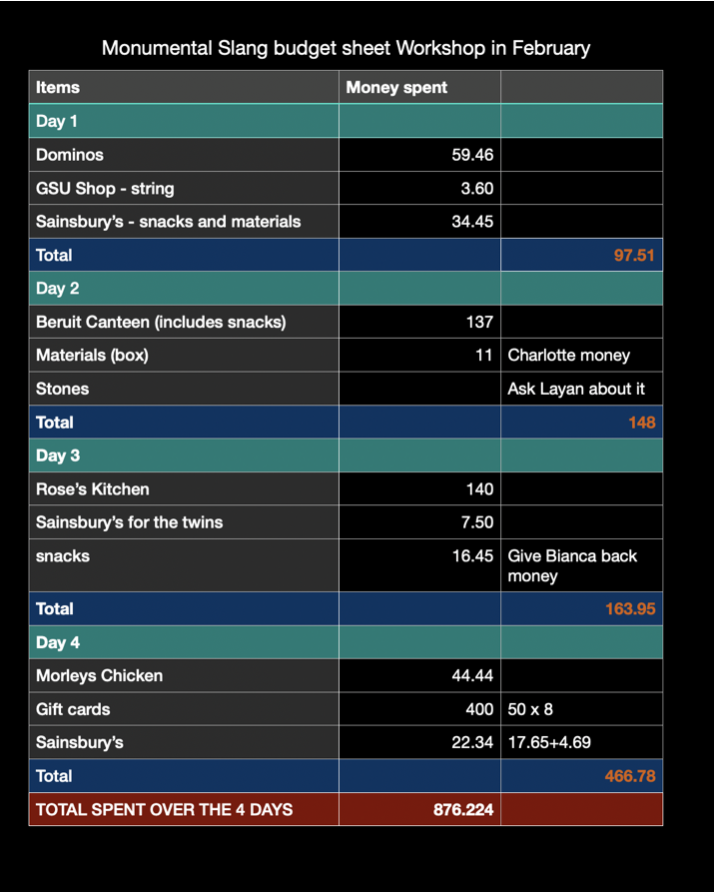
Fig 5. Divya Kishore. Screenshot of Expenditure Excel 1 from Divya’s notes, 2024.
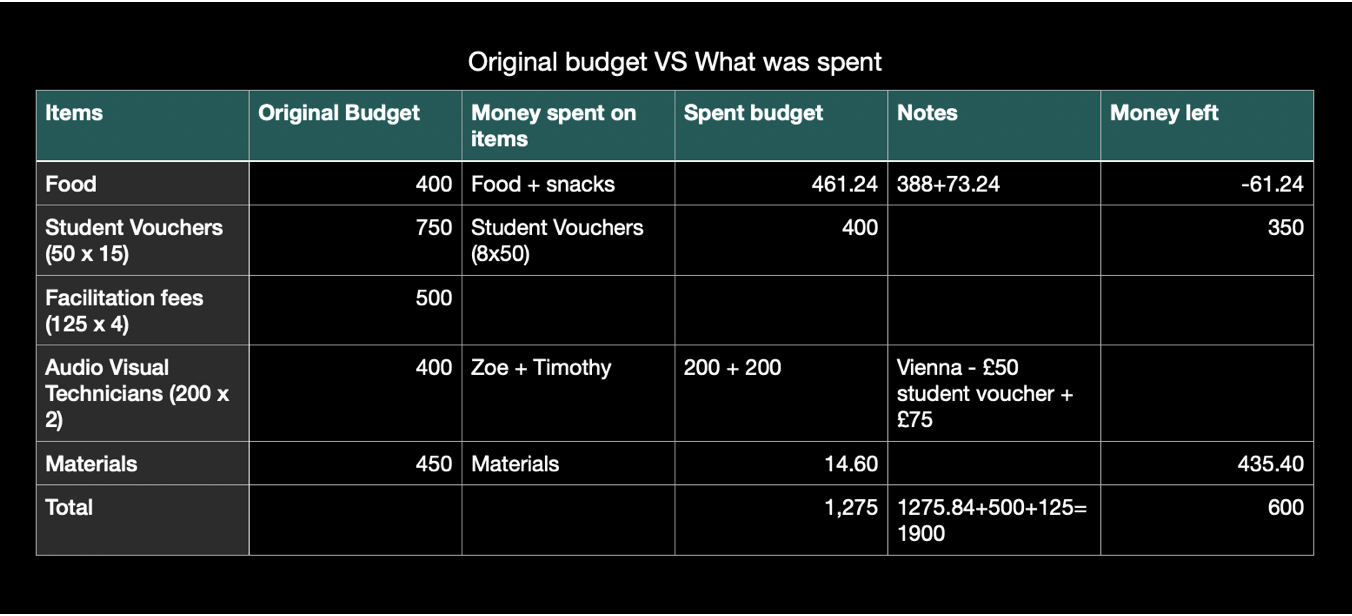
Fig 6. Divya Kishore. Screenshot of Expenditure Excel 2 from Divya’s notes, 2024.
Lastly, the timeline could be an amalgamation of the participants, facilitators, and the institution rather than moments of re-orientation due to burnout caused by overwork. The original timeline submitted in the grant proposal (picture below for reference) states that we would finish the project by March 30th, 2024. Even if this was just an example for the grant proposal and not the final timeline, there was never a proper conversation between all the project stakeholders about a feasible timeline for the curricula.
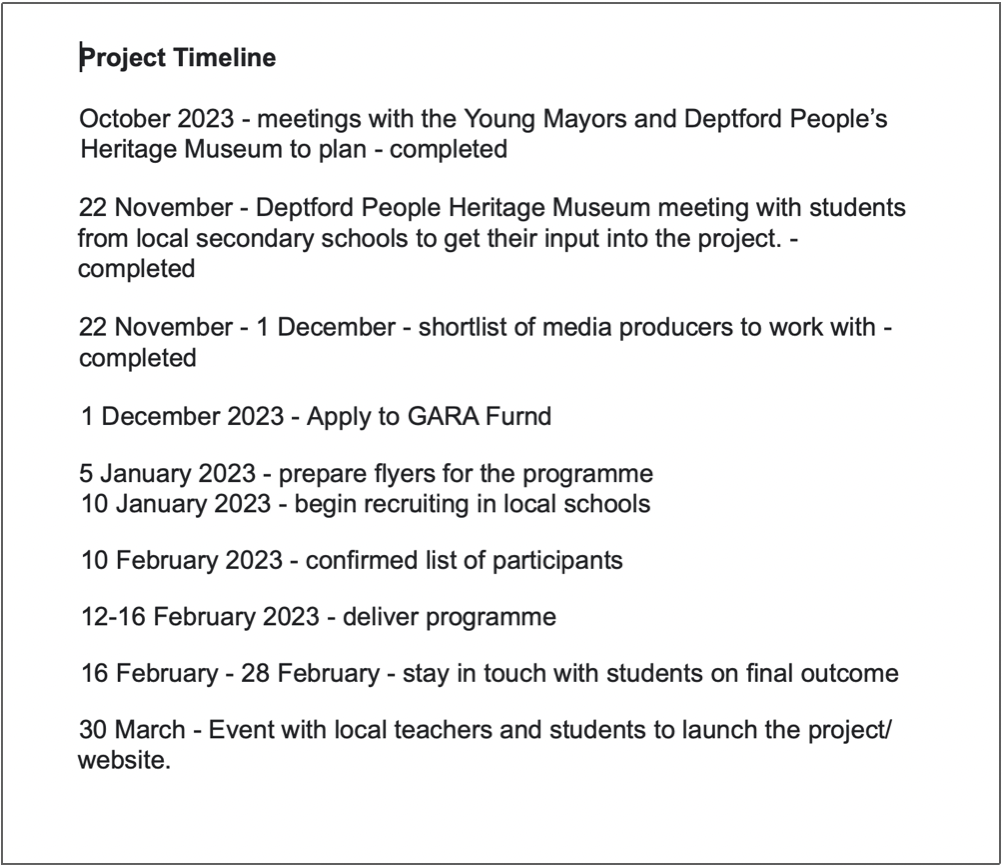
Fig 7. Divya Kishore. Screenshot of project timeline from grant proposal, 2024.
One reason the curricula took three months to design (15.02.2024 - 31.05.2024; refer to the timeline on page 4) is because, most (if not all) of the facilitators (BA Curating students) were burnt out from not having a long enough winter break, the four-day workshop took place during their half-term break (the window to rest and catch up with any material they weren’t able to for their classes), leading to them trying to catch up with all of their assignments for their other modules during term time. The timeline above doesn’t keep time with the humanness—and any other priorities they might have—of the BA Curating students, the Goldsmiths lecturers, and DPHM members. As an alternative to setting a timeframe for people coming in, it would be a better practice to create a timeline with those coming in to work on a project. Making a feasible and realistic timeline with all stakeholders would develop a dual orientation where care is shown to the participants and the facilitators.
Footnotes
[1] Jillian Steinhauer, “How Mierle Laderman Ukeles Turned Maintenance Work into Art.” Hyperallergic, February 10, 2017. https://hyperallergic.com/355255/how-mierle-laderman-ukeles-turned-maintenance-work-into-art/.
[2] Helena Reckitt, “Support Acts: Curating, Caring and Social Reproduction.” Journal of Curatorial Studies 5, no. 1 (February 1, 2016): 6–30. https://doi.org/10.1386/jcs.5.1.6_1.
[3] Graham, Janna, Jorella G Andrews, Lara Paquete Pereira, James Ohene-Djan, Joyce Jacca and Tracey Jarrett, “The Monument is the Struggle.” (Visual Cultures lead cross-departmental project, Goldsmiths, University of London, United Kingdom, 2024), 1-3.
[4] Michelle Bastian, “Fatally Confused: Telling the Time in the Midst of Ecological Crisis.” Environmental Philosophy 9, no. 1 (2012): 23–48. https://doi.org/10.5840/envirophil2012913.
[5] Reckitt, “Support Acts,” 6–30.
[6] Reckitt, “Support Acts,” 6–30.
[7] Rabia Belt, “Ableism,” in Moving Toward Antibigotry (Boston, Massachusetts: Boston University Center for Antiracist Research, 2022), 39–45.
[8] Ásta Jóhannsdóttir, Snæfríður Þóra Egilson, and Freyja Haraldsdóttir, “Implications of Internalised Ableism for the Health and Wellbeing of Disabled Young People,” Sociology of Health & Illness 44, no. 2 (January 15, 2022): 360–76, https://doi.org/10.1111/1467-9566.13425.
[9] Franco Berardi, “Time, Acceleration, and Violence,” E-flux Journal, September 2011, https://www.e-flux.com/journal/27/67999/time-acceleration-and-violence/.
[10] Michelle, “Fatally Confused,” 23–48
[11] “Classroom Charters Building the Shared Values of a Rights-Respecting Classroom,” UNICEF Canada, accessed June 1, 2024, https://www.unicef.ca/sites/default/files/legacy/imce_uploads/UTILITY%20NAV/TEACHERS/DOCS/GC/Classroom_Charters_Instructions.pdf.
[12] Iaraith Ní Fheorais, “Access Toolkit for Artworkers,” Access Toolkit for Artworkers, February 14, 2024. https://www.accesstoolkit.art/.
[13] Iaraith, “Access Toolkit for Artworkers.”
List of Images
Fig 1. Kishore, Divya. Picture of Participant map from Divya’s notes, 2024. Picture. Source: Picture of Participant map made by Divya from Divya’s notes.
Fig 2. Kishore, Divya. Picture of Organisational flow chart from Divya’s notes, 2024. Picture. Source: Picture of Organisational flow chart made by Divya from Divya’s notes.
Fig 3. Kishore, Divya. Picture of rough timeline made from Divya’s notes, 2024. Screenshot. Source: Screenshot of timeline from Divya’s digital notes.
Fig 4. Kishore, Divya. Screenshot of budget from grant proposal, 2024. Screenshot. Source: Screenshot of budget in the grant proposal.
Fig 5. Kishore, Divya. Screenshot of Expenditure Excel 1 from Divya’s notes, 2024. Screenshot. Source: Screenshot of Expenditure Excel from Divya’s digital notes.
Fig 6. Kishore, Divya. Screenshot of Expenditure Excel 2 from Divya’s notes, 2024. Screenshot. Source: Screenshot of Expenditure Excel from Divya’s digital notes.
Fig 7. Kishore, Divya. Screenshot of project timeline from grant proposal, 2024. Source: Screenshot of project timeline in the grant proposal.
Bibliography
Bastian, Michelle. “Fatally Confused: Telling the Time in the Midst of Ecological Crisis.” Environmental Philosophy 9, no. 1 (2012): 23–48. https://doi.org/10.5840/envirophil2012913.
Belt, Rabia. “Ableism.” In Moving Toward Antibigotry, 39–45. Boston, Massachusetts: Boston University Center for Antiracist Research, 2022.
Berardi, Franco. “Time, Acceleration, and Violence.” E-flux Journal, September 2011. https://www.e-flux.com/journal/27/67999/time-acceleration-and-violence/.
Graham, Janna, Jorella G Andrews, Lara Paquete Pereira, James Ohene-Djan, Joyce Jacca and Tracey Jarrett, “The Monument is the Struggle.” Visual Cultures lead cross-departmental project, Goldsmiths, University of London, United Kingdom, 2024.
Jóhannsdóttir, Ásta, Snæfríður Þóra Egilson, and Freyja Haraldsdóttir. “Implications of Internalised Ableism for the Health and Wellbeing of Disabled Young People.” Sociology of Health & Illness 44, no. 2 (January 15, 2022): 360–76. https://doi.org/10.1111/1467-9566.13425.
Ní Fheorais, Iaraith. “Access Toolkit for Artworkers.” Access Toolkit for Artworkers, February 14, 2024. https://www.accesstoolkit.art/.
Reckitt, Helena. “Support Acts: Curating, Caring and Social Reproduction.” Journal of Curatorial Studies 5, no. 1 (February 1, 2016): 6–30. https://doi.org/10.1386/jcs.5.1.6_1.
Steinhauer, Jillian. “How Mierle Laderman Ukeles Turned Maintenance Work into Art.” Hyperallergic, February 10, 2017. https://hyperallergic.com/355255/how-mierle-laderman-ukeles-turned-maintenance-work-into-art/.
Thompson, Wilhemina, Divya Kishore, Bianca Santa Anna Caballero and Janna Graham, “Monumental Slang: Deptford Young People’s Project.” Grant proposal document by BA Curating students, Goldsmiths, University of London, United Kingdom, 2023.
UNICEF Canada. “Classroom Charters Building the Shared Values of a Rights-Respecting Classroom.” Accessed June 1, 2024. https://www.unicef.ca/sites/default/files/legacy/imce_uploads/UTILITY%20NAV/TEACHERS/DOCS/GC/Classroom_Charters_Instructions.pdf.
Grades and Feedback
Grade: 78
Graded on: —
Graded by: Janna Graham
Divya,
A very well written, theorised and substantiated meditation on the role of time in anti-ableist practice, reflecting on difficulties experienced in the temporal dimensions of the Monumental Slang Youth Project.
It provides an important template for reflection on processes, that could be adapted to involve all those involved in projects and form the base for the kind of charter you propose.
Your work in laying out the problem of time through theoretical material offered by Michelle Bastian, Helena Beckett, Franco Berardi and positing this as a concrete sub-set of the definition of able-ism is extremely useful.
If there were anything to improve or rather build upon, it would be to - while continuing the micro political reading of the event - allso consider the constraints of such processes, what is it that specifically works against these propositions of time. Understanding these structurally, might help to identify at what stage do charters begin? At the stage in which funding applications are at the stage in which projects are generally imagined? When DPHM acquired funding to engage in youth programming?
The point you are making about caring for the teachers works well with Spivak's notion of the overturning of current service dynamics in education if this were to be the case. Expanding out from the micro into the larger implications would be a really useful next step or area to build upon in future work, which I hope you do!!
My Reflections
It really bothers me that this essay lacks a proper conclusion.
I really struggled with this essay. I was burnt out. There was a deep disinterest in anything to do with… anything really. But I wrote it. I liked thinking about the micro politics and how a lack of certain organisational structures creates sore points in bodies that take part in projects related to that organisation. Once again, the theory is good, all the raw details are there, but the essay itself needs at least one more edit and a proper restructuring.
It took me a long time to understand what Janna meant in her feedback about thinking about these issues structurally. Now I realise I needed to go through my third year and truly understand, from perspectives I developed through the research I conducted a little later on. Writing is also a process of fermentation, I am learning. Things need time to process, to breathe, to create themselves. For the first time, I am not hating that. I think I like that it takes time, that our personal growth is an intrinsic part of getting better at research and writing and vice versa.
However, in saying all that, Janna points to a very necessary addition. What I have been focused on for a long time is the micro-political. The complexity and nuance of the patient experience at the individual level shaped my research goals and interests. My personal experiences in the medical industrial complex drove me towards the analysis of the micro-political. Shying away from the macro is a conscious choice. However, fixes at the macro level require a certain level of scalability that my analysis and solution, derived at the micro level, do not have at this point in time. Or, my understanding is that fixing the cog at a certain point to reduce sore points in bodies participating requires a bigger-picture approach. But, I don’t want to turn away from the affects created in people who experience sore points. Perhaps that’s why I do not wish to turn away from the analysis of the politics of a micro level.
Anyways, that was a long-winded way of saying, I need to add another layer to my research, and Janna helped me see that. My writing requires a lot more finesse, which will take time, but I am working on it. And I really need to get better at structuring essays, which I think I have. It will be self-evident when one observes the difference between my second-year essays and my third-year essays.