The Hex of a Bad Date—Zine
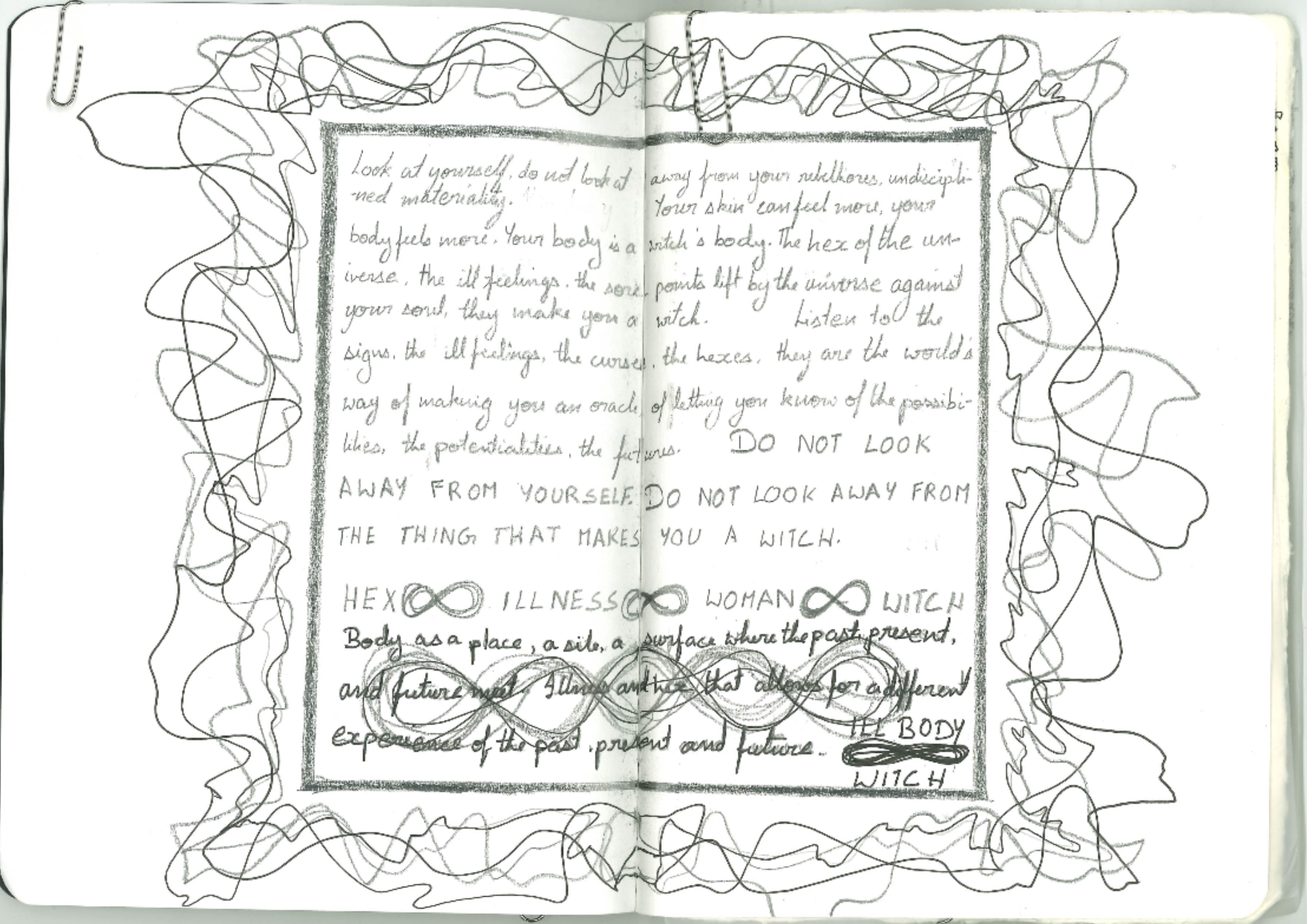
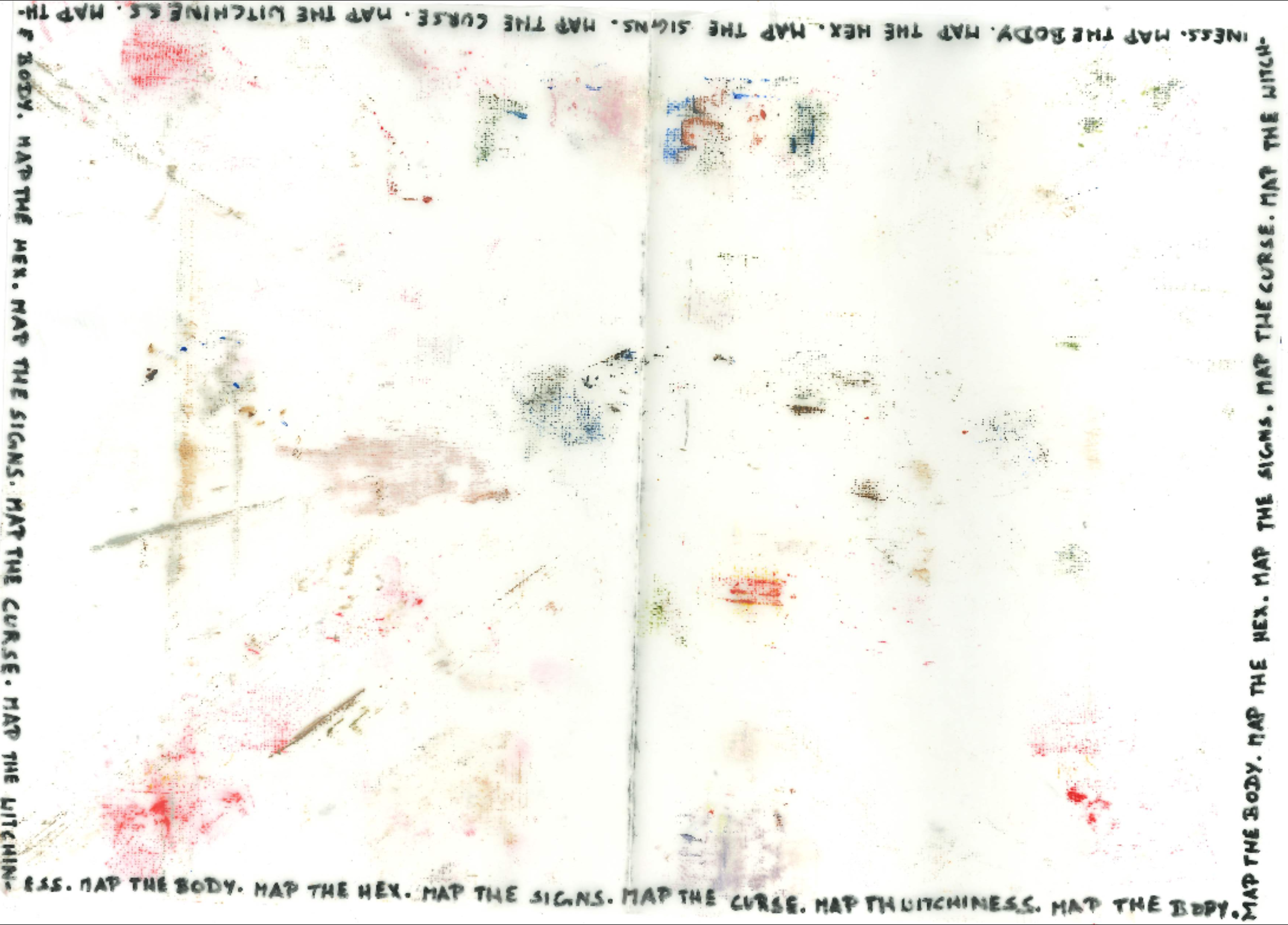
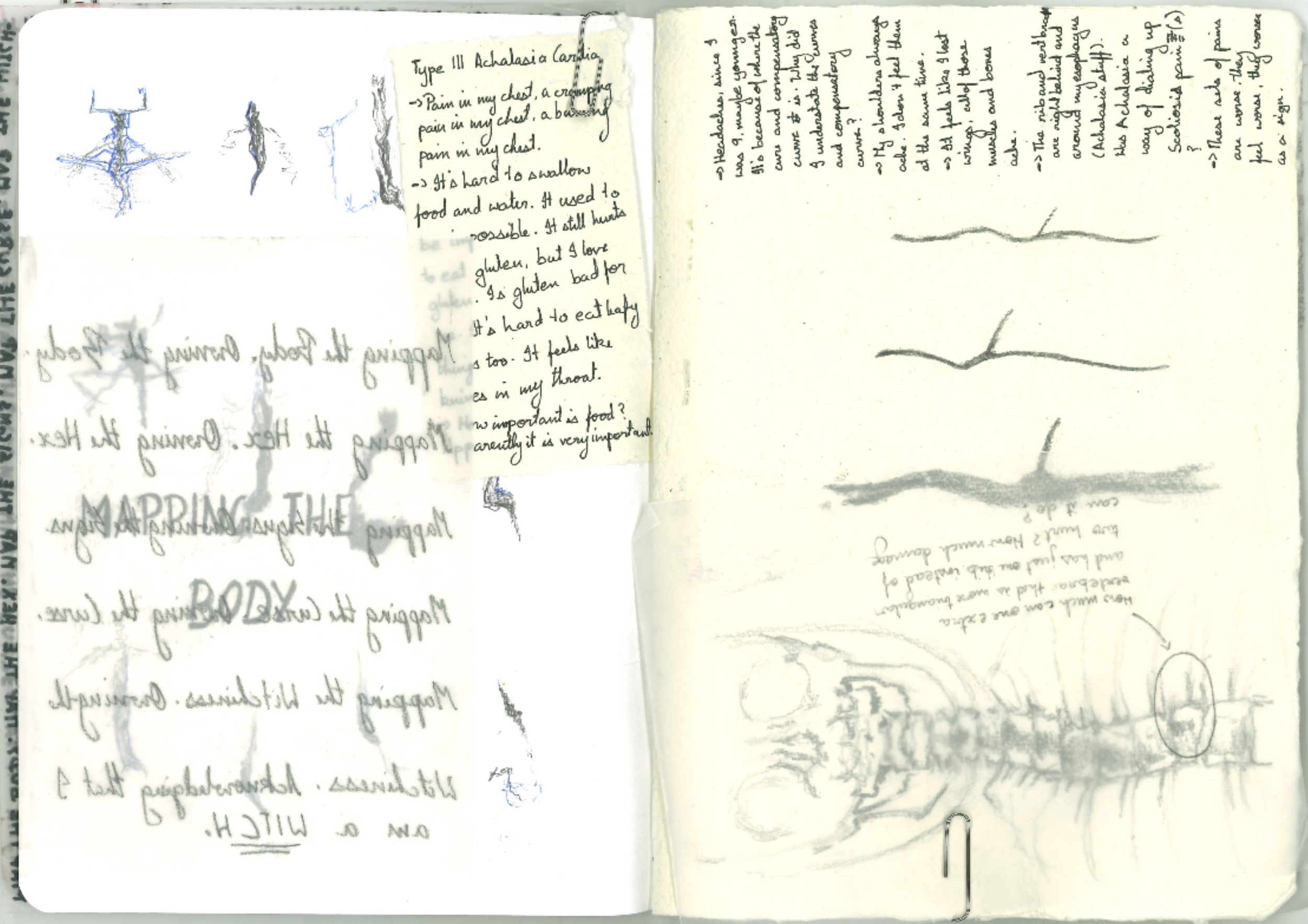
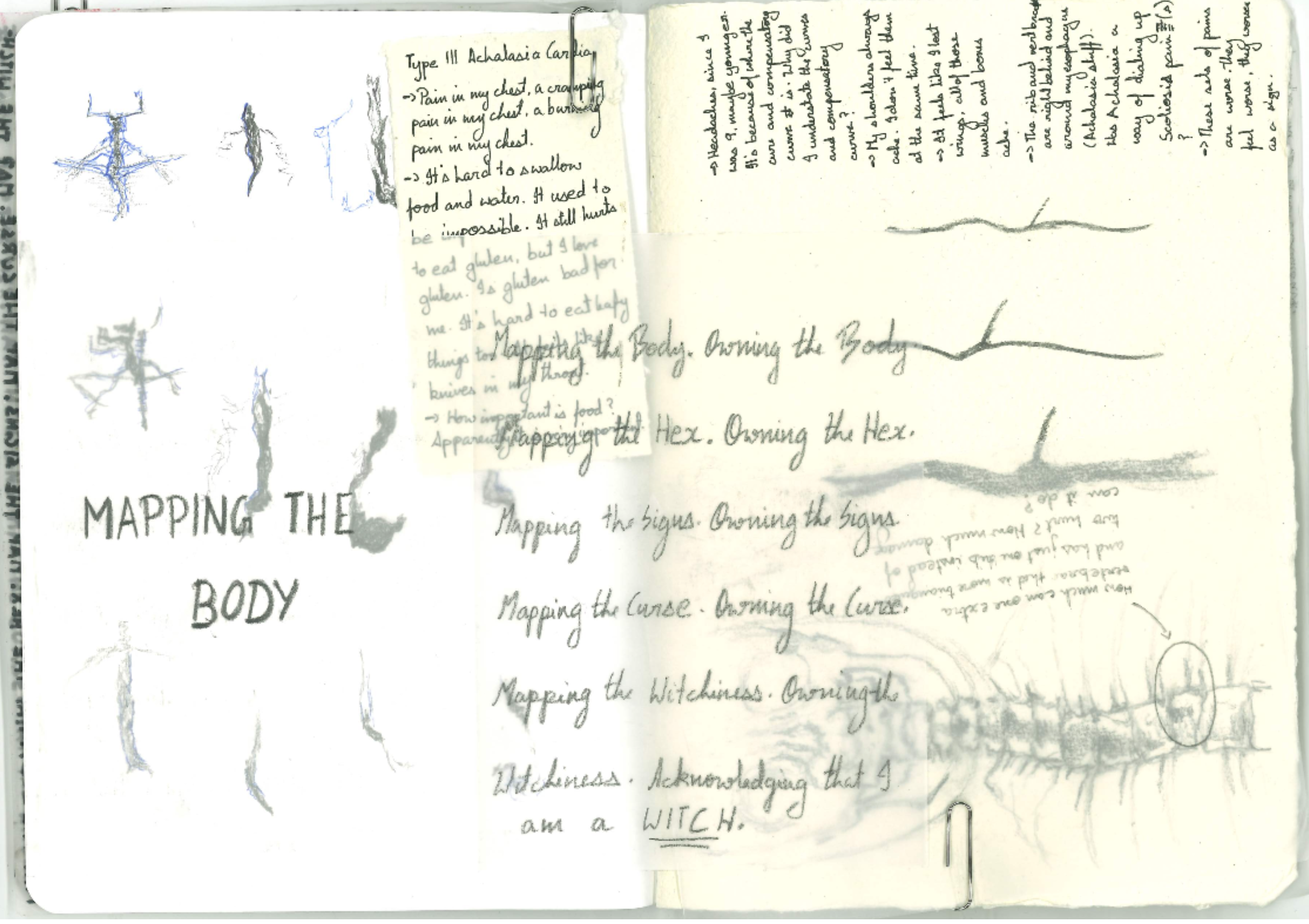
This is the Zine and Essay I submitted for the module ‘Occulture: From Magic and Myth-Work to Care and Repair ’ in the academic year 2024-2025. Grades, feedback, and my reflections are at the end.
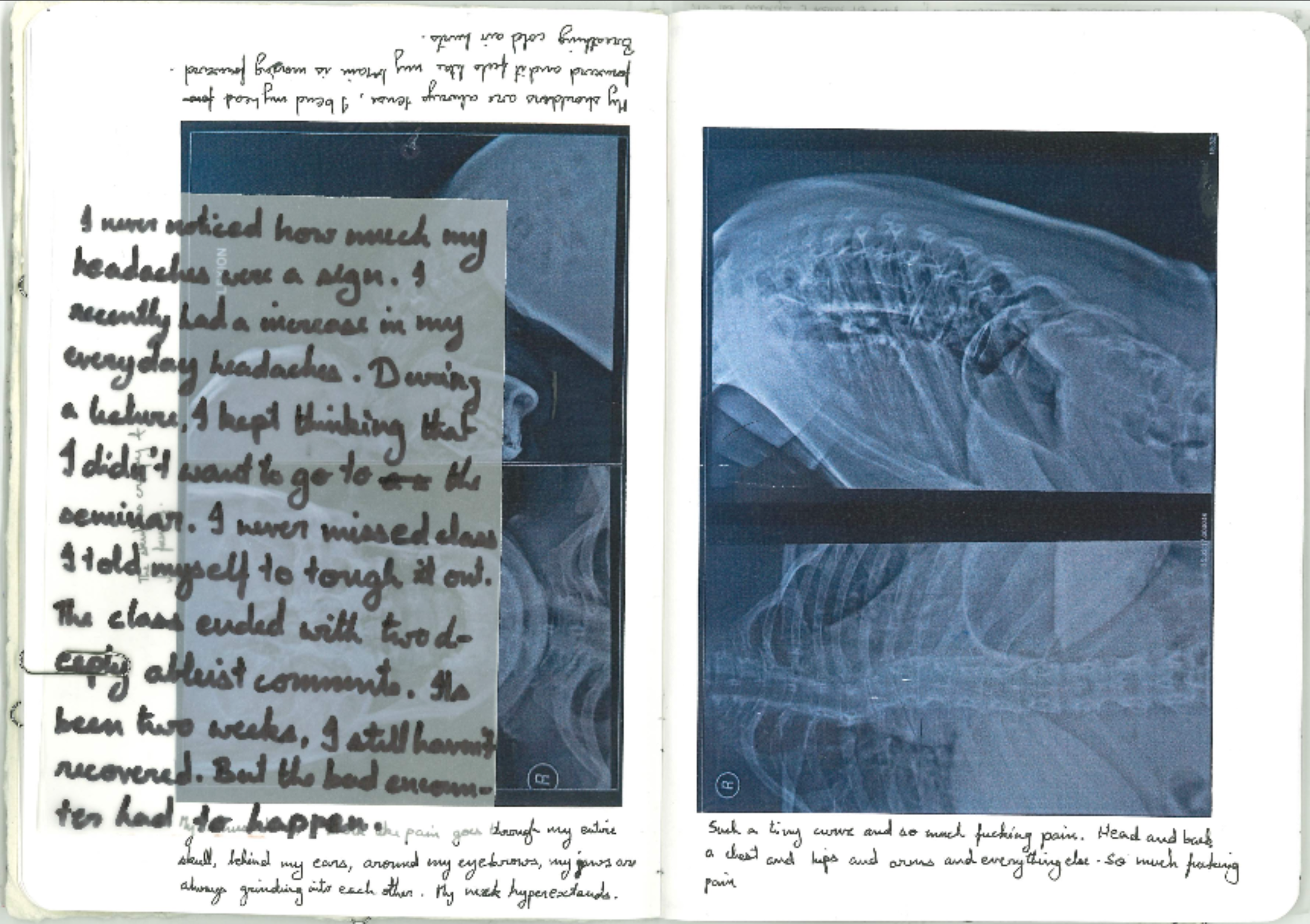
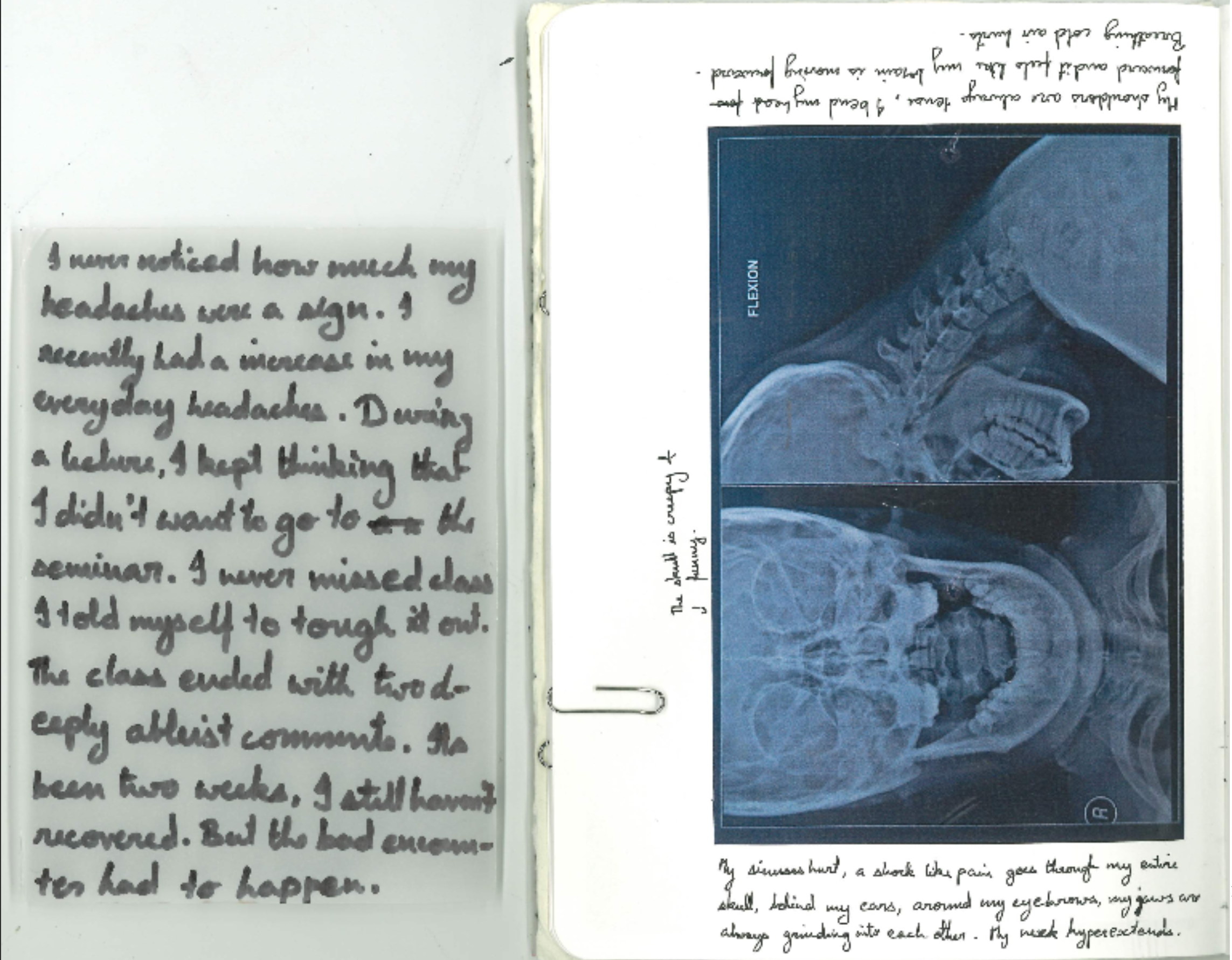
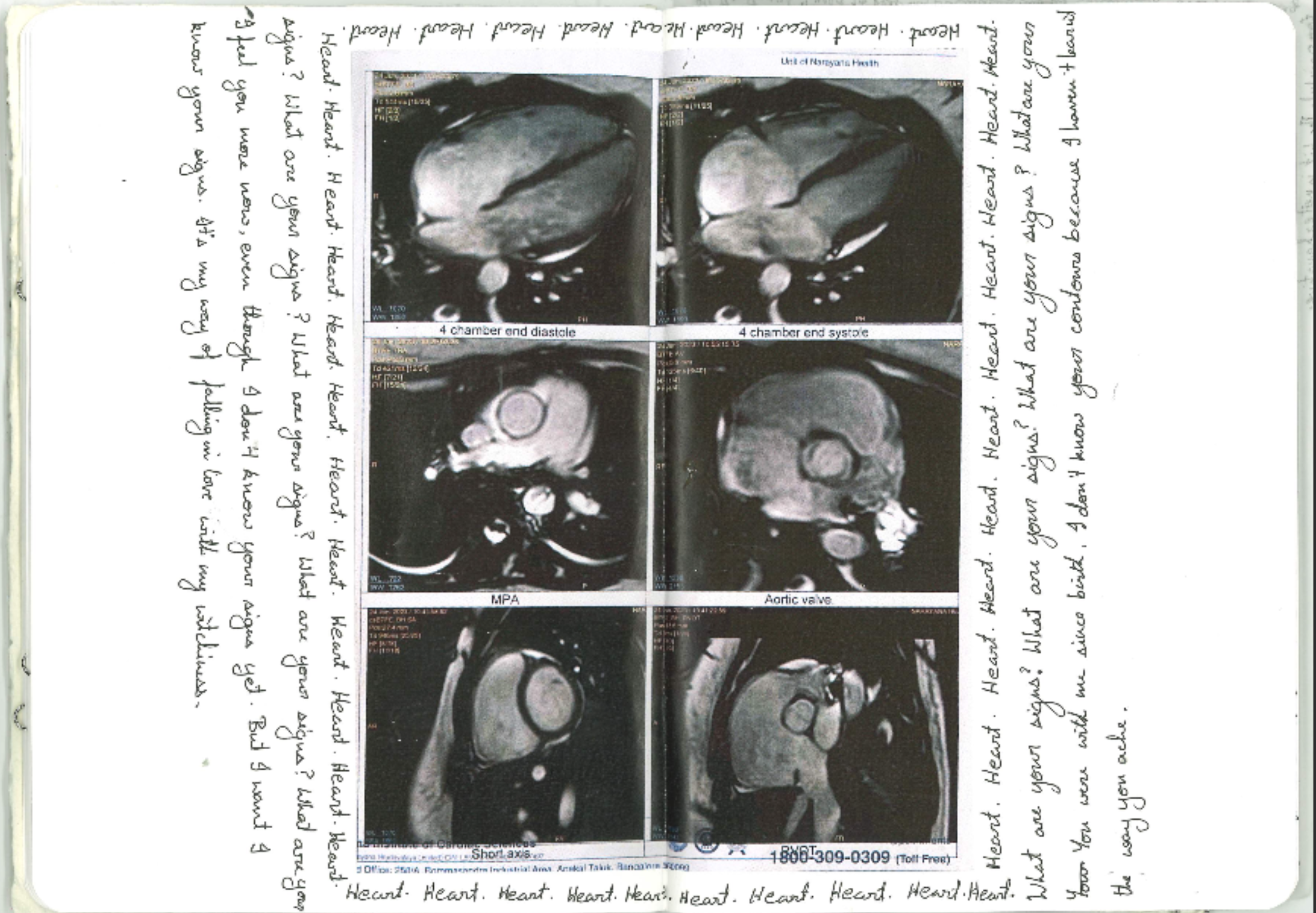
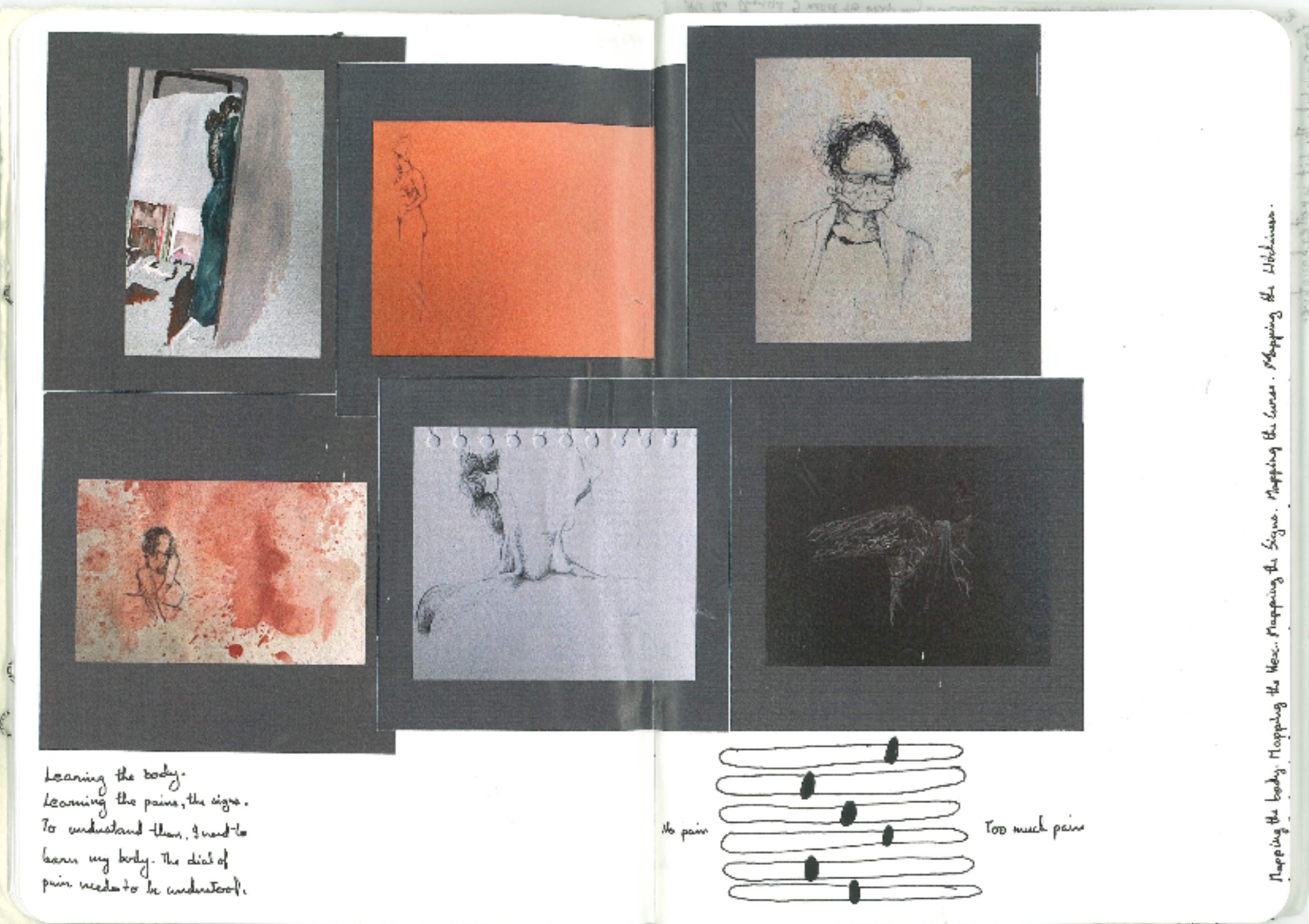
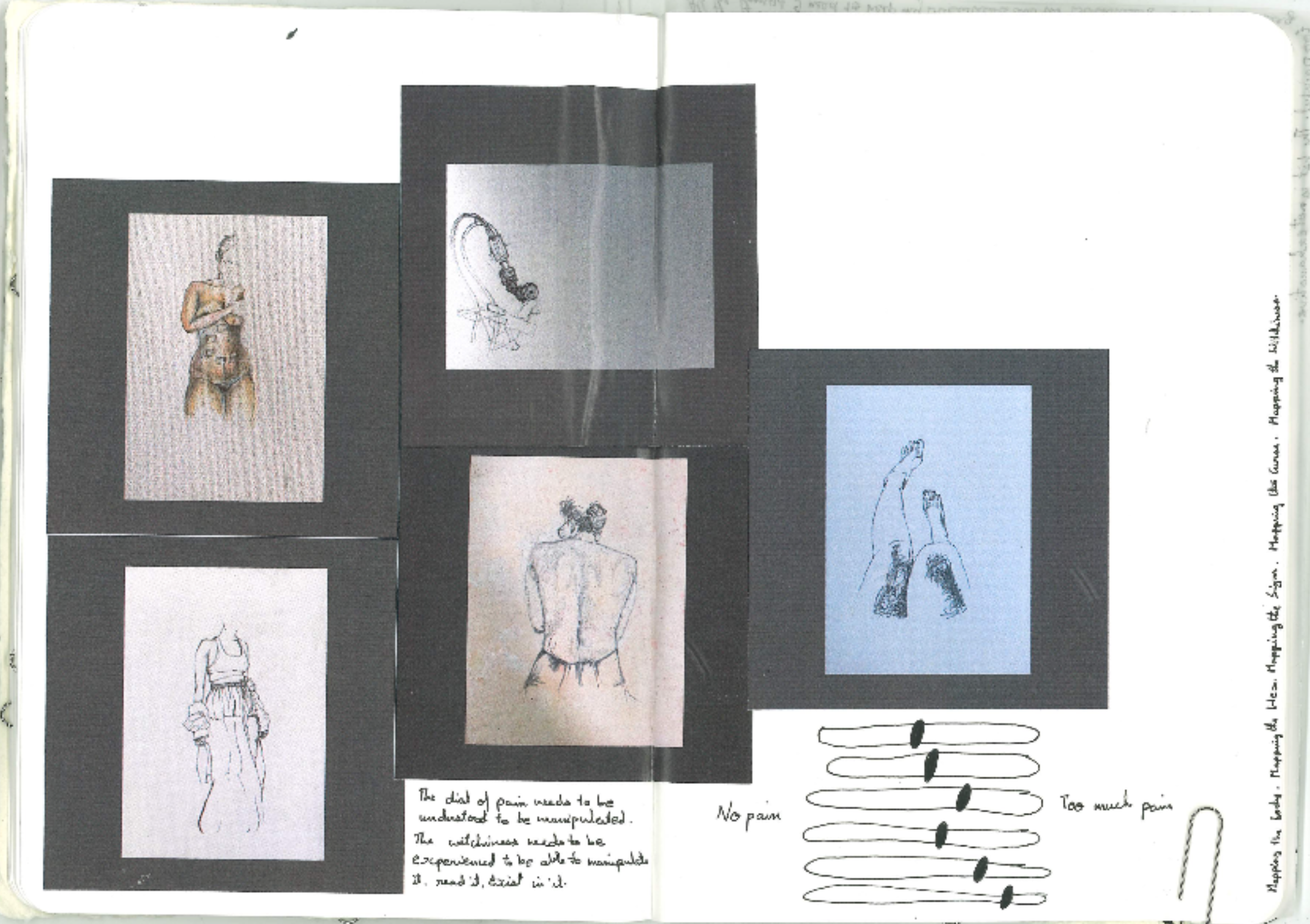
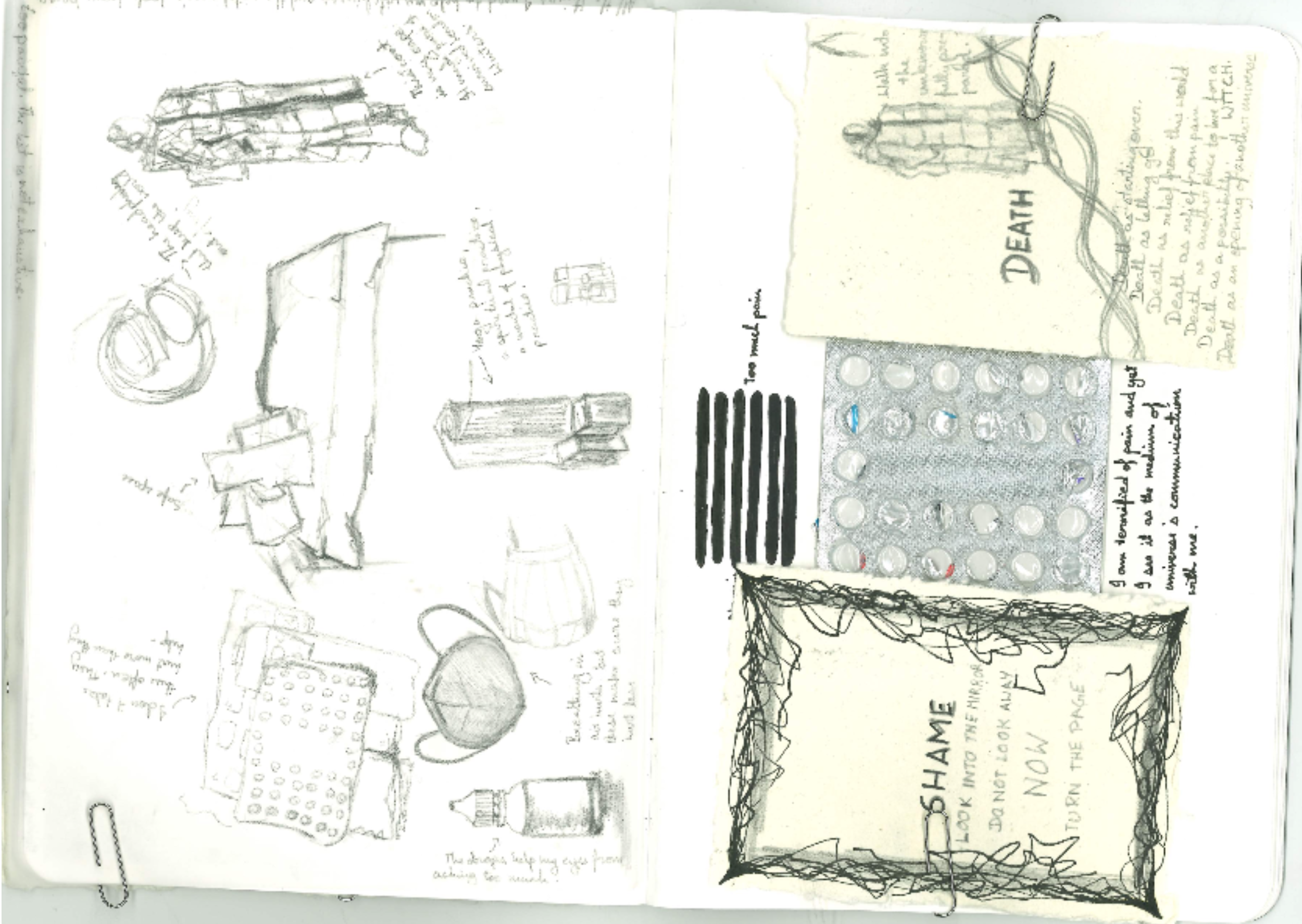
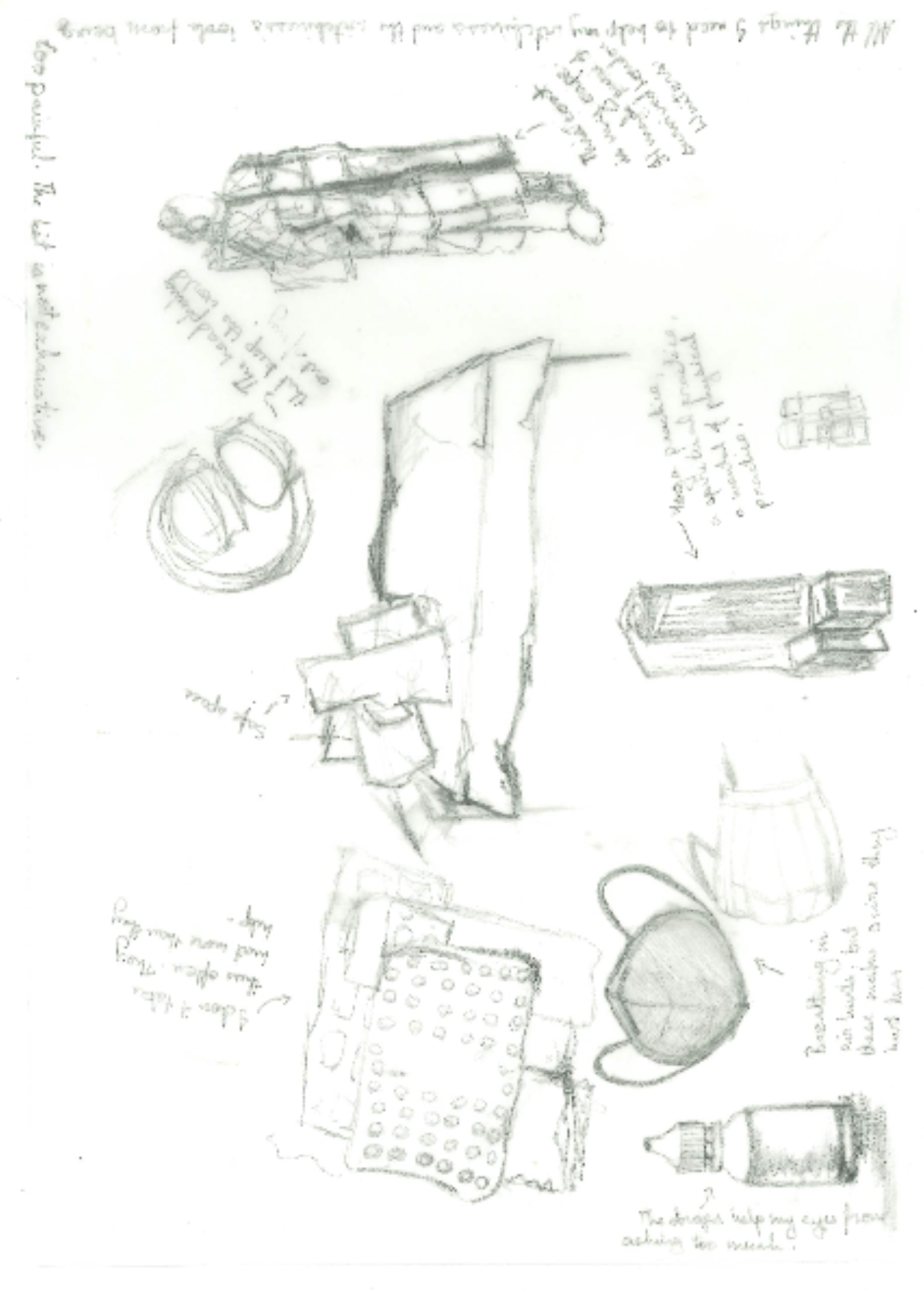
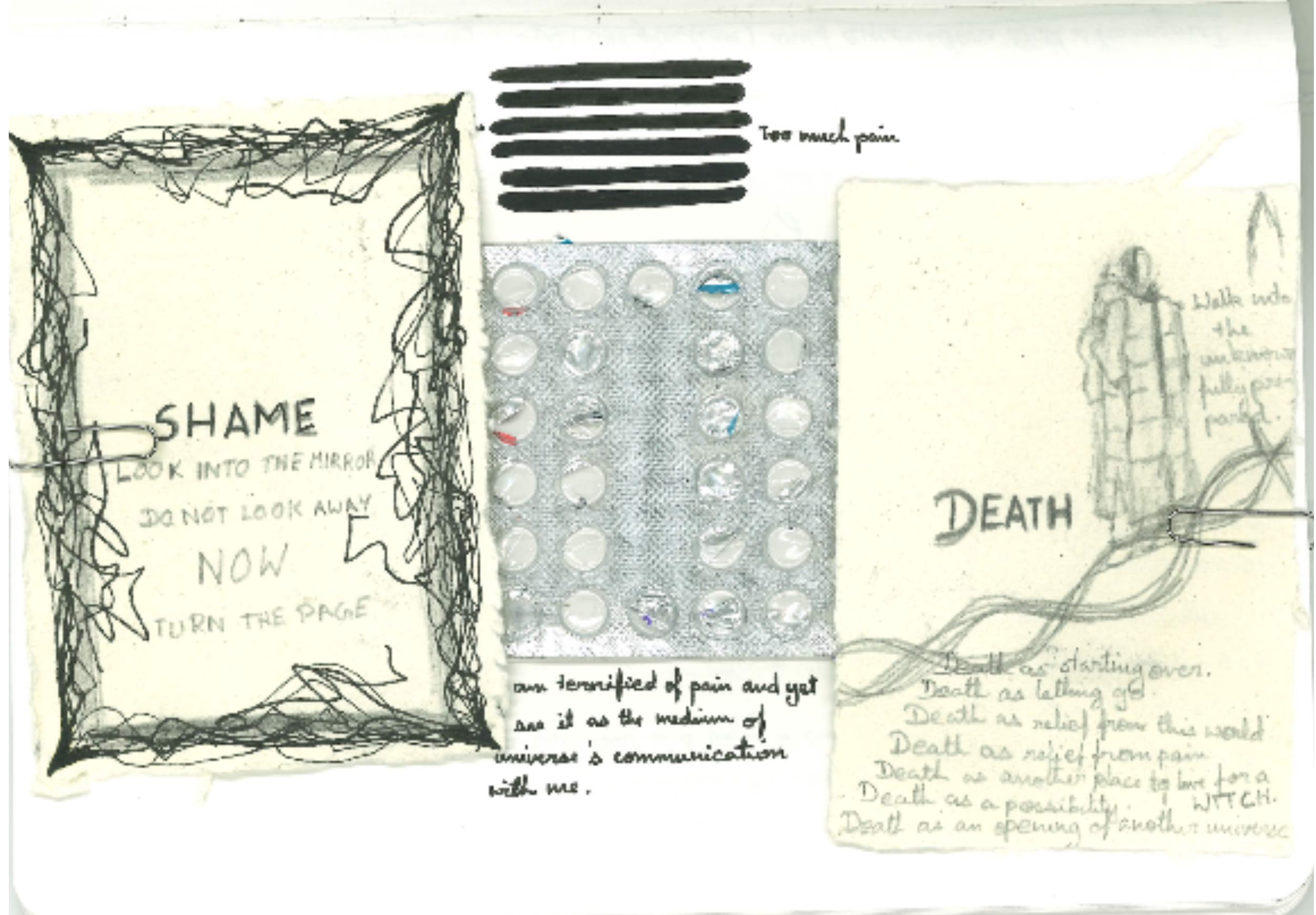
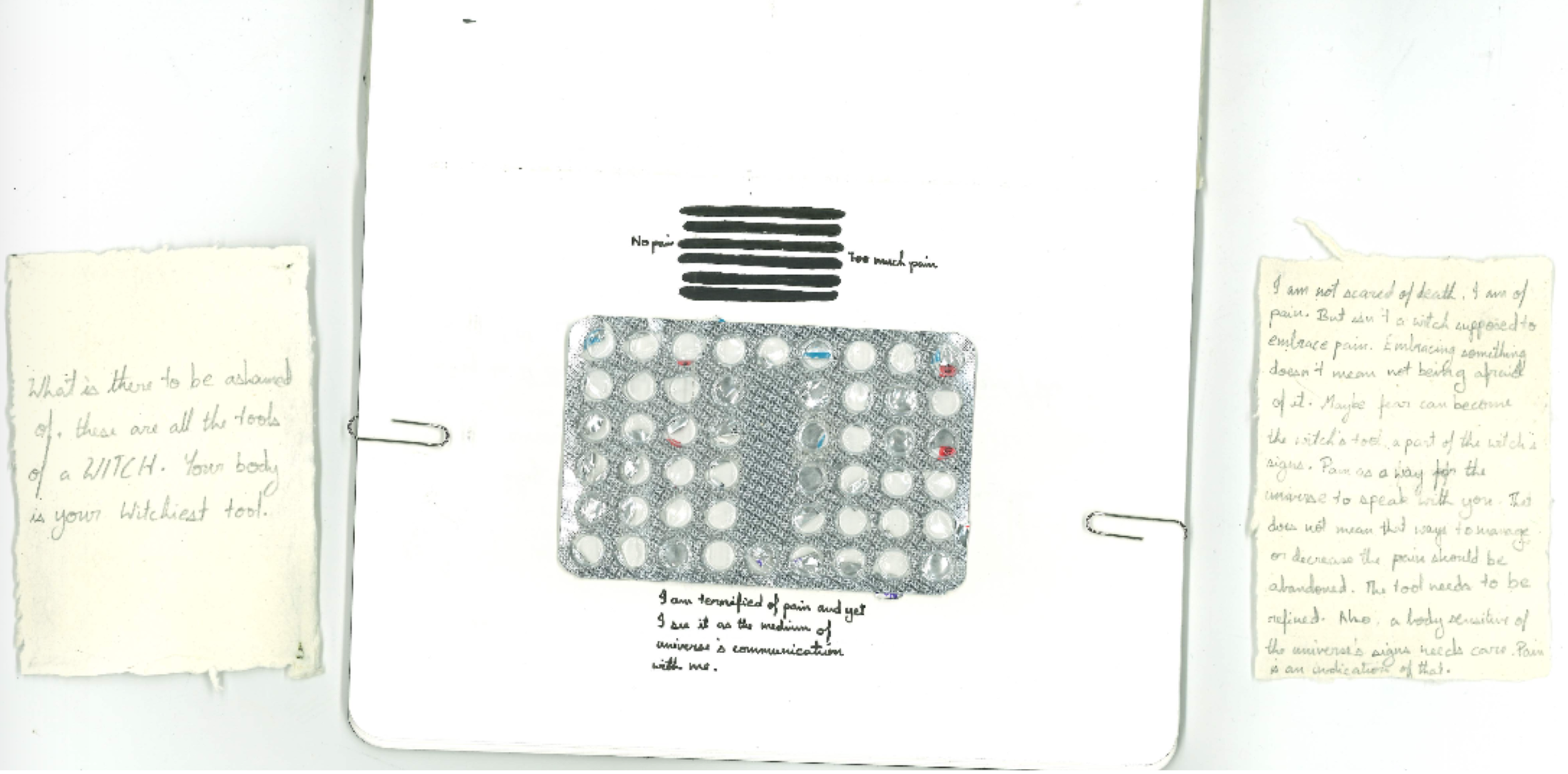
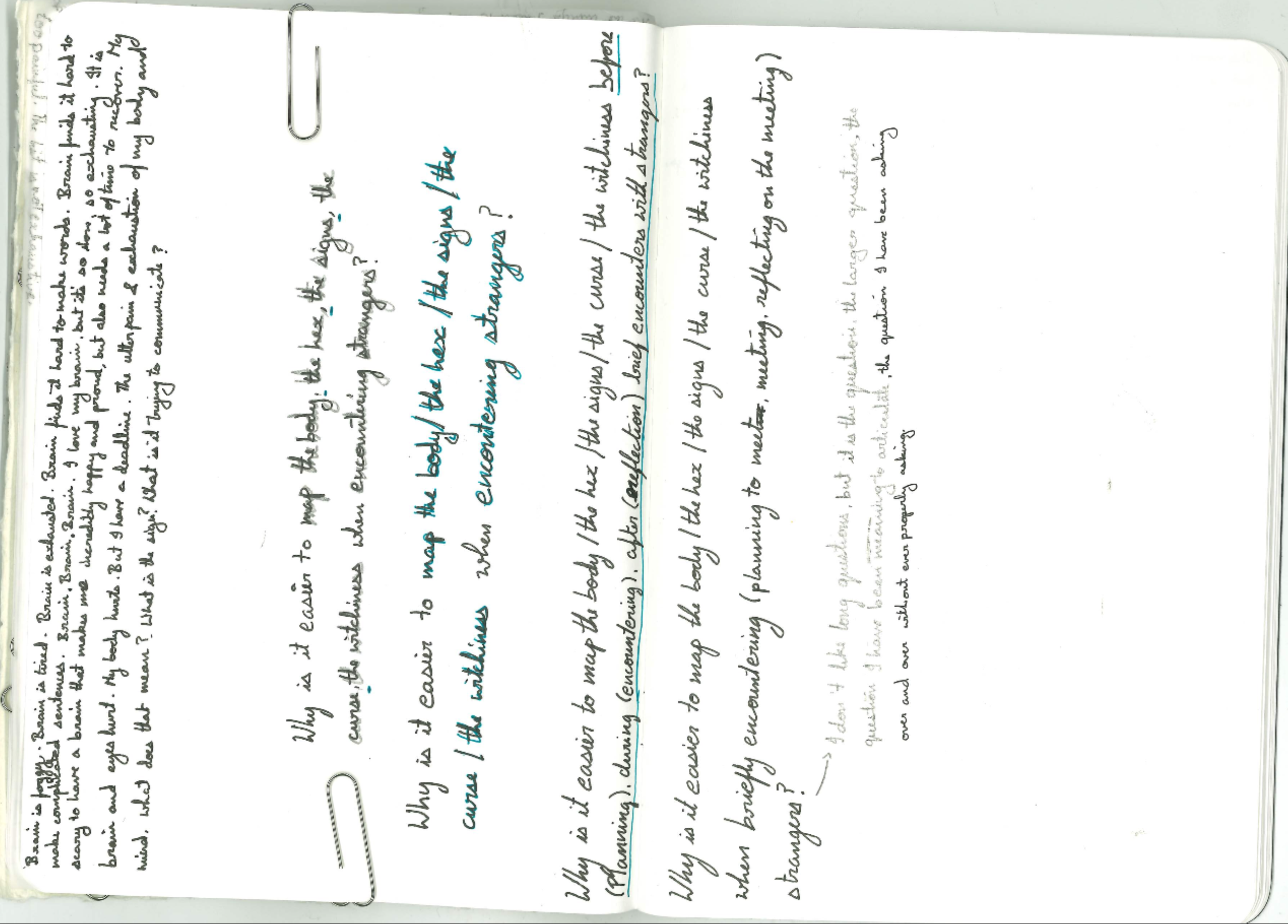
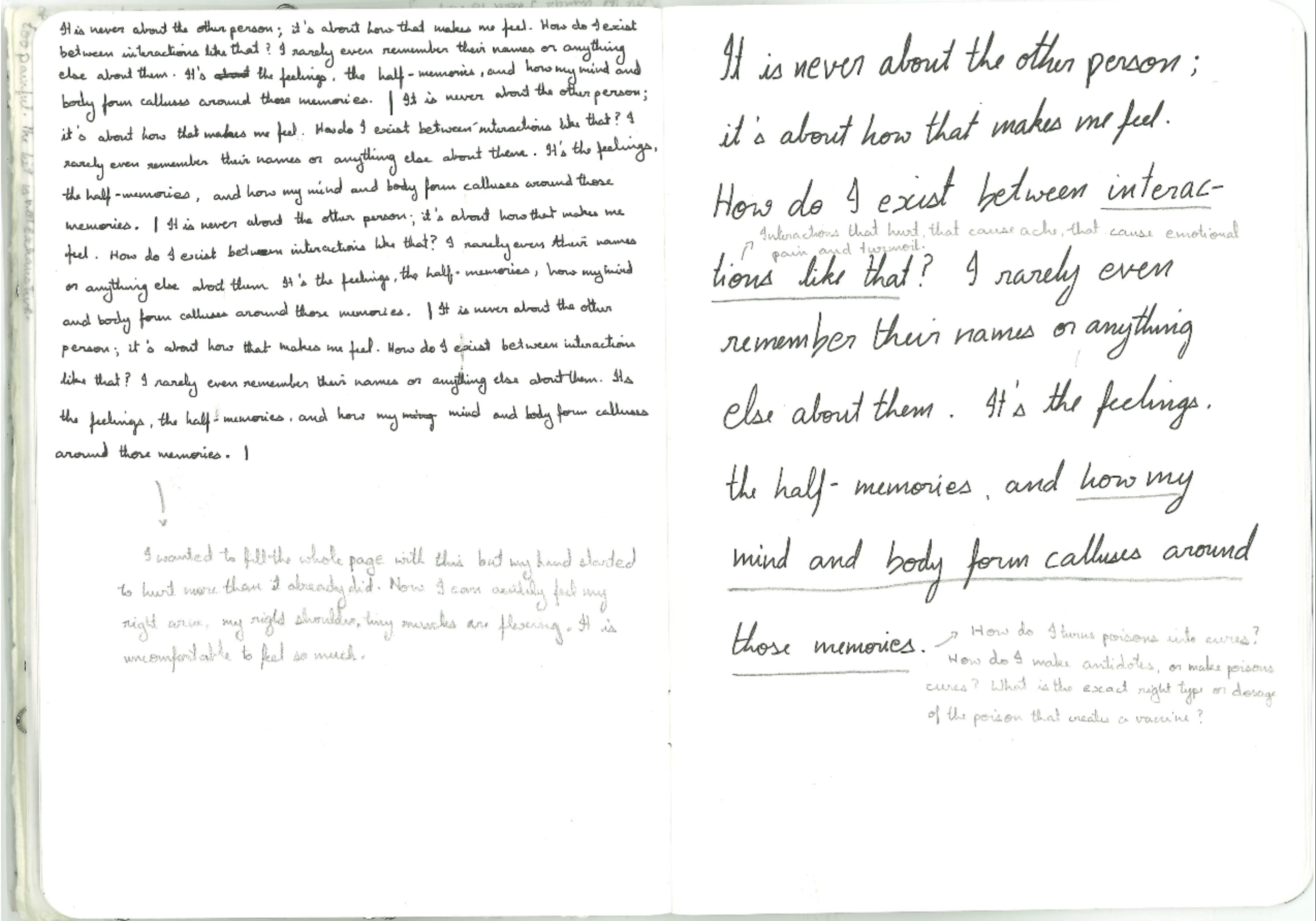
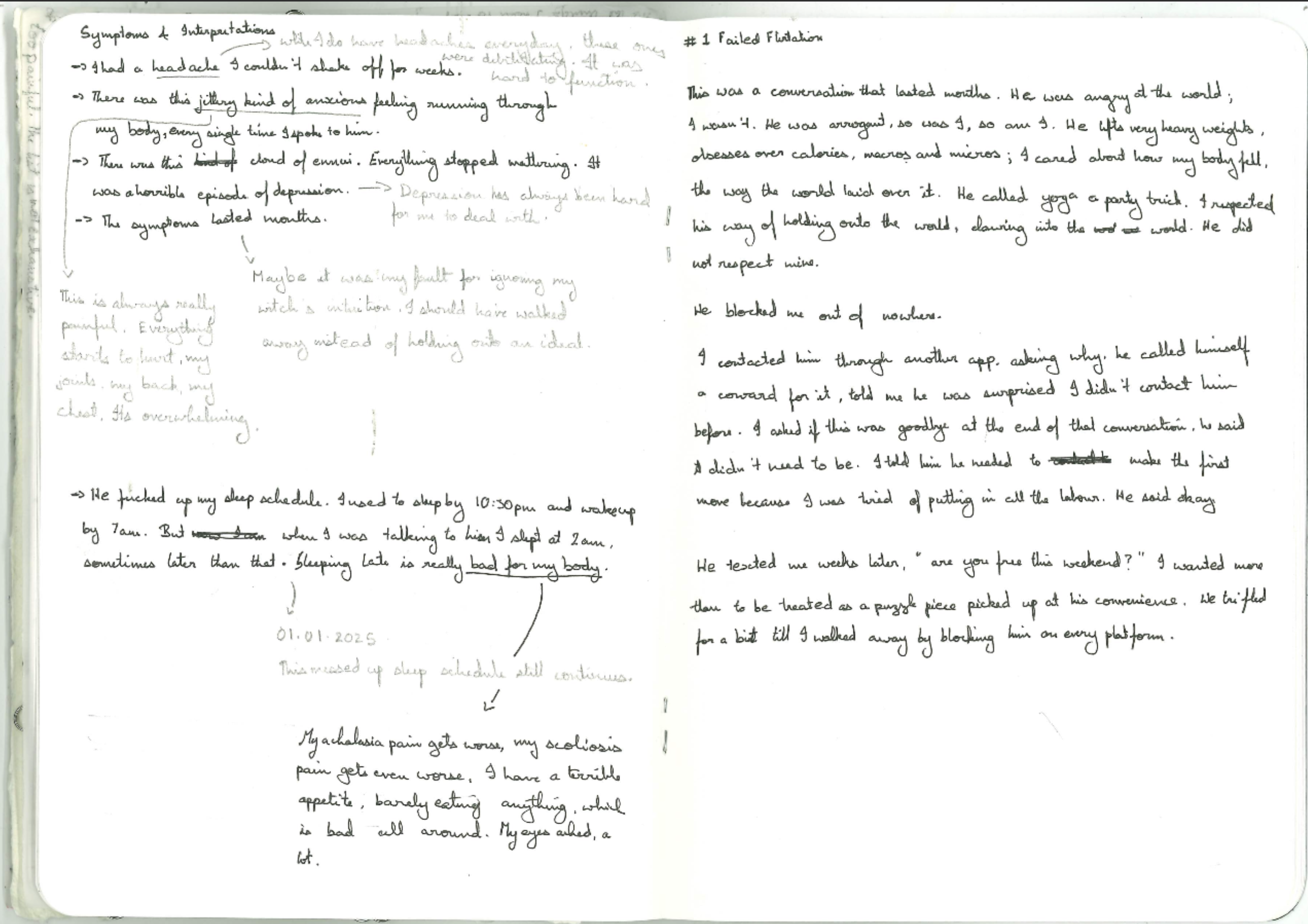
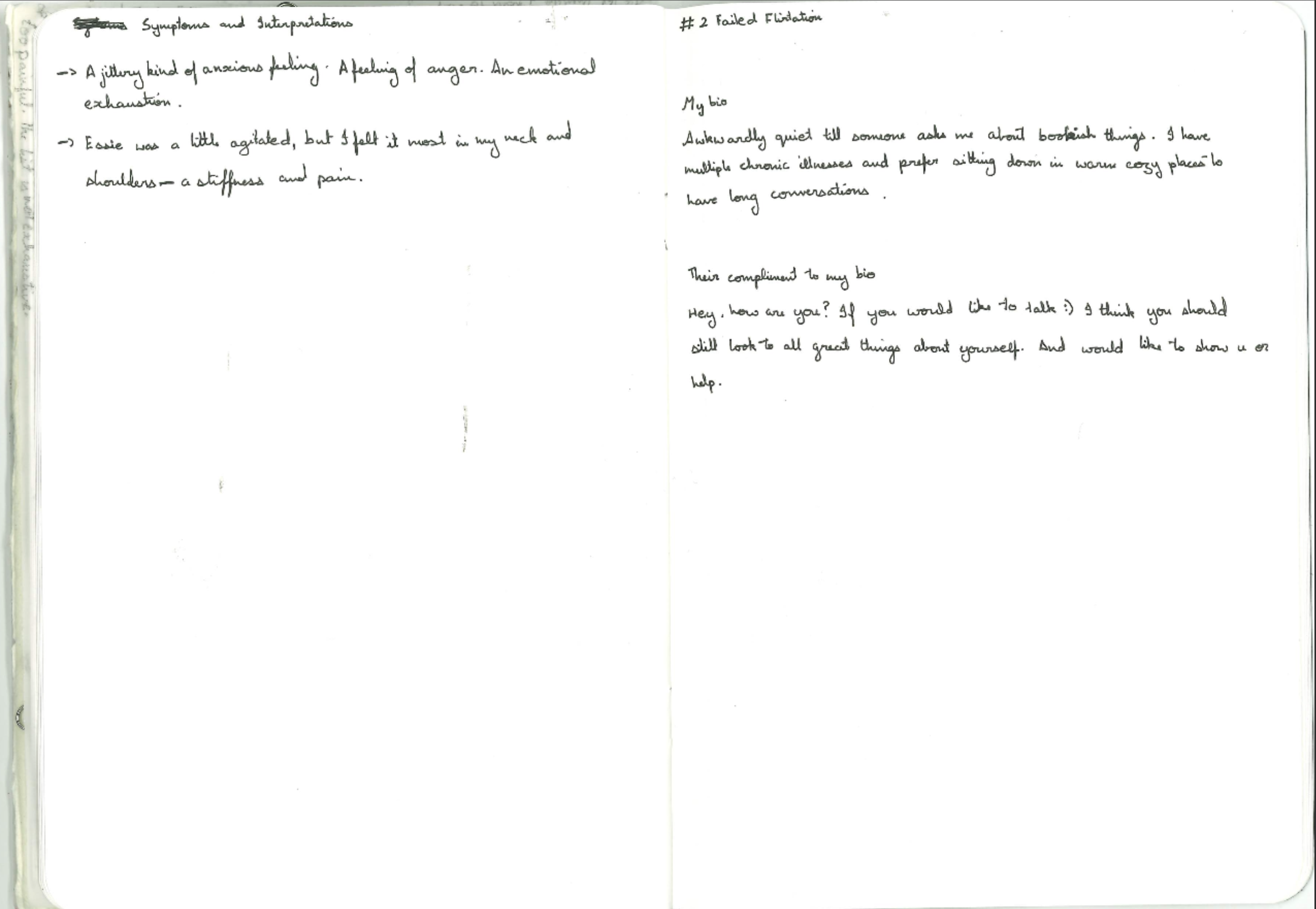
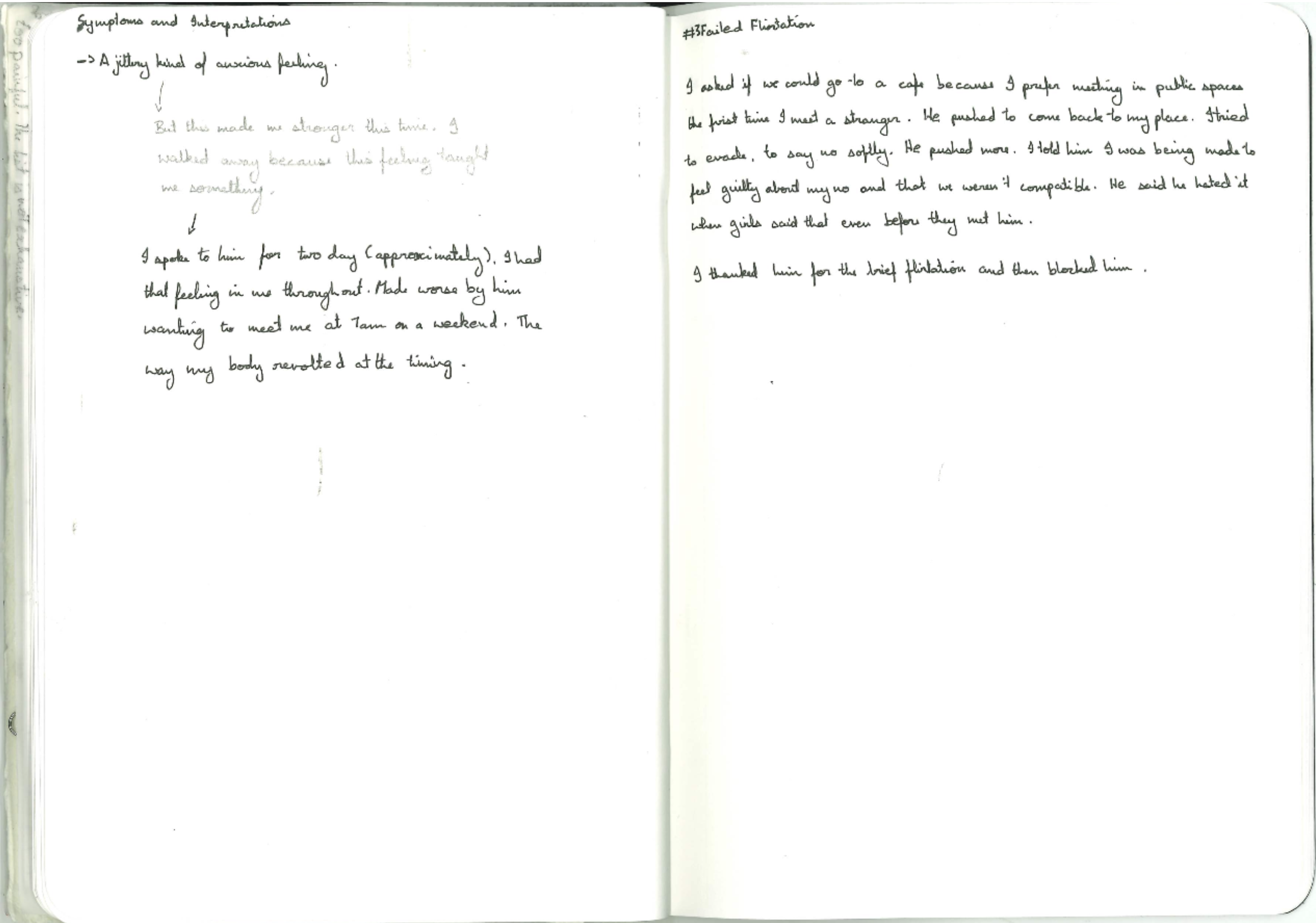
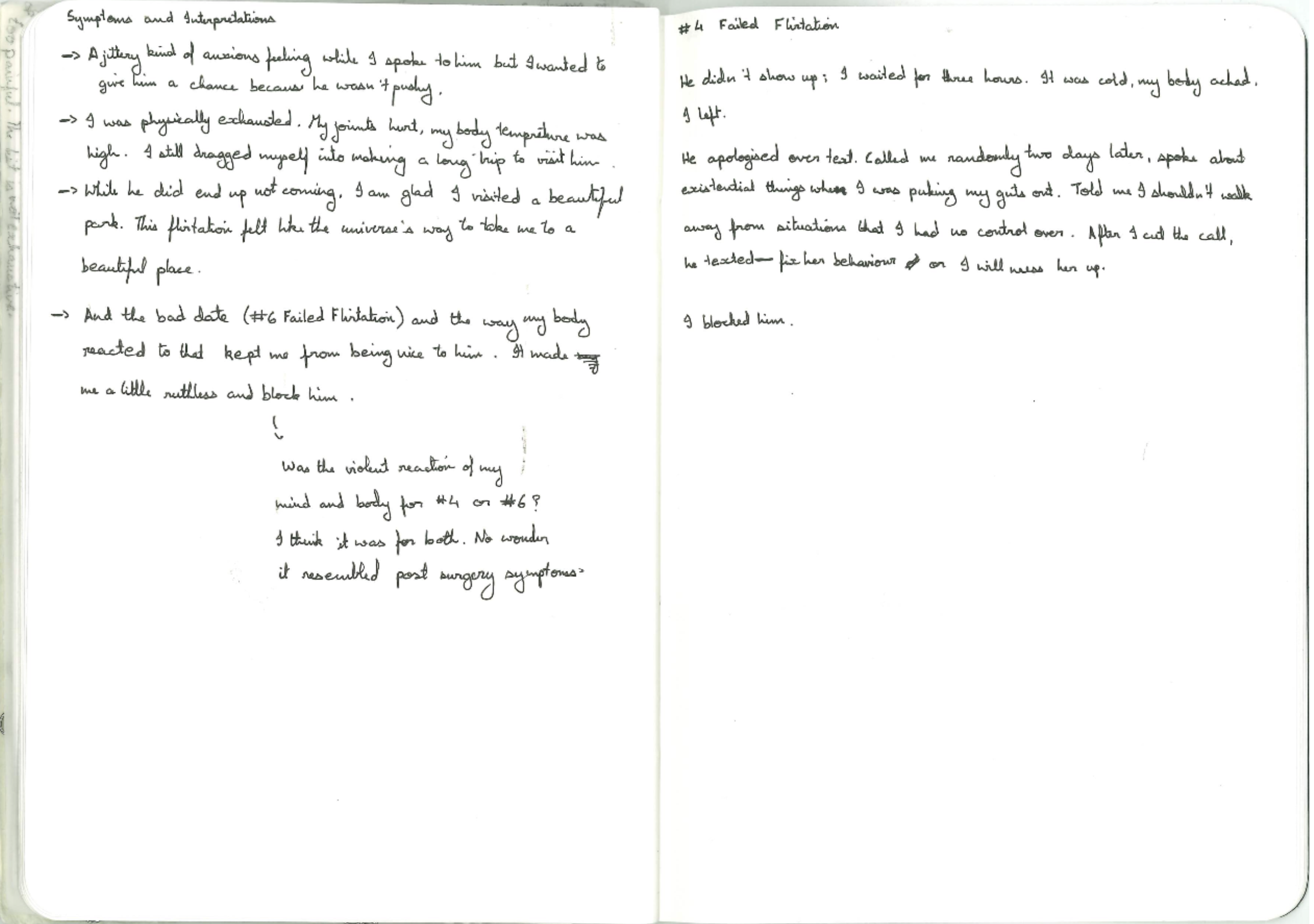
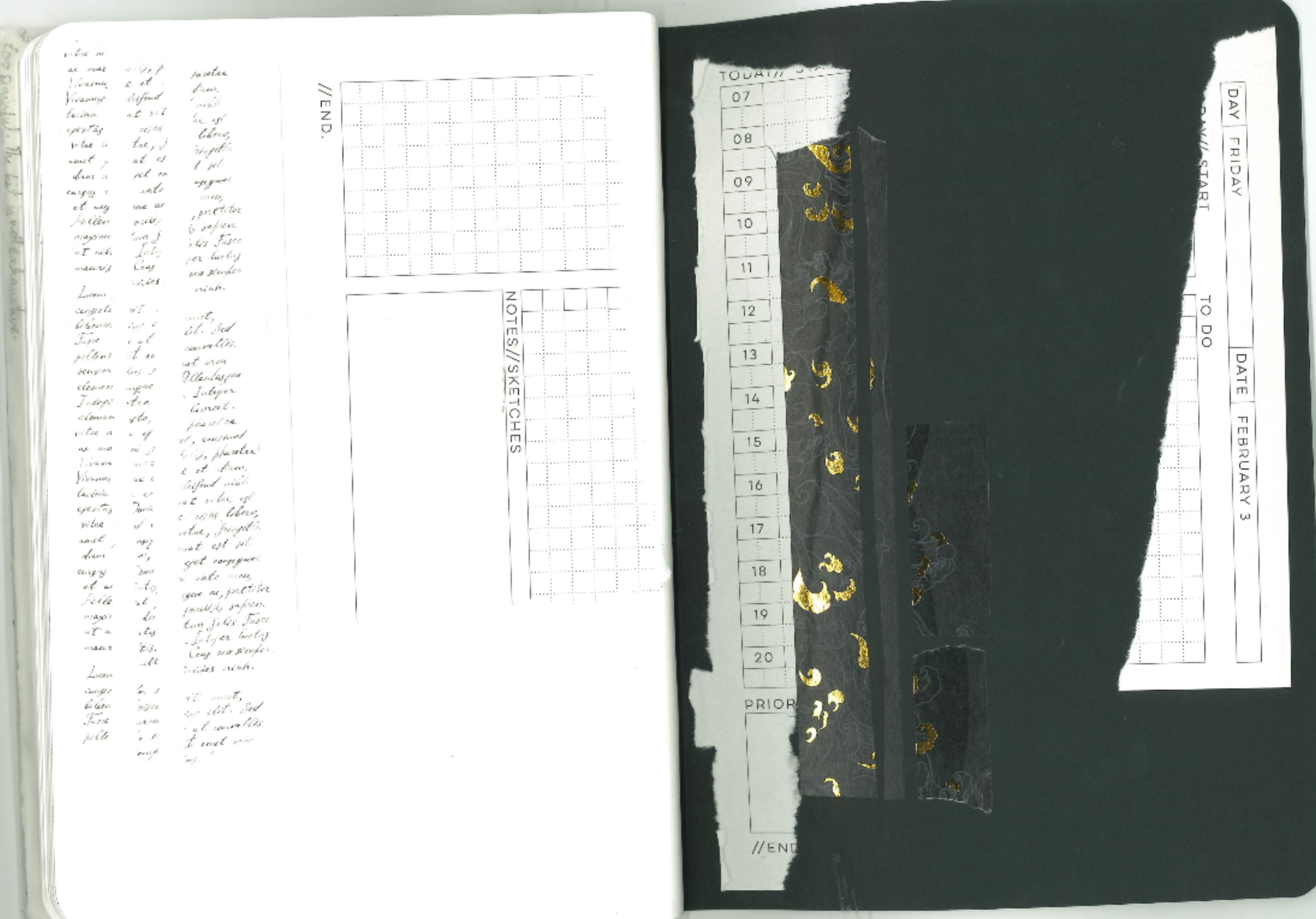
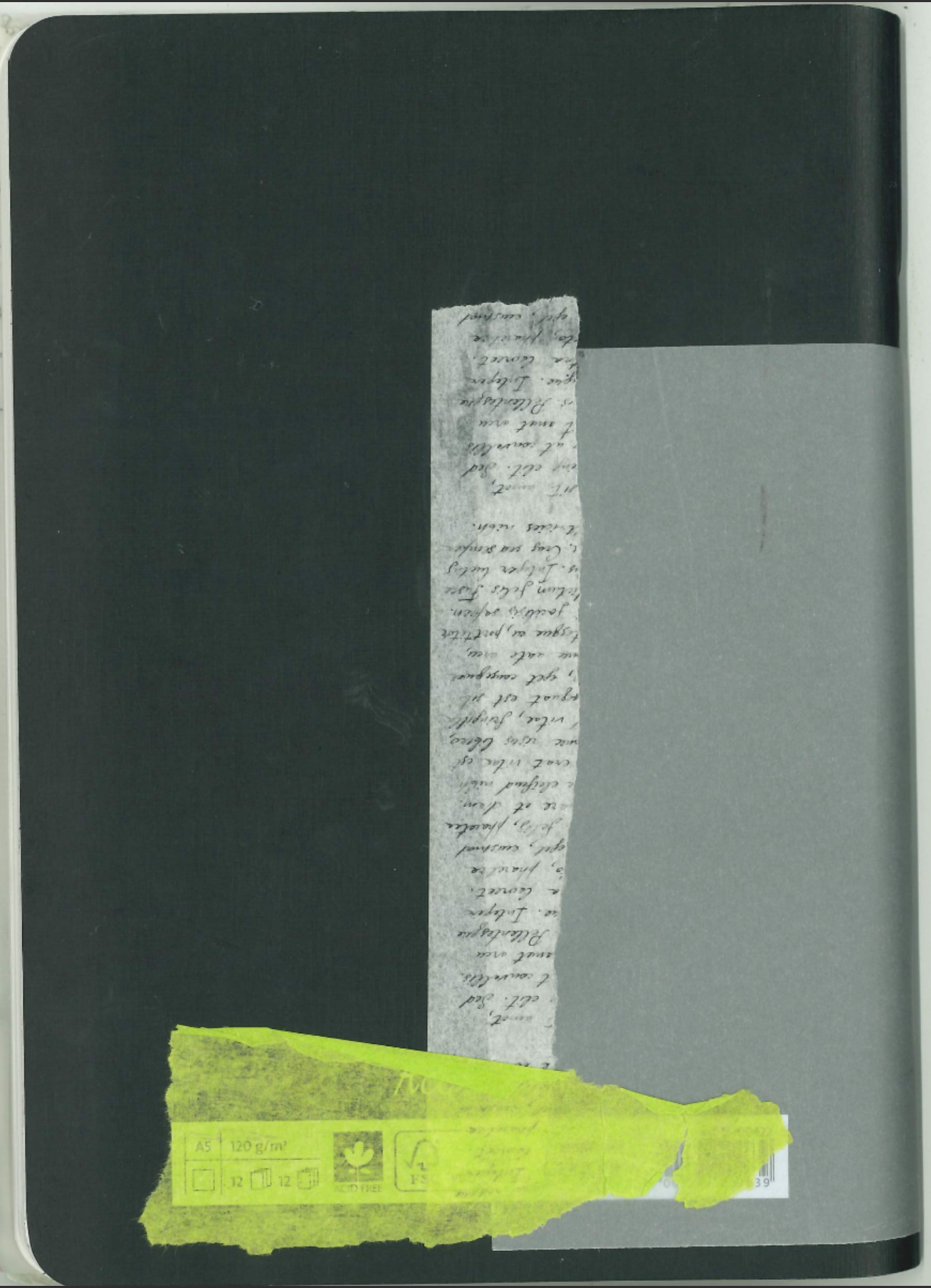
What is the Hex of a Bad Date on a Disabled Body? — Essay
“Now not only do we live apart from our garments and finery, but apart from our bodies. Completely apart. We know nothing about our bodies; there are specialists for this. And when our bodies do speak to us through sickness, we feel surprised, attacked as if by something outside ourselves. We do not feel, we do not control, we do not seek our own health. Our bodies do not belong to us. We live with them, but without them, in spite of them, against them.” - By Xaviere Gauthier, translated by Erica M. Eisinger[1]
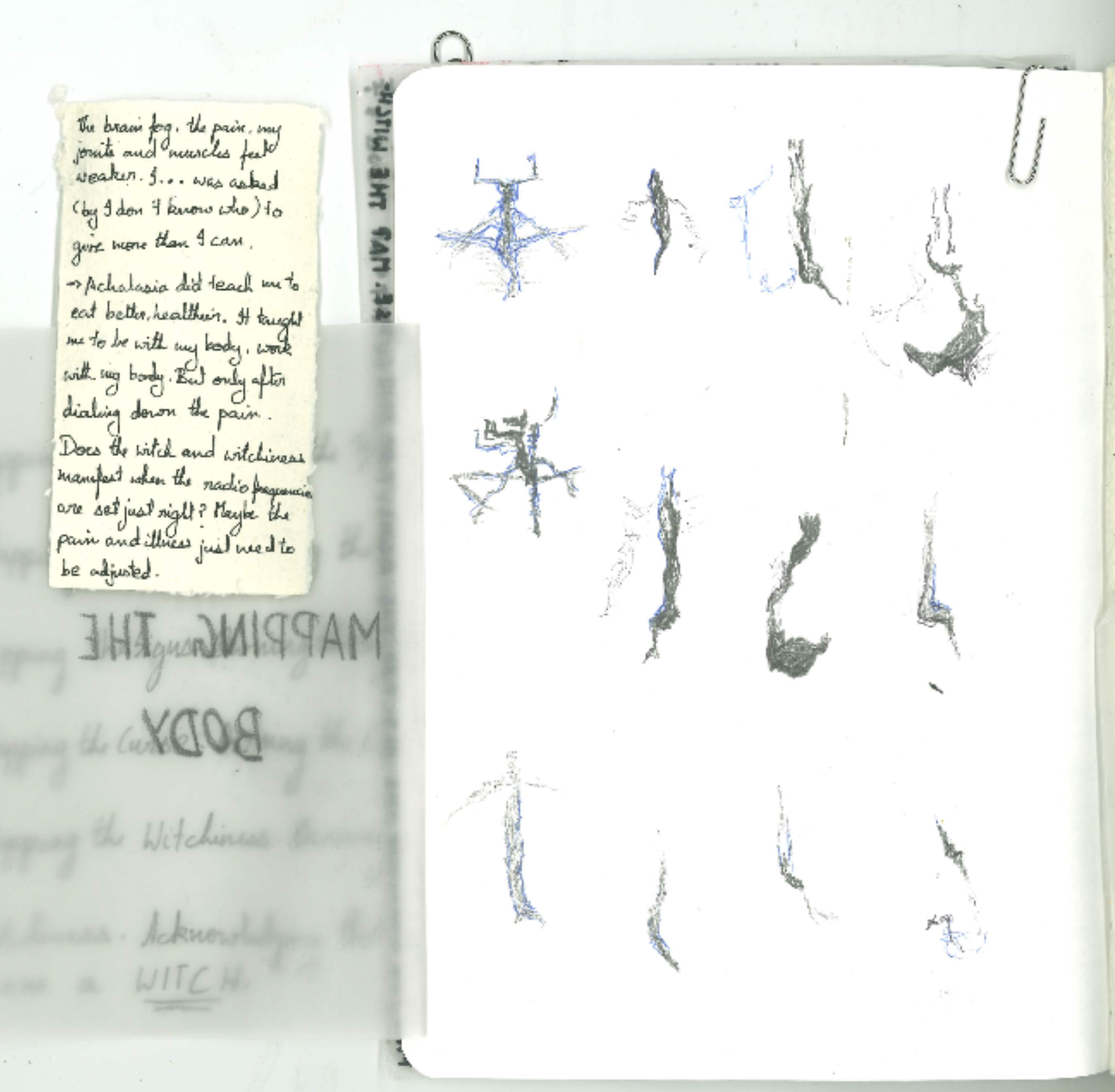
One of my earliest memories is of a man swooshing a soft broom across my body whilst he made peculiar vocalisations, spraying water, and then tying a తవీజ్ (taavīj)—a talisman—around my neck to rid my body of sickness and my mind of anxiety. It was a way to remove దృష్టి (dr̥ṣṭi)—commonly known as the evil eye. Drsti translates to sight from Telugu (the official language of Andra Pradesh, India) to English. The concept of Drsti, as taught to me by the women of my family, is that Drsti is the manifestation of ill thoughts from one person as ill feelings in another; it begins as negative emotions and anxiety and then as ill sensations in the body. As a child who was quite sick her entire childhood and adulthood, there were many rituals performed on me to remove Drsti; a lot of them were by women of my family and women elders of the temple. This led me to associate ill feelings in my body with hexes and curses.
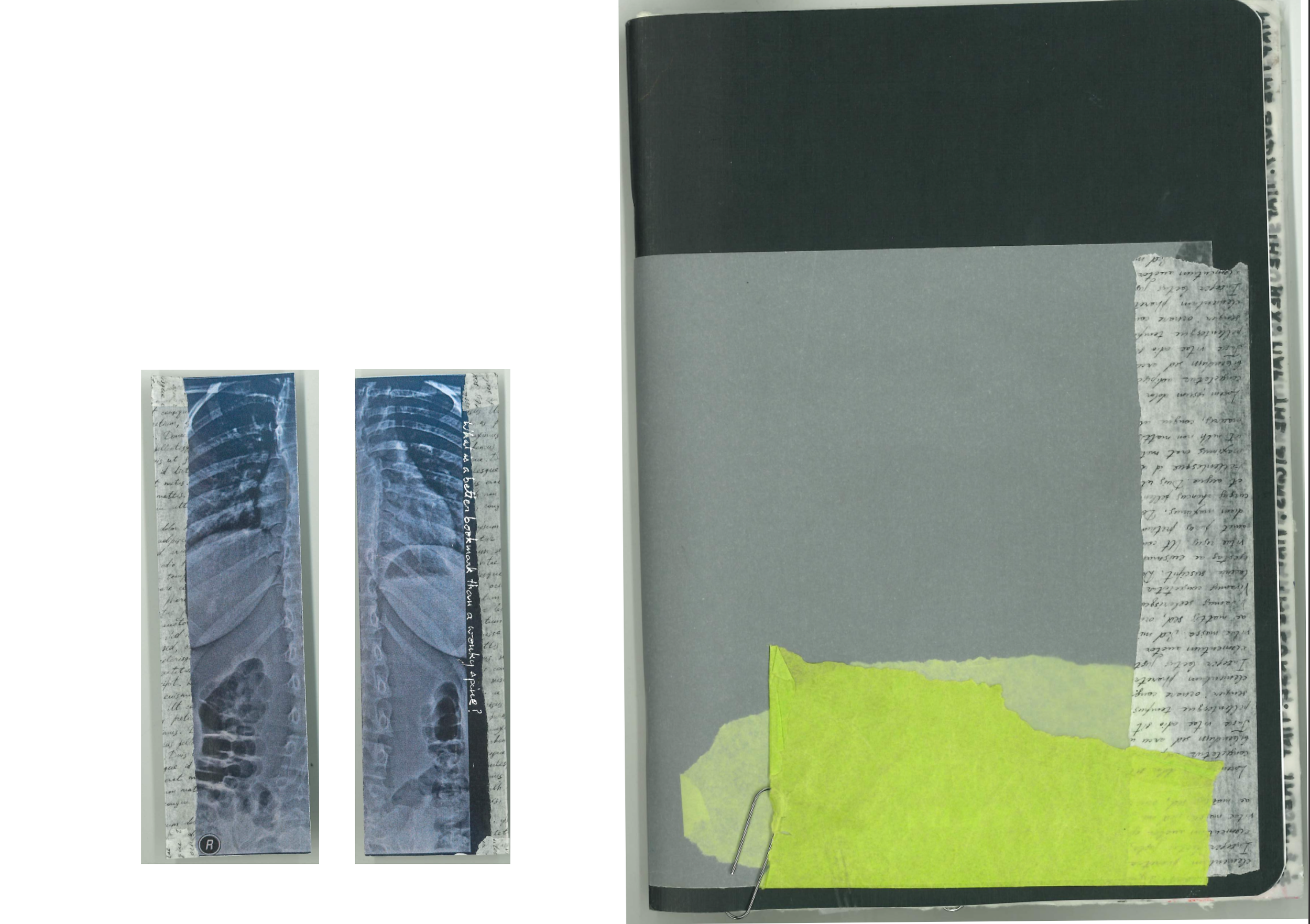
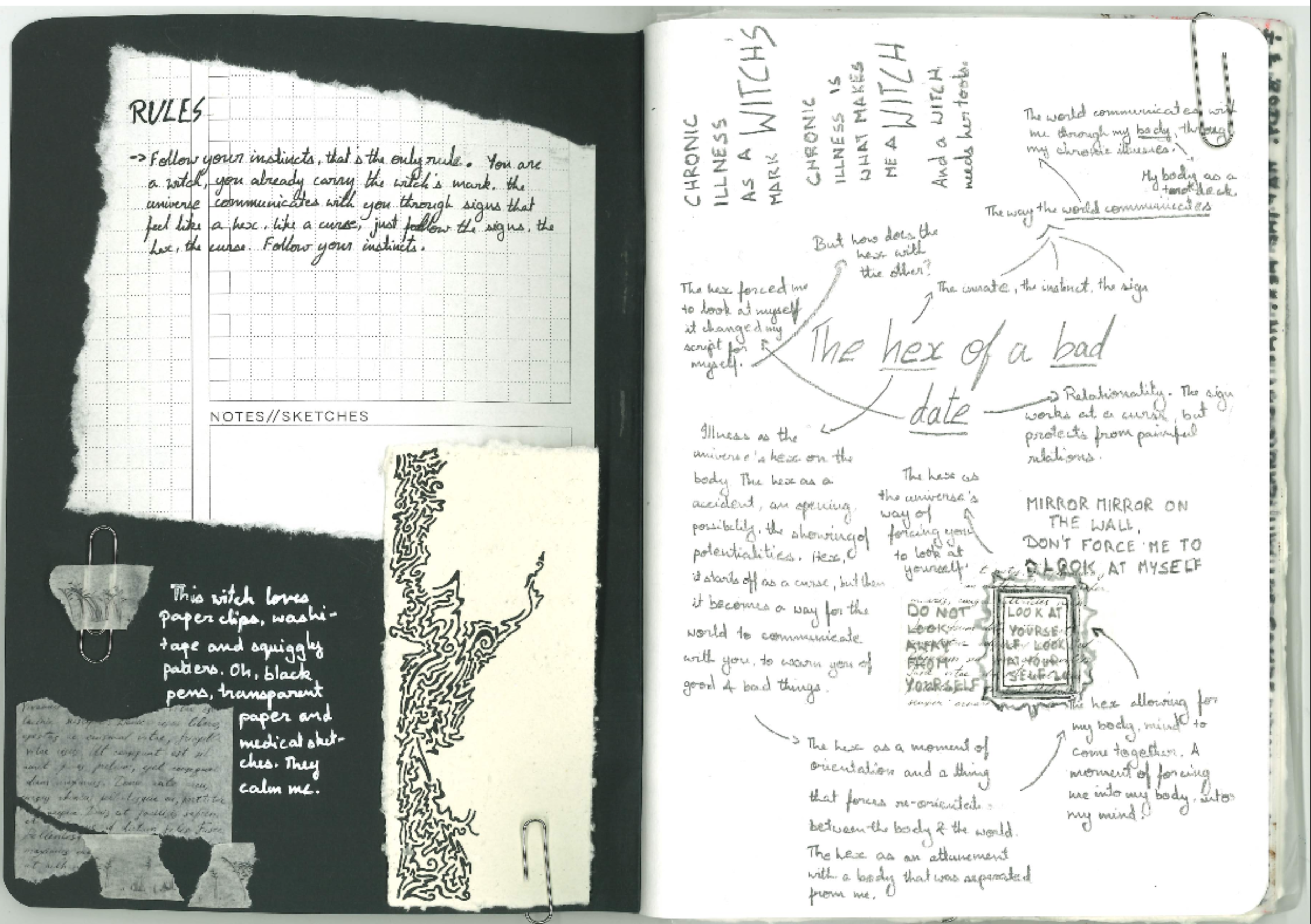
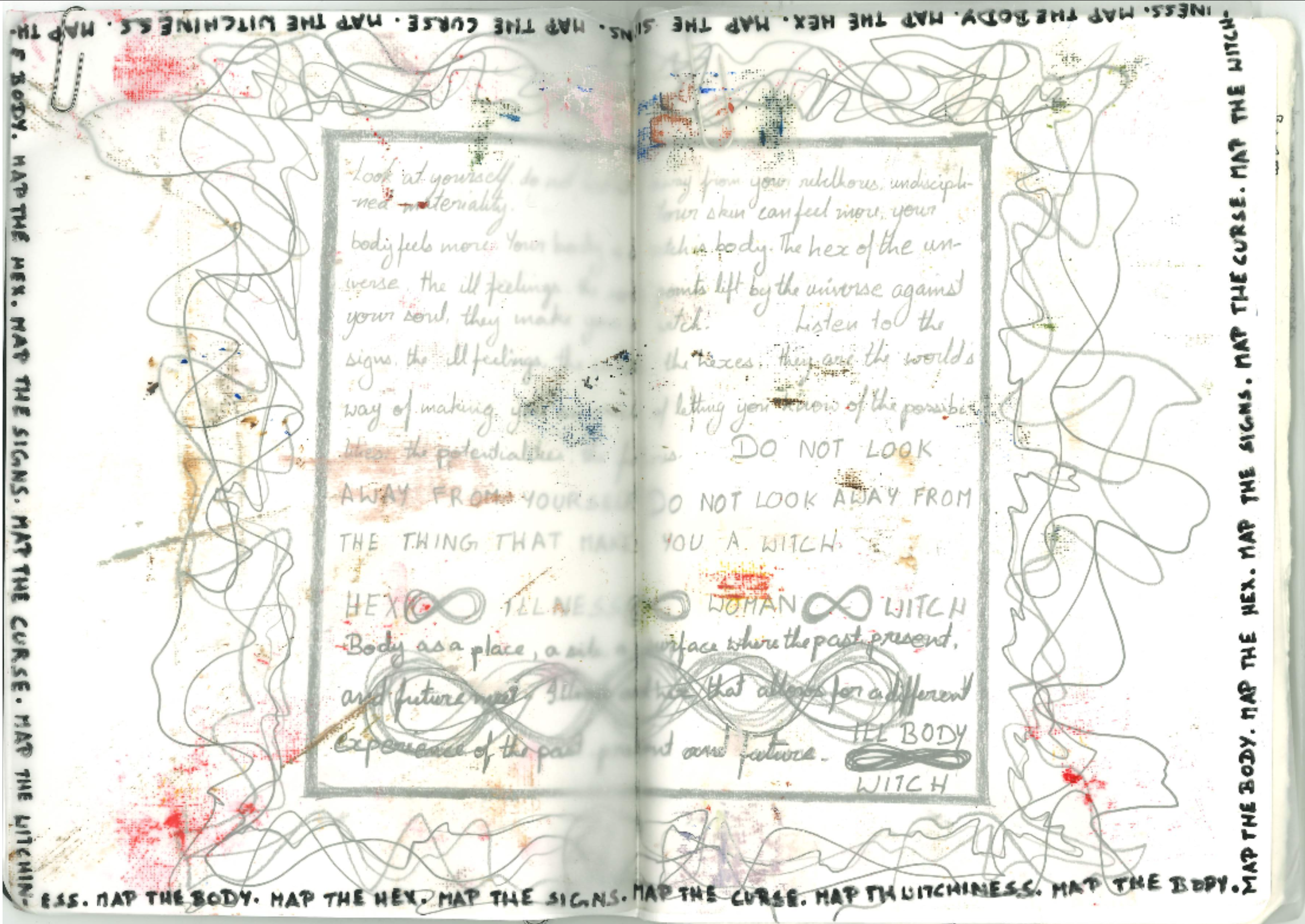
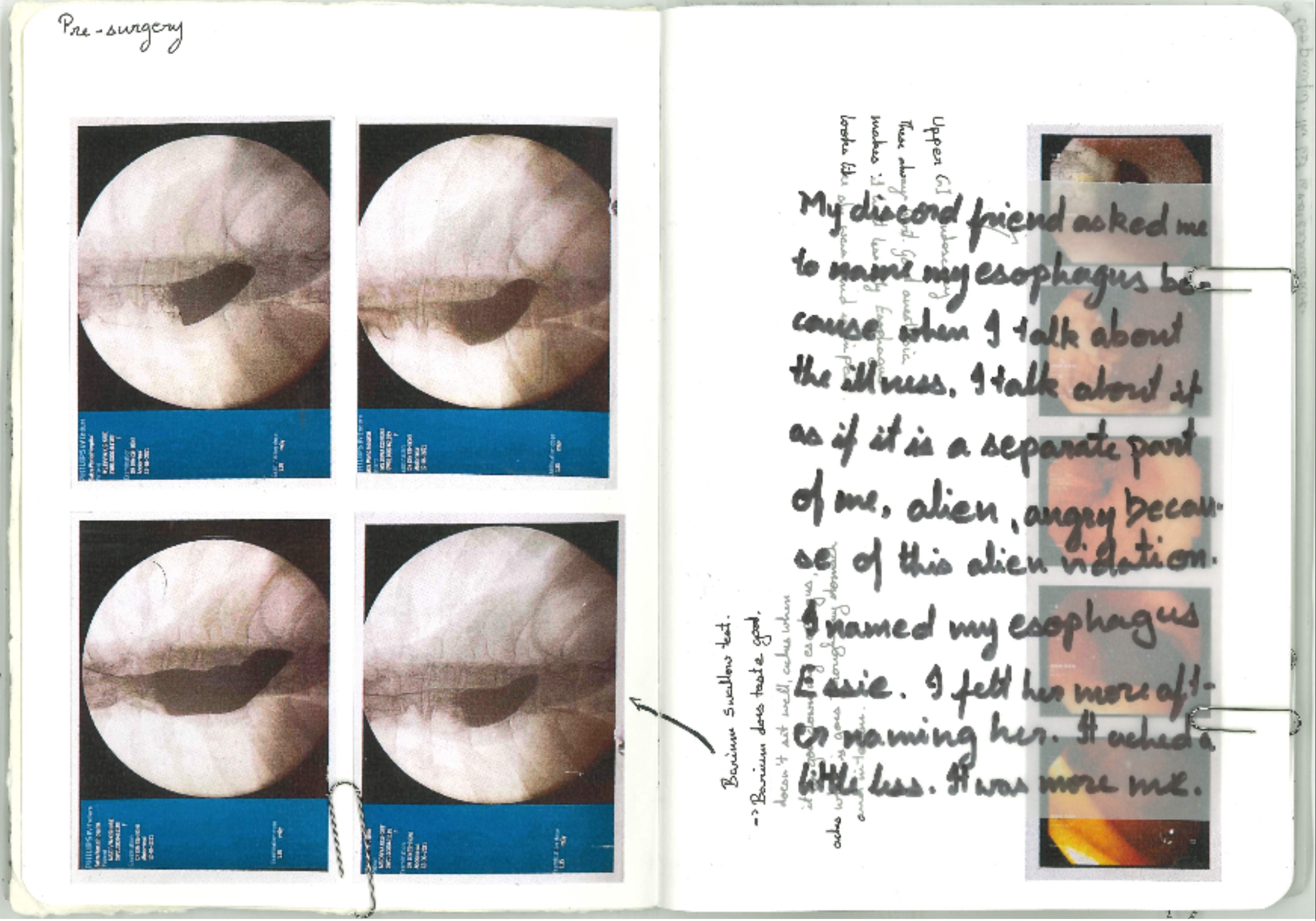
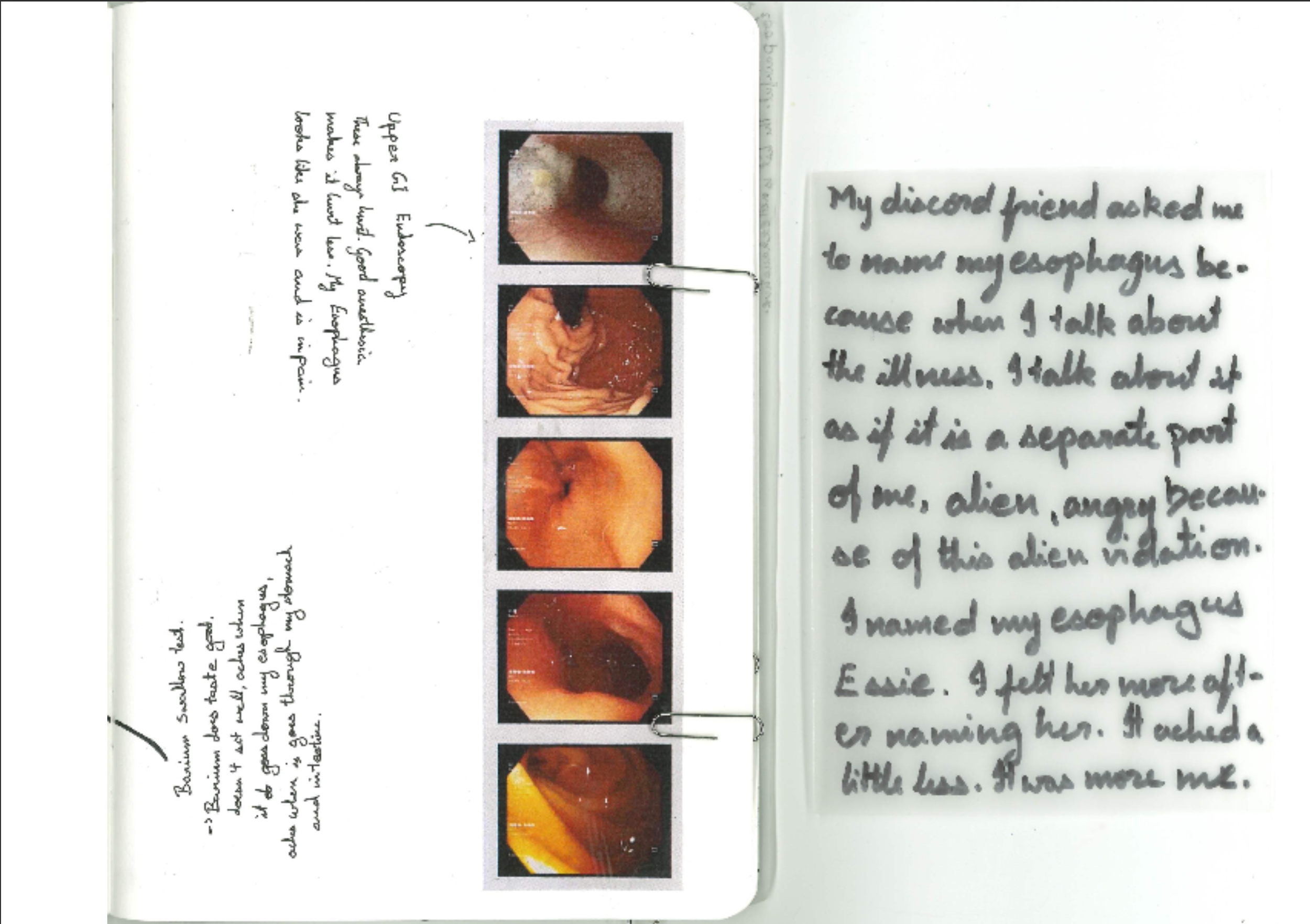
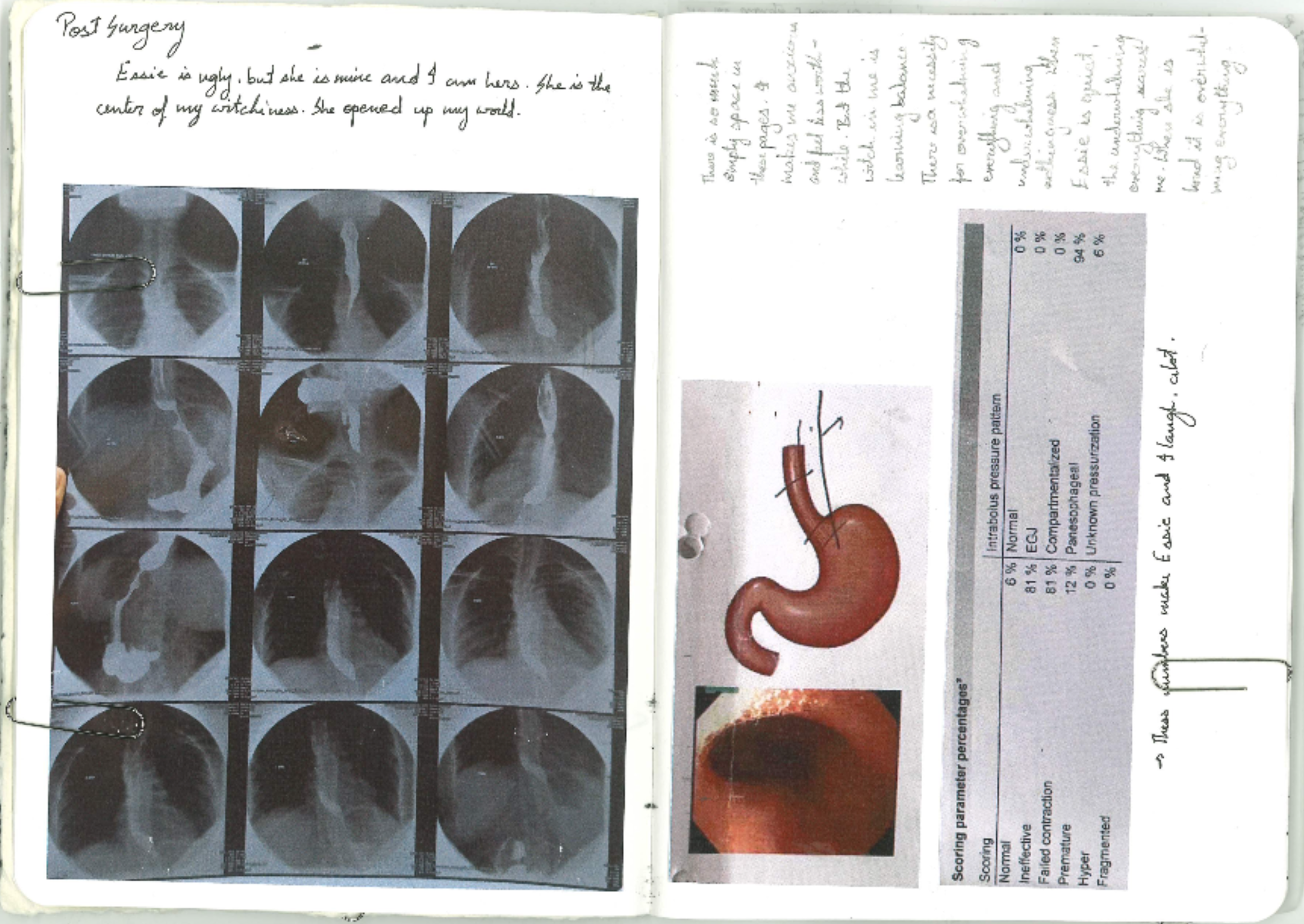
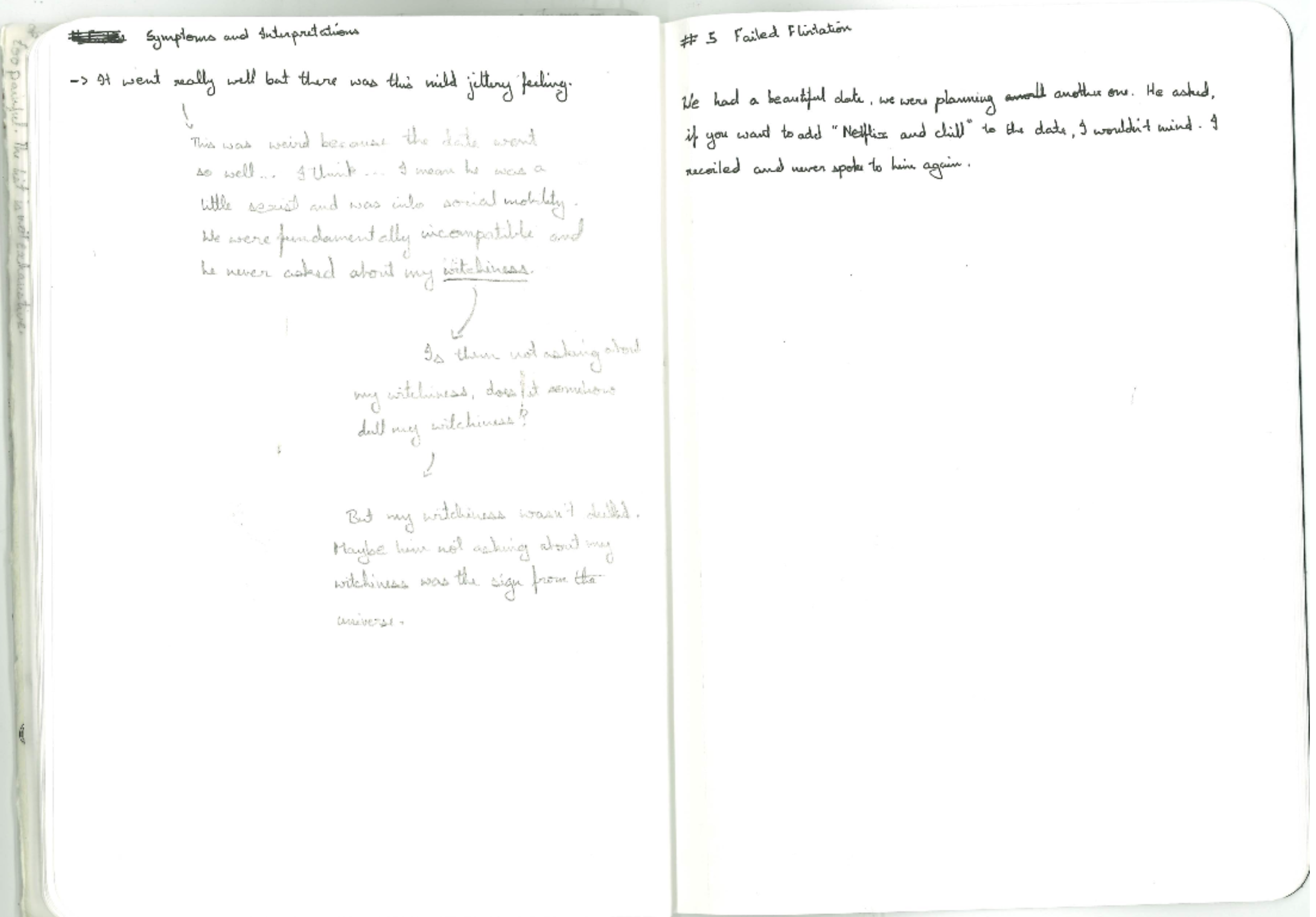
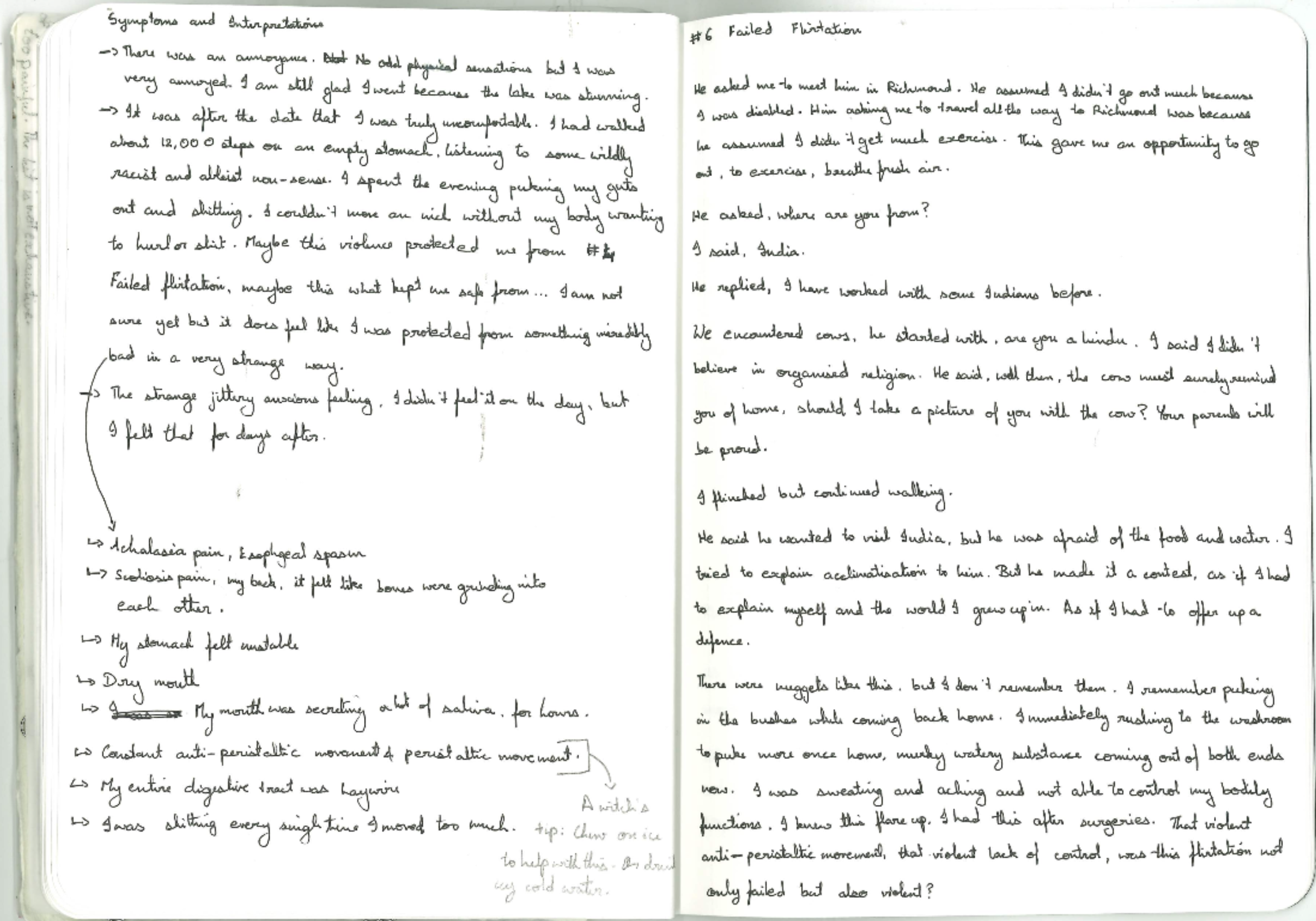
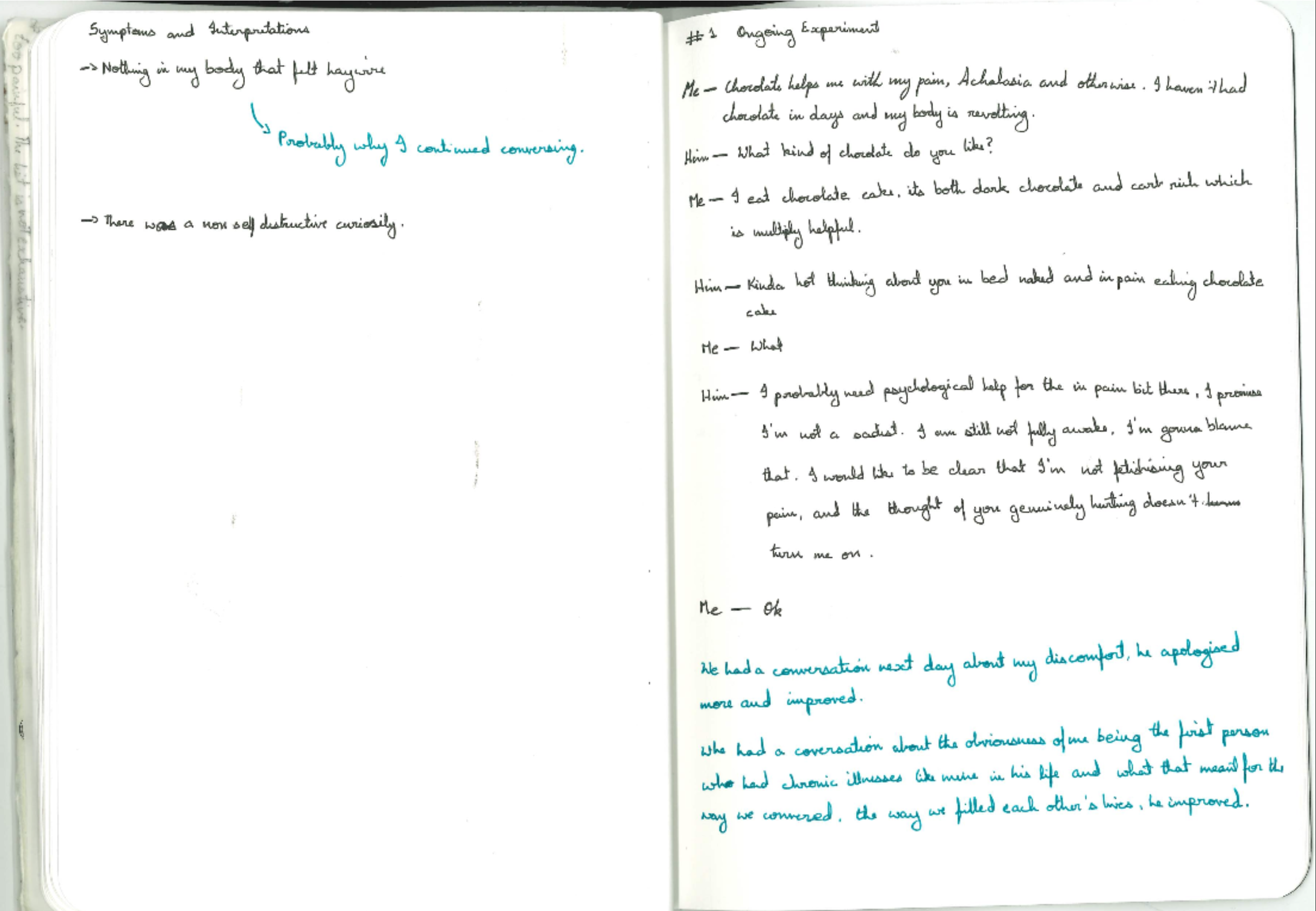
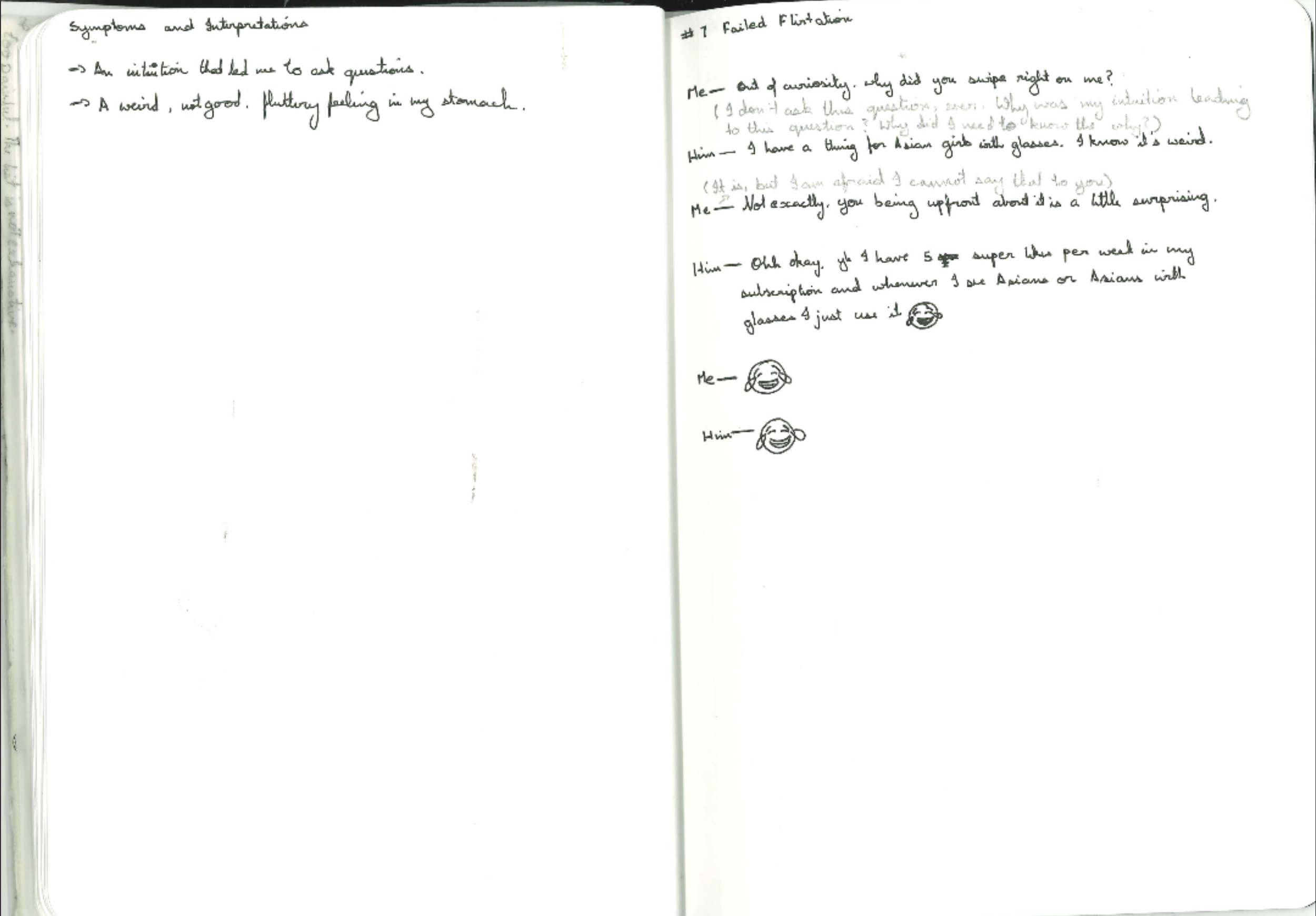
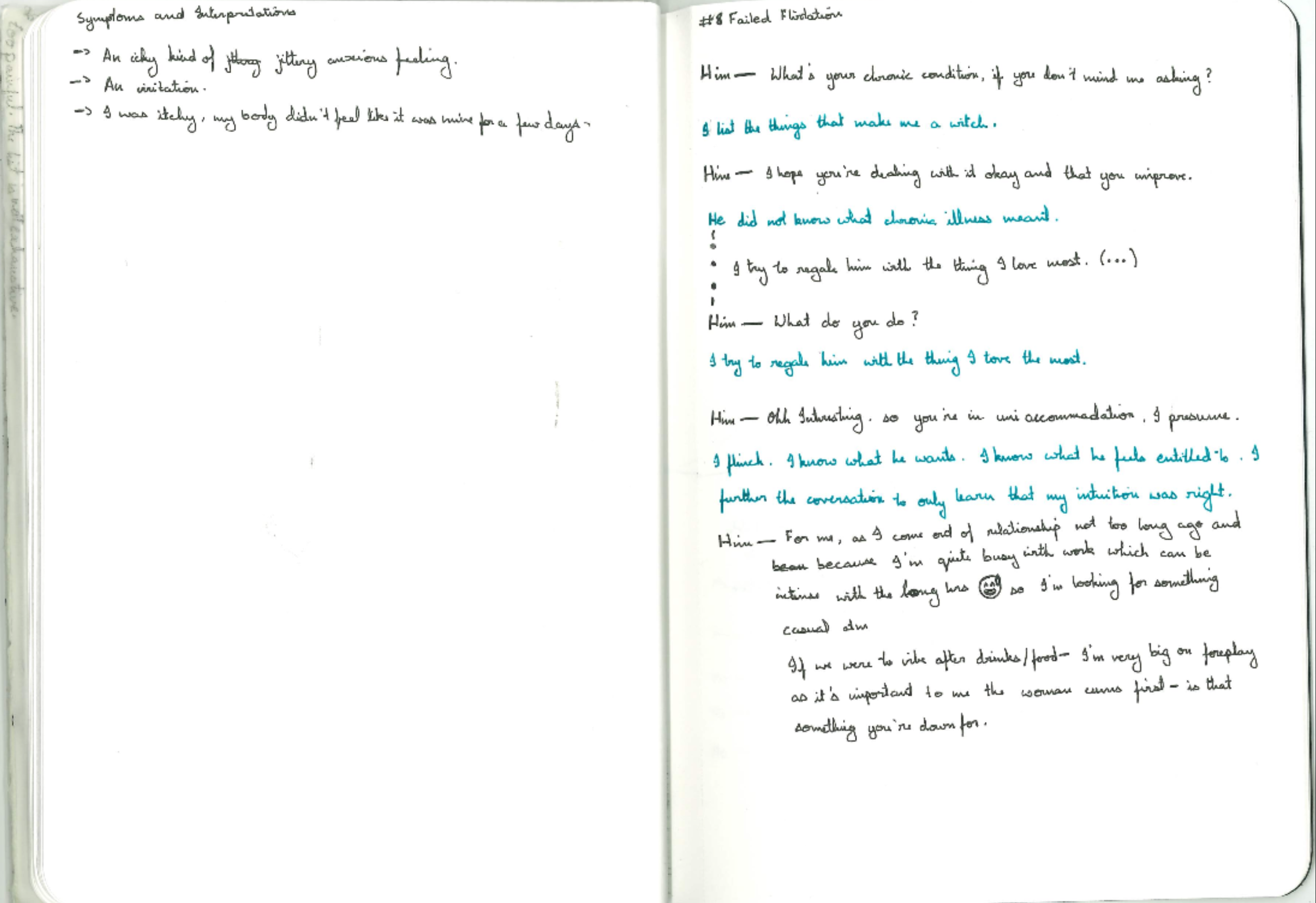
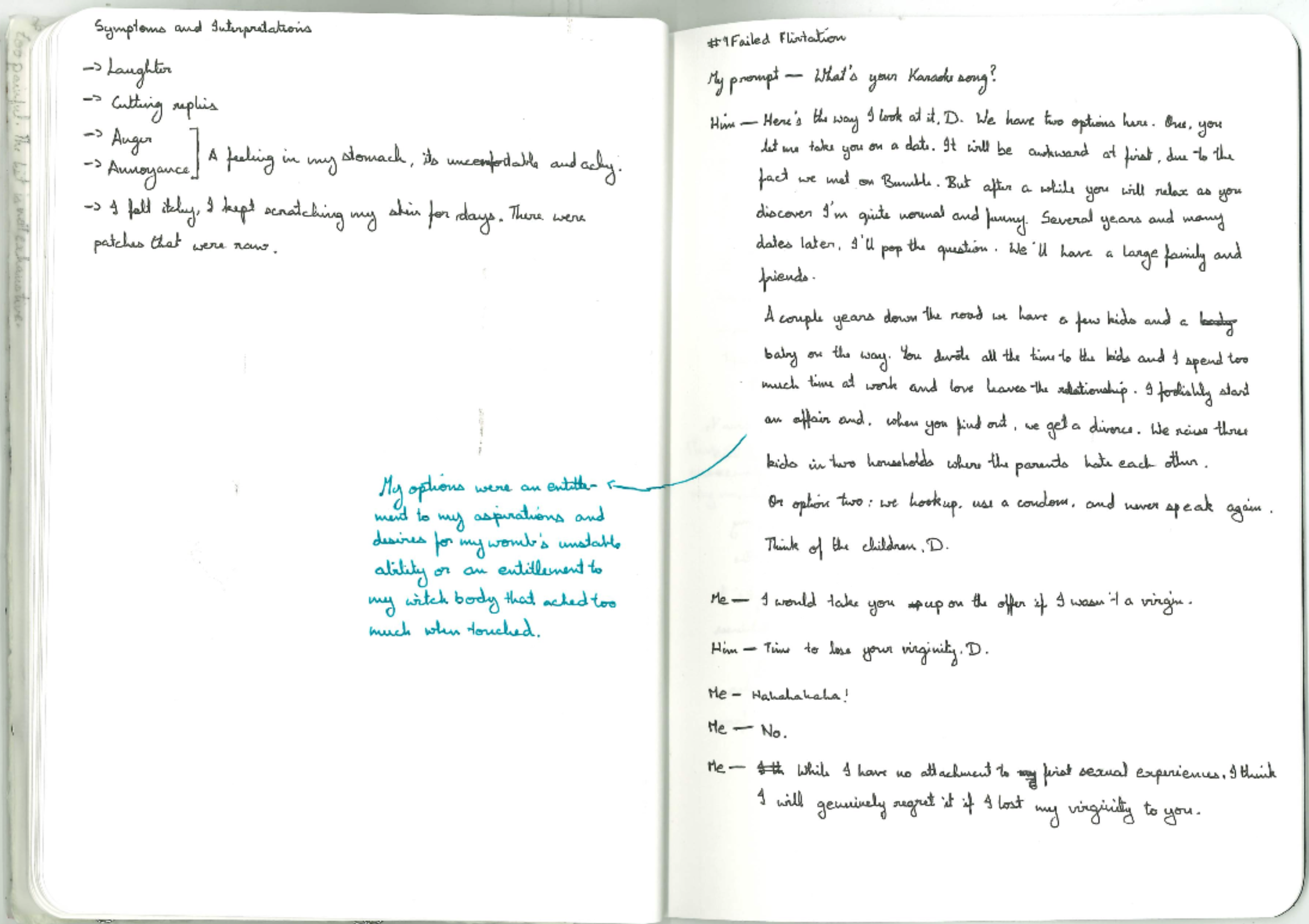
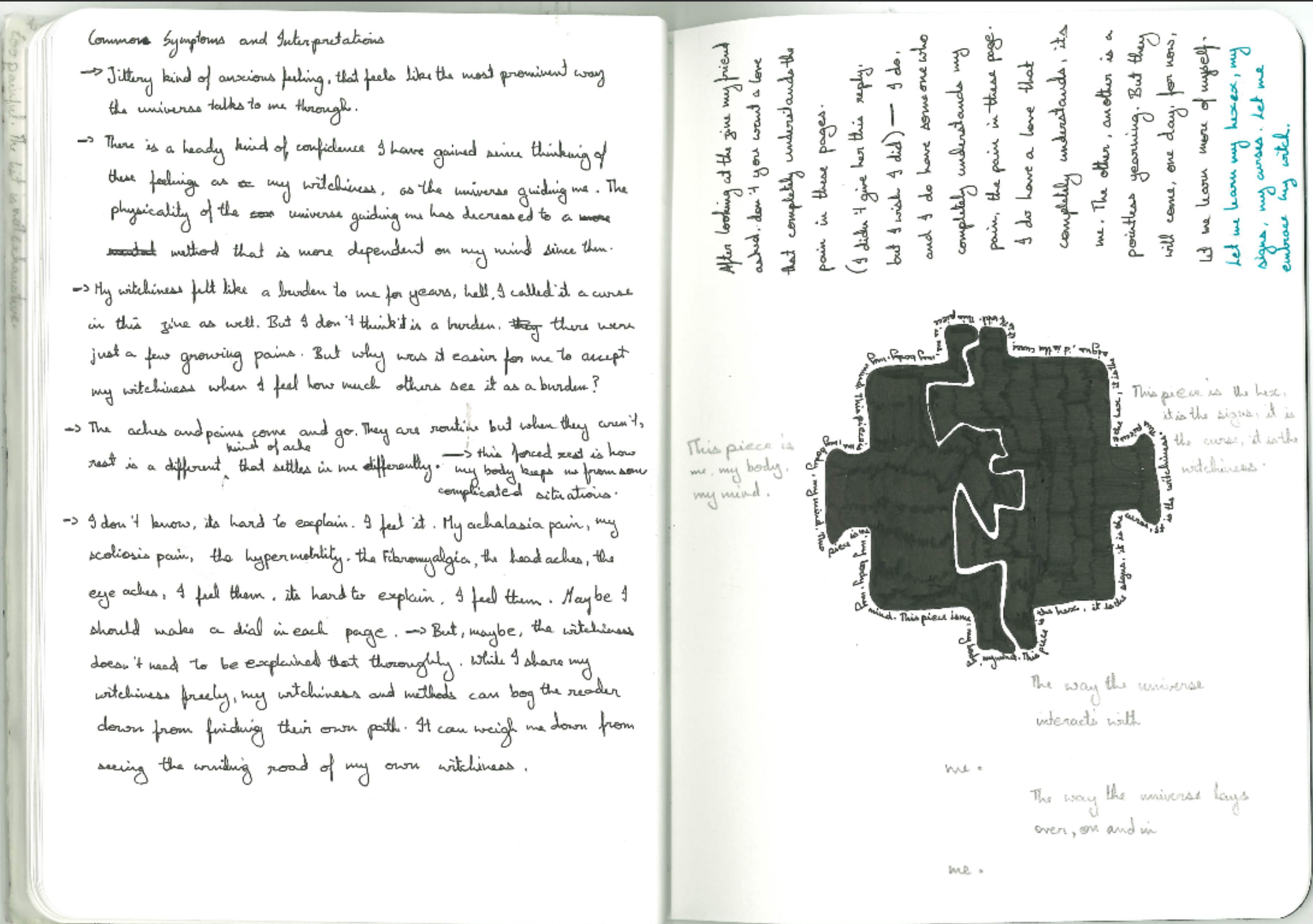
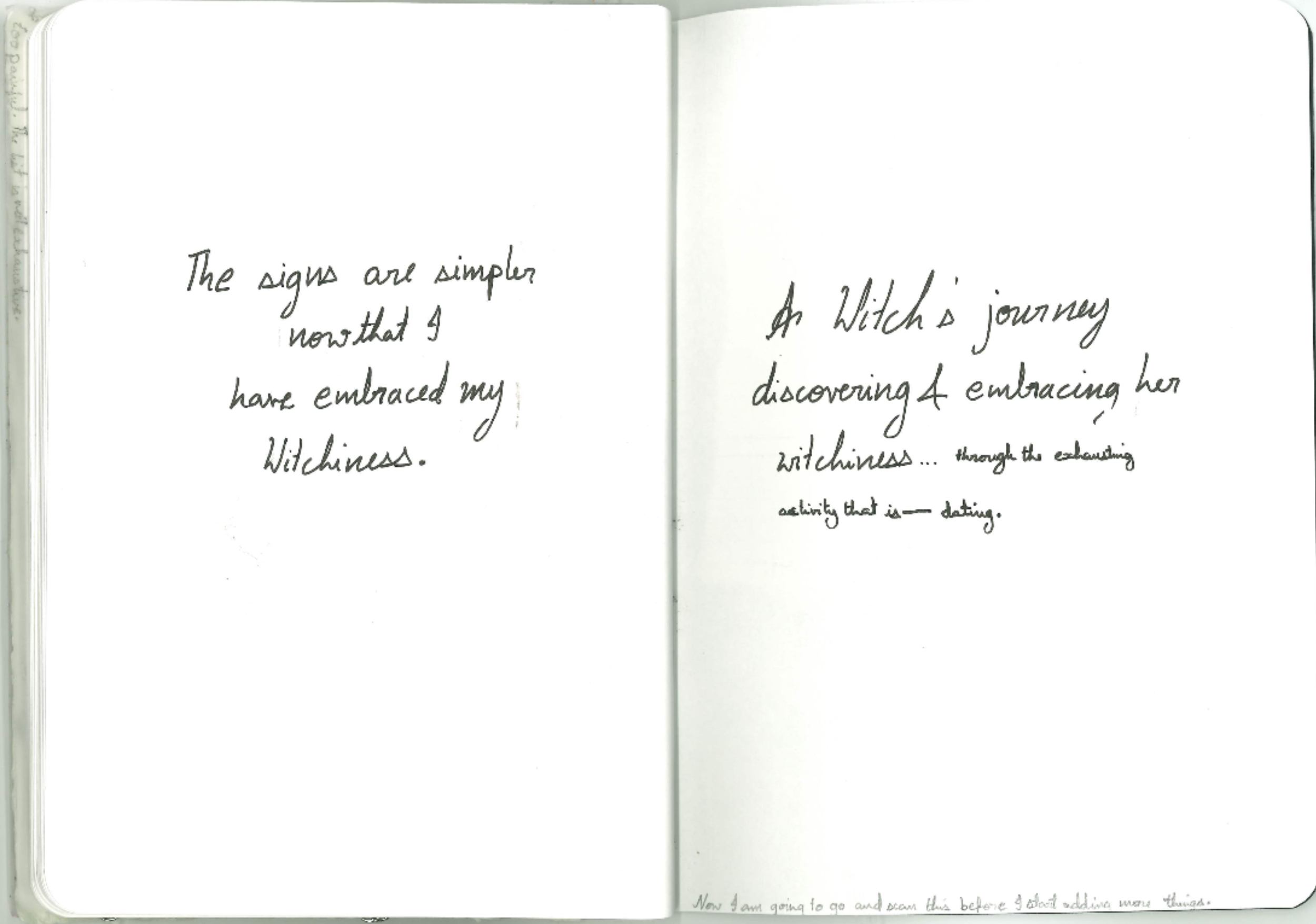
As I grew older and my illnesses grew stronger, I stopped believing in the rituals that were meant to provide relief but continued to believe in the hex. The thing about Drsti is that the person who places the hex or curse is inconsequential; the effect on the body is of paramount importance. With no faith in the ritual that relieves and no person to blame, the illness became the hex, and the pain it caused became a curse. I treated it as such until I learnt that the illness can be a tool, a guide, a method. The sickness can provide me insight into potentialities. The illness that felt and feels like a hex is the thing that makes me a witch. In the first part, this project tries to explain this thought process by mapping the hex, the body, and the feelings before, during, and after fleeting flirtations—‘The Hex of the Bad Date’ Zine. In the second part, the essay, I try to place the explorations in the zine in conversation with Gilles Deleuze’s delibrations on Spinoza—specifically Spinoza’s nutrients/food and poisons,[2] along with Ami Harbin’s explorations on the moral promise of bodily disorientations,[3] Desiree Valentine’s Access Intimacy as a Phenomenological Ethos,[4] and Perry Zurn’s critical phenomenology of walking.[5]
Perry Zurn talks about the worldedness of walking: the when, where and how of walking in the context of racism, ableism and homotransphobia,[6] but I want to discuss it in the context of the witchy body. In ‘A Critical Phenomenology of Walking: Footpaths and Flight Ways,’ he unpacks how we individually experience the simple and daily act of walking and what that opens up in critical theory.[7] Our experience of walking (interacting with the world) opens our eyes to the inherited conditions of the social. This experience of walking is individual. The opening of our eyes is also individual. We all experience specific sore points in the world because we all walk differently; some people are invigorated by cobblestones and sunlight, and some people are overwhelmed by how their ill body aches while walking on cobblestones and how sunlight causes migraines. At this juncture, I would like to look to Deleuze and Spinoza to categorise how people and things interact with us in a manner that decomposes us (poison) or compounds our power (food/nutrients).[8]
According to Deleuze, Spinoza did not believe in Good and Evil but did in good and bad. He defines good as something that adds to our component parts and elevates them, i.e., positively nourishes us, food, nutrients—good encounters. Whereas bad decomposes us, i.e., poisoning and intoxication—bad encounters. The world gets categorised through these understandings of good and bad encounters, or food/nutrients and poisons.[9] However, this thesis is premised on the notion that good and bad are external things that can be chosen. What if one has no choice but to orient to a bad encounter? What if our body—which Spinoza says is a combination of various parts that add up in a dominant relation to form the body—is a site of bad encounters due to chronic illnesses? Deleuze and Spinoza do talk about illness and death, but when they do talk about them, they talk about it as a consequence, as an end-point, not as a starting point. Or they speak of illness as a speeding up to the end-point that is death.[10]
The bad-ness of bad encounters and the good-ness of avoiding bad encounters is charted out. However, the transformative aspect of bad encounters and the worlds they can open up is not explored. If anything, Spinoza and, by extension, Deleuze in Spinoza Practical Philosophy, is creating a manual to live in a way that doesn’t disturb but tries to fit into the present social and physical structures of the world most agreeable to one’s body and mind through the idea of well-thought-out choices.[11] Over here, I look to Zurn for a vital pivot. Zurn talks about inherited social structures that are oppressive and can be felt through the act of walking. But, in this case, the act that differentiates, that makes the oppression visible, is also an act of resistance. It is an idea of becoming aware of the bad encounter and why it is a bad encounter and resisting it by being empowered in the actions of the bad encounter. It recognises the choicelessness of the bad encounter and refuses to let it decompose us.[12]
There is something I would like to inject in between at this stage through Harbin,[13] Valentine[14] and my zine. But first, I would like to start with—the witch was and is always about knowledge. The Witch is about listening, feeling and embodying the knowledge that comes from the choicelessness of the bad encounter and does more than resist its intoxication. The Witch is about the body, the mind and the universe and how those three flow into and through each other. It is about how a choiceless bad encounter is a witch’s tool and how illness can become the universe’s way of communicating with the witch. In my case, my choiceless bad encounter is chronic illness(es), and I have come to recognise it as the universe’s way of communicating with me through bodily sensations. What happens between this choiceless bad encounter and the refusal to let it decompose me? It is the knowledge of bodily disorientations and access to a different form of intimacy with the people and worlds around me.
Harbin says that philosophy has often ignored or neglected to consider the moral promise of bodily disorientations.[15] She accesses the concept of disorientation through Charles Taylor’s definition[16] of disorientation. But Harbin considers this form of total physical disorientation, “where we lose track of all perceptual connection and consistency,” rare. She theorises that what we end up feeling is partial felt disorientations.[17] I disagree. Some chronic illnesses can make us lose track of all perceptual connections and consistency. It can be a singular moment or moments spread across a lifetime of navigating illness(es) and the structures around ill bodies. It forces us to remake the world for ourselves. It forces us to remake the world for the people around us. It forces us to remake the world with others, alike and unlike. This is where access intimacy comes in.
Valentine says Mia Mingus’s Access Intimacy is informed by and responds to our ontological intimacy as defined by Kym Maclaren.[18] Ontological intimacy is a form of transgression; it is us transgressing into the formation of someone else’s being and them transgressing back into ours. It is ontological because “it occurs simply by virtue of the kinds of beings we are—intersubjective beings,” and intimacy because “the other touches and shapes me not just from the outside, but within my most ‘private,’ personal experience.”[19] It is a form of co-forming each other. Access Intimacy is about the ease in this intersubjectivity of our existence. An ease that is not easily found because of our uniquely different footpaths and flightways. The Witch is about collecting the how of intersubjectivity and seeing if the poison on the inside can become the cure of the outside. I tried to experiment with this in my zine.
I have found that the poison on the inside can become the cure on the outside because the poison doesn’t just decompose us; it decomposes us onto another path. The decomposition is not speeding up our path to death; it is making our lives richer. The hex of the bad date was never about the bad date; it was about my body protecting me from friction-ful intersubjectivities that I would have clung to in the belief that a friction-less intersubjectivity could be developed. The ill feelings and sensations were perfectly timed to motivate refusals, to choose my body and mind over the poison and cure of another. Sometimes, the path cannot be resisted; sometimes, the path just needs to become another path. The witch is the knowledge that allows for all of this, and the hex is the tool that allows the witch to become.
Footnotes
[1] Xaviere Gaultier, “Why Witches?” In New French Feminisms: An Anthology, translated by E. M. Esinger, edited by E. Marks and I. de Courtivron, (Hemel Hempstead: Harvester Wheatsheaf, 1981), 200.
[2] Gilles Deleuze, Spinoza: Practical philosophy, (San Francisco: City Lights Books, 1988), 2 - 44.
[3] Ami Harbin, “Bodily Disorientation and Moral Change,” Hypatia 27, no. 2 (2012): 261–280, http://www.jstor.org/stable/23254903.
[4] Desiree Valentine, “Shifting the Weight of Inaccessibility: Access Intimacy as a Critical Phenomenological Ethos,” Puncta 3, no. 2 (July 9, 2020): 76–94, https://doi.org/10.5399/pjcp.v3i2.9.
[5] Perry Zurn, “A Critical Phenomenology of Walking: Footpaths and Flightways,” Puncta 4, no. 1 (February 9, 2021): 1–18, https://doi.org/https://doi.org/10.5399/PJCP.v4i1.1.
[6] Zurn, “A Critical Phenomenology of Walking,” 1–18.
[7] Zurn, “A Critical Phenomenology of Walking,” 1-5.
[8] Deleuze, Spinoza, 2 - 44.
[9] Deleuze, Spinoza, 2 - 44.
[10] Deleuze, Spinoza, 32 - 35.
[11] Deleuze, Spinoza, 2 - 44.
[12] Zurn, “A Critical Phenomenology of Walking,” 11-14.
[13] Harbin, “Bodily Disorientation and Moral Change,” 261–280.
[14] Valentine, “Shifting the Weight of Inaccessibility,” 76–94.
[15] Harbin, “Bodily Disorientation and Moral Change,” 261–280.
[16] “In those rare moments when we lose orientation, we don't know where we are; and we don’t know where or what things are either; we lose the thread of the world, and our perceptual field is no longer our access to the world, but rather the confused debris into which our normal grasp on things crumbles.” Harbin quotes Charles Tayor in: Harbin, “Bodily Disorientation and Moral Change,” 262.
[17] Harbin, “Bodily Disorientation and Moral Change,” 261-263.
[18] Valentine, “Shifting the Weight of Inaccessibility,” 85-89.
[19] Valentine, “Shifting the Weight of Inaccessibility,” 87.
Bibliography
Deleuze, Gilles. Spinoza: Practical philosophy. San Francisco: City Lights Books, 1988.
Gaultier, Xaviere. “Why Witches?” In New French Feminisms: An Anthology, translated by E. M. Esinger, edited by E. Marks and I. de Courtivron, 199-203. Hemel Hempstead: Harvester Wheatsheaf, 1981.
Harbin, Ami. “Bodily Disorientation and Moral Change.” Hypatia 27, no. 2 (2012): 261–80. http://www.jstor.org/stable/23254903.
Valentine, Desiree. “Shifting the Weight of Inaccessibility: Access Intimacy as a Critical Phenomenological Ethos.” Puncta 3, no. 2 (July 9, 2020): 76–94. https://doi.org/10.5399/pjcp.v3i2.9.
Zurn, Perry. “A Critical Phenomenology of Walking: Footpaths and Flightways.” Puncta 4, no. 1 (February 9, 2021): 1–18. https://doi.org/https://doi.org/10.5399/PJCP.v4i1.1.
Grades and Feedback
Grade: 78
Graded on: 10th February, 2025
Graded by: Simon O’Sullivan / Virginia Lazaro
Creative Project
Your project presents a clear and well-executed exploration of a journey of self-reaffirmation and exploration. The medium you have used of a zine/diary fits this type of practice really well, making the journey of reflection and reconnection with your body quite relatable and present. While deeply personal, it also invites engagement and resonance with others and thanks to that, I would say that the hex is also the tool that allows us (those who read and see your project) to become.
Essay
Your text is both very interesting and well written. The exploration is compelling, especially when intertwined with your practice. If you choose to continue working with this material or expanding on these ideas, you might find Deleuze and Guattari's concept of becoming, primarily developed in A Thousand Plateaus, particularly relevant. They enunciated a series of becomings (becoming animal, becoming woman etc.), and a notion that centers on transformation and the production of new subjectivities. This could offer you a good framework for further developing your theorization of the ill body not as an endpoint, but as a site of possibility. I would love to read more on your becoming witch!
My Reflections
This is a project I had tremendous fun with. That is quite literally all I have to say about this project. As a side note, this is the first project where I wrote a proper conclusion, which I am incredibly proud of.