Project Title: Translations/Interpretations
Question: Does the formation of the subaltern counter public (disabled/chronically ill/mentally ill community) in retaliation to the inability in joining the ableist public sphere create a bigger divide in the assimilation of the both?
This is the Project proposal/Essay I submitted for the module ‘Curating the Public Sphere’ in the academic year 2022-2023. Grades, feedback, and my reflections are at the end.
“Rama, why do you answer in Wolof when I speak to you in French?”
-Film Xala [1]
This proposal stems from the desire to bridge the communication gap (translations error) occurring between the public sphere and the subaltern counter public. In this context, the disabled people subaltern counter public. To delve into the friction when it comes to communication, we must first define disability: who it is we are addressing when we say “disabled people.” And what we mean when we say “the ableist public sphere.” Terminology that is fundamental to the project.
“For us, disability is the quintessential post-modern concept, because it is so complex, so variable, so contingent, so situated. It sits at the intersection of biology and society and of agency and structure. Disability cannot be reduced to a singular identity: it is a multiplicity, a plurality.”[2] A quote from ‘The Social model of Disability: an outdated ideology?’ authored by Tom Shakespeare and Nicholas Watson. In this paper they talk about the social model of disability, the medical/individual model of disability and the need for something that is not quite as oppositional to each other due to how very complex disability is.[3]
The British social model of disability states that it is the structures of society and its institutions that is disabling the person. The medical/individual model supposes that it is the human that needs to be “fixed” to fit into society and its institutions. Here is where the distinction between disability and impairment come in. Disability is social: disabled people. Impairment is physical: people with disabilities. While the Social model of disability is extremely empowering, it is reckless in its scope. It ignores intersectionality, identity politics (assumes disability is the whole sum of their identity and would like it to be so), the very real limitations that medical conditions place on bodies, and,- most of all, when taken to its extreme, -demonises any and all medical intervention and rehabilitation.[4]
The Social Model of disability presupposes that there is nothing wrong with the body, only the external is in need of fixing. However, can a completely inclusive environment be created based in this ideology?
Shakespeare and Watson call it utopian, the idea of an environment that is accessible for all.[5] How ever much society is “fixed,” disabilities (referring to impairment in this context) can be intersectional in their needs. There is no universal, a standard for all. Even when we assume that all are disabled.
More so, if we go along with the British social model of disability, every single person is disabled. Creating a problematic in clear identification of which subaltern people have access to this sphere. More than access, it is a complexity for if the “correct” people don’t get a voice, then how do we address the issue at all?
While the social model of disability was beneficial for the 1970s political disability movement, maybe it is time to look at it again and consider who/what we mean when we say disabled.
In this proposal, when disability is referred, it is impairment that is meant. Through this creative project, there is a merging of the social model of disability and the medical/individual model of disability. Something altogether different where the disabled person, and the way they see their body and/or mind, is the focal point. A focus on embodiment, in the self and the other that is explored. While trying to articulate the relationship the self has with the other within the structures of society.
Now, moving to the terminology, “the ableist public sphere.”
“Ableism is deeply seeded at the level of epistemological systems of life, personhood, power and liveability. Ableism is not just a matter of ignorance or negative attitudes towards disabled people; it is a trajectory of perfection, a deep way of thinking about bodied, wholeness, permeability and how certain clusters of people are en-abled via valued entitlements. Bluntly ableism functions to ‘inaugrat[e] the norm’ (Campbell 2009, 5).”[6] A quote from Fiona Kumari Campbell in ‘Precision ableism: a studies in ableism approach to developing histories of disability and abledment,’ where she talks about the making of the able body (abledment). Campbell begins with talking about “the ghost of comparison,” where disability is spoken in relation to ability, in wider research. Even if it is not the intention. There is a divide that is created with public spheres because of this de facto binary manner of looking at the world.[7]
Roots of the able body myth is seen throughout history, made more potent during the colonial era. During the colonial era, the myth was made in opposition to the opressors. A narrative creating the “perfect worker” under the subjugation of the oppressor (coloniser- historically speaking, capitalist markets - speaking in present terms). A standard for a human was created to fit the workings of the world; creating the privileged and the opposite. This standard was (and continues to be) institutionalised through processes such as nation, policy, law making, research, so on and so forth. A easy way to recognise this standard is through seeing who was given access to the public sphere, historically. The divisions of the private and the public where the private was not worthy enough for the public.
A few examples would be the Habermasian public sphere- the coffee house -where membership is based on ownership of private property, divisions between private and public, and who is considered to be human.[8] A complex intersection of wealth, race, sex, gender and ability. A necessity for a certain tick boxing of everything in all categories. The Coffee House, a space where citizens come together to deliberate about common affairs. But the very act of defining who gets membership into this arena allows for common affairs to be limited in perspective as well. The act of the division in between private and public further makes rigid what cannot be discussed in public, I.e. within the confines of the coffee house.
Hannah Ardent’s definition of the political, which is, any action performed in public. There is a reliance on the private in this instance, something that needs to be invisible. Or, something that cannot help but be invisible. In both instances there is someone who is privileged when it comes to accessing the public sphere.[9]
The very nature of this standard setting is ableist. Thus, this proposal refers to this very specific set of standards to enter it, to speak, be heard in the wider public sphere when it mentions “the ableist public sphere.” While keeping in mind that the contours of what would be considered ableist is subject to specific environments.
When the contours of the public sphere is established, counter publics become an inevitable phenomenon. A necessity even. For participation parity is something that cannot be achieved in full. Both in stratified and egalitarian societies according to Nancy Fraser’s ‘Rethinking the Public Sphere: A Contribution to the Critique of Actually Existing Democracy,’ in the context of end stage capitalism. If anything Fraser argues for the presence of a multiplicity of publics.[10]
Fraser explores, in detail, the necessity of publics and counter publics. However, she does not elaborate on how they interact with each other. The paper is more focused on barriers in the ability to join the public sphere. Wether they might be physical or material.
The theory that is proposed and underpins the creative project is based in the idea that these fissures that stem from lived experience allows for unique languages (metaphorically speaking) to be developed amongst each microcosm. Languages that aren’t entirely fathomable by the macrocosm due to its very (assumed) nature of being “niche.” Here is where the act of translation, on the part of the various subaltern counter publics, begins. Something that is noticed in Houstan A Baker Jr’s ‘Critical Memory and the Black Public Sphere’ in the context of Black America. Very specifically, the role Martin Luther King Jr played.
In this paper, there is a sense that Martin Luther King Jr was heard for he was able to articulate in a way that the public sphere could understand.[11] Most of all, the very fact that MLK Jr was allowed space while his counterparts engaged in the same civil rights movements weren’t given the equivalent platform due to the lack of vocal charisma is a form of ableism in itself.
Although, there is a bigger issue that is in need of addressing. Of the public sphere talking for the counter public even if they do not understand and/or have lived experience of the counter public. This is noticed in Richard Sandell’s paper, ‘Beggars, freaks and heroes? Museum collections and the hidden history of disability,’ where he quotes David Hevey, “In the history of disability representations, we find a history of representation that was not done by us but done to us.”[12] There is an implication that the very people who need the representing are not the people who are setting the boundaries of how they are to be represented in the dominant narrative.
As you go further down the paper, Sandell delves into how these dominant narratives are embedded into all of our current thought processes and practices. Which is made clear by what the curators in the museums think about accessibility: disabled people as customers/consumers and not active participants by being represented in art/archive collections. What they associate to disability in their collection. How receptive they are to changing their own mindsets about the role and responsibilities of museums in the shaping of the dominant narrative around disability through the specific representation, or lack thereof of it.[13]
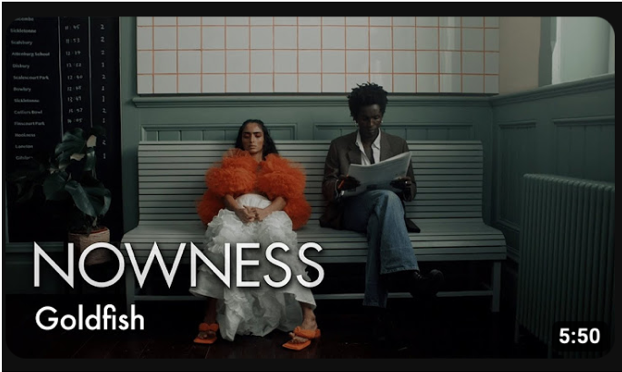
Figure 1. Edmonds, Charlotte (dir). Goldfish. 2022.
The act of translation is a form of convincing the public sphere that the subaltern counter public deserves to be heard when it comes to processes of nation, policy, law making. A way of saying that they want to set the contours of the way they want to be represented. Which is seen in the first artist reference Goldfish, directed by Charlotte Edmonds. This short film plays on the concept of “the attention span of a goldfish,” exploring dance as a physical representation of sensory overload.[14]
There is a translation attempt over here. The physical representation of visual, sensory and hearing overload is a process of making the invisible visible. Hoping for the publics who do not experience it to at least... see it. By showing it, making it translatable, maybe they can understand, empathise, have a better vocabulary for these sensations.
Although, there is another concern which is “like people, like people,” when it comes to digital public spheres. What is the point of translating if the translations stay amongst the subaltern counter public that is trying to translate itself to the public sphere? This is observed in the second artist reference the instagram account @ThingDoctorsSay.
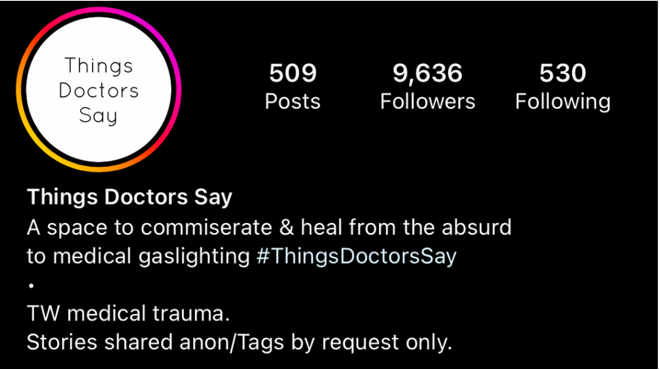
Figure 2. Screenshot of @Thingsdoctorssay instagram page. 2023.
Things Doctors Say is a collection of crowd sourced medical gaslighting stories. It is a form of community building while highlighting ageism, fat phobia, sexism, misogyny, racism, ableism and other forms of inequalities prevalent in the medical community. This account was made for disabled and/or chronically ill and/or mentally ill people. To share their stories, find community in shared lived experiences while also creating awareness.
There is a bind over here that is directly the question of who views/interacts with this content.
In Celia Lury and Sophie Day’s paper ‘Algorithmic Personalisation as a Mode of Individuation,’ concepts like “liking and likeness” and “recommendation algorithms” are spoken about. In both these concepts there is a profile of the person using specific platforms built based on their likes, shares, their own content (their habits, personal likes and dislikes, abilities, disabilities, jobs), so on and so forth. All of this then allows for personalisation in the process of recommendations in terms of accounts to follow, new content that they might like, new products that might be beneficial, or- in the context of disability -analgesics that might have worked for someone with similar disabilities. The idea behind this is that like people, like people, literally. In the sense of social media. Maybe, to stretch it a little, that like people have the same likes and dislikes, or maybe are even the same, more or less. It is a form of categorising personalities, lives and livelihoods.[15]
In this sense, the very act of defining the counter public is an act of separation. Something that is not intentional but a part of the way society is built. In an attempt to make an intervention to the infrastructures that force division through a variety of methods Translations/Interpretations is proposed.
The project Translations/Interpretations is a performative art piece that seeks to understand the translation error occurring in between disabled people and the structures of ableism. In the self and the other, within the constraints of the institution.
This project asks non able bodied people (mentally ill, invisibly and visibly disabled, chronically ill people) to share how they experience a day in their body, and outside: through either three sentences (no more than 50 words), a pictures/pictures (no more than 3), or a sound byte (no more than a minute) for a period of ten days. The non able bodied person will be asked to supplement the material provided with a more detailed explanation of what they are experiencing in and outside their body (no limits) as well, in a manner they understand to be “translatable.”
The writing/picture/sound byte would be posted online and offline. The wider public will be asked to comment under the post, elucidating what and how they understand the experience that the non able bodied person has communicated. To translate the material.
After the period of one year, during which time this project will be run multiples times online and offline, the material submitted by the non able bodied person, the wider public and the longer explanation that was supplemented shall be put together in a larger publication by the title ‘Book of Etiquette.’ This publication will also include the notes of the facilitator of this project, Divya Kishore.
Translations/Interpretations, the creative project, is to understand the translation error, or distortion of narrative, that happens between disabled people and their various subaltern counter publics and the ableist public sphere. To highlight the dominant narrative that does not serve public(s) that it is meant to be serving. All the while questioning and problematising how various publics & (subaltern) counter publics interact with each other.
During the months December of 2022 to March 2023, the project was trialed twice. One time in an online format on the instagram account @normal_space_bodies. The second time was an in person facilitation on Goldsmiths campus as a strike teach out activity. One of the observations made was that the online format was sometimes harder to engage with as people were afraid of saying the wrong thing. And that their answer was trackable. Then a modification to anonymise replies was made for the in person event which garnered more participation. However, people still enquired about the online platform. A way to give themselves space and time to come back to it rather than superficially engaging with the project.
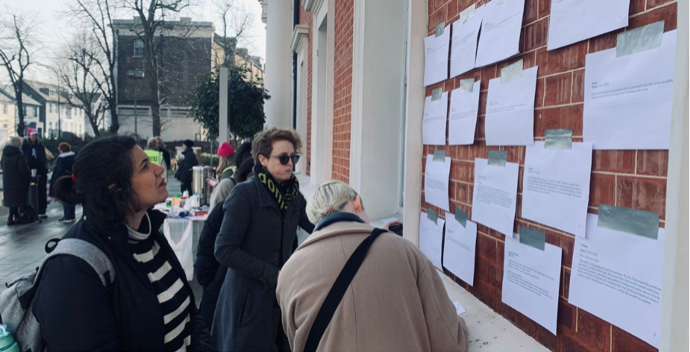
Figure 3. Kishore, Divya. Translations/Interpretations 1. 2023.
The marketing materials used for the online and in person trial was a simple poster that was circulated with the platforms that were available through goldsmiths channels. Because of the high traffic location of the in person trial, people who had not viewed the poster had also attempted at participation.
A few ethical dilemmas that we confronted was of payment, identification and the role of the facilitator/mediator.
Due to the sensitive nature of the materials submitted by non able bodied members the question of how do we measure the amount the materials are worth was brought up. A lot of these stories come from a place of grief, anger, pain and joy. How do we give them a monetary value? For instance, Divya would prefer to not be paid for the mediating and facilitation work that she ends up doing for the project. Because for her it feels like she is monetising on someone else’s (and her own) pain. Most of the people who agree to participate are Divya’s close friends and family who only share the stories because of Divya’s facilitation. How do we then bring money into this conversation?
The issue of identification, if a person does not identify with the subaltern disabled counter public but has all the markings of one, how do we navigate this conversation?
Most of all, the role of the facilitator/mediator. Respect for all of these various vulnerabilities must be maintained every step of the way. The option to pull out at any time will always be given.
The tentative timeline for this project is as follow:
Six offline facilitations are planned over the course of one year. The project travels with Divya in the offline format. The online format shall be continued on the instagram account @normal_space_bodies. At the end of the year all the materials will be gathered into a publication.
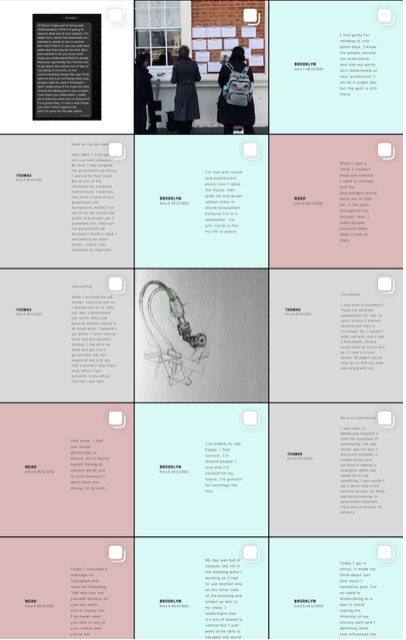
Figure 4. Kishore, Divya. Screenshot of @normal_space_bodies. 2023.
The reason for such an ill defined time line is that it depends on the facilitator’s ability as well. It is not only the participants whose ability is (and should be) accounted for, it’s also the facilitator’s.
The budget is as outlined below:
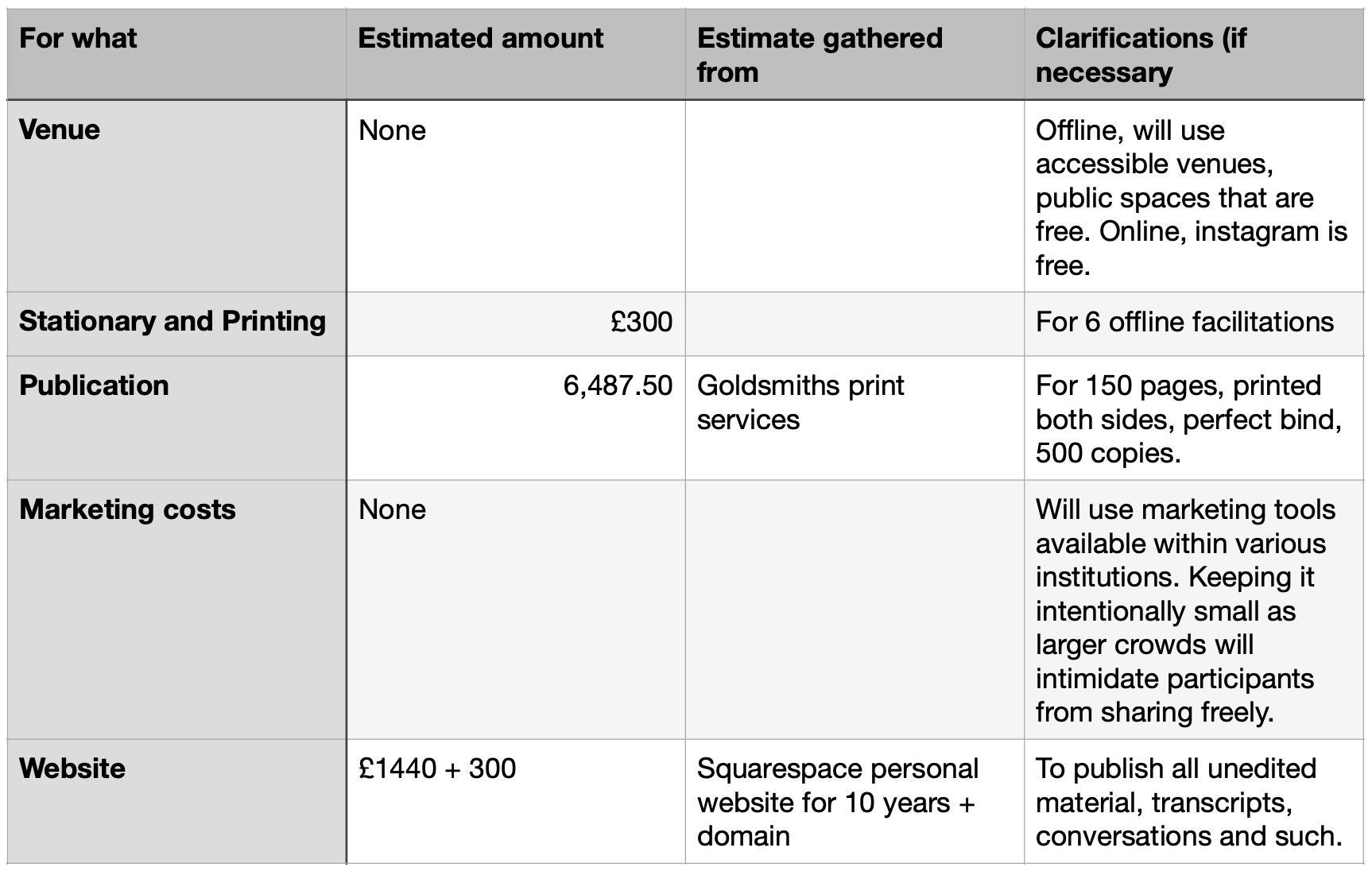
Possible sponsors for this project are Wellcome Collection, Arts Council England, SHAPE Arts, CRIP magazine and White Pube Creative Grant.
Footnotes
[1] El Hadji asks his daughter this question at 01:25:05. Xala, directed by Ousmane Sembène (1975; Hungary: Filmi Domirev, 1975), https://vimeo.com/510759173.
[2] Shakespeare, Watson, “The Social Model of Disability: An Outdated Ideology?” 19.
[3] Shakespeare, Watson, “The Social Model of Disability: An Outdated Ideology?” 9-28.
[4] Shakespeare, Watson, “The Social Model of Disability: An Outdated Ideology?” 9-28.
[5] Shakespeare, Watson, “The Social Model of Disability: An Outdated Ideology?” 9-28.
[6] Campbell, “Precision Ableism: A Studies in Ableism Approach to Developing Histories of Disability and Abledment,” 146.
[7] Campbell, “Precision Ableism: A Studies in Ableism Approach to Developing Histories of Disability and Abledment,” 140-142.
[8] Fraser, “Rethinking the Public Sphere: A Contribution to the Critique of Actually Existing Democracy,” 56-62.
[9] Hedva, “Sick Woman Theory.”
[10] Fraser, “Rethinking the Public Sphere: A Contribution to the Critique of Actually Existing Democracy,” 56-80.
[11] Baker, “Critical Memory and the Black Public Sphere,” 3-33.
[12] Sandell, Delin, Dodd, Gay, “Beggars, Freaks and Heroes? Museum Collections and the Hidden History of Disability,” 10.
[13] Sandell, Delin, Dodd, Gay, “Beggars, Freaks and Heroes? Museum Collections and the Hidden History of Disability,” 5-19.
[14] NOWNESS, “Goldfish.”
[15] Lury, Day, “Algorithmic Personalisation as a Mode of Individuation,” 17-37.
List of Images
Figure 1.Edmonds, Charlotte (dir). Goldfish. 2022. Screenshot. Source: https://www.nowness.com/picks/goldfish.
Figure 2. @Thingsdoctorssay. Screenshot of @Thingsdoctorssay instagram page. 2023. Screenshot. Source: Screenshot taken by Divya Kishore of https://instagram.com/thingsdoctorssay?igshid=YmMyMTA2M2Y=.
Figure 3. Kishore, Divya. Translations/Interpretations 1. 2023. Photograph. Source: Photograph taken during the first physical facilitation of Translations/Interpretations.
Figure 4. Kishore, Divya. Screenshot of @normal_space_bodies. 2023. Screenshot. Source: Screenshot taken by Divya Kishore of https://instagram.com/normal_space_bodies?igshid=YmMyMTA2M2Y=
Bibliography
Baker, Houston A. “Critical Memory and the Black Public Sphere.” Public Culture 7, no. 1 (1994): 3–33. https://doi.org/10.1215/08992363-7-1-3.
Campbell, Fiona Kumari. “Precision Ableism: A Studies in Ableism Approach to Developing Histories of Disability and Abledment.” Rethinking History 23, no. 2 (2019): 138–156. https://doi.org/10.1080/13642529.2019.1607475.
Celia Lury, and Sophie Day. “Algorithmic Personalization as a Mode of Individuation.” Theory, Culture & Society 36, no. 2 (August 28, 2019): 17–37. https://doi.org/10.1177/0263276418818888.
Edmonds, Charlotte (dir). “Goldfish.” NOWNESS, October 31, 2022. https://www.nowness.com/picks/goldfish.
Fraser, Nancy. “Rethinking the Public Sphere: A Contribution to the Critique of Actually Existing Democracy.” Social Text, no. 25/26 (1990): 56–80. https://doi.org/10.2307/466240.
Hedva, Johanna. “Sick Woman Theory.” Topical Cream, March 12, 2022. https://topicalcream.org/features/sick-woman-theory/.
Normal Bodies (@normal_space_bodies). 2022. Screenshot of profile. Instagram. 2023. https://instagram.com/normal_space_bodies?igshid=YmMyMTA2M2Y=.
Rage, Raju. “Access Intimacy and Institutional Ableism: Raju Rage on the Problem with 'Inclusion'.” Disability Arts Online, April 16, 2020. https://disabilityarts.online/magazine/opinion/access-intimacy-and-institutional-ableism-raju-rage-on-the-problem-with-inclusion/.
Sandell, Richard, Annie Delin, Jocelyn Dodd, and Jackie Gay. “Beggars, Freaks and Heroes? Museum Collections and the Hidden History of Disability.” Museum Management and Curatorship 20 (1): 5–19. https://doi.org/10.1080/09647770500302001.
Sembène, Ousmane. Xala. 1975. Hungary: Filmi Domirev, 1975. Film. https://vimeo.com/510759173.
Shakespeare, Tom. “The Social Model of Disability.” The Disability Studies Reader, 2021, 16–24. https://doi.org/10.4324/9781003082583-3.
Shakespeare, Tom. Watson, Nicholas. “The Social Model of Disability: An Outdated Ideology?” Research in Social Science and Disability 2 (2002): 9–28. https://doi.org/10.1016/s1479-3547(01)80018-x.
Things Doctors Say (@thingsdoctorssay). 2023. Screenshot of profile. Instagram. 2023. https://instagram.com/thingsdoctorssay?igshid=YmMyMTA2M2Y=.
Grades and Feedback
Grade: 85/100
Graded on: October 10, 2023.
Graded by: Rachel Wilson
Divya,
Excellent work! This well written and clearly structured proposal guides the reader deftly through the theoretical, political, personal, and ethical questions navigated in this project.
You make use of a wide and well-chosen selection of theoretical and activist argument to extend the question of public space towards and personally relevant, and highly prescient questions. These include how to bridge divisions generated by notions of ability and disability, and how to actually be heard and understood in a ableist, majoritarian spheres. The project you outline here points to and engages with concrete strategies that directly respond to these complex questions, with flexibility and ambition.
You have given considered attention to the ethical questions of participation and in your role as facilitator, demonstrating an accomplished praxis. Your budget and timeline are well thought through and realistic, taking account of your experience in the project so far. Referencing and bibliography are accomplished. One note on the section in which you describe facilitation – you refer to yourself in the third person – and I was curious as to whether this is intended to reflect a collective nature of the project?
Going forwards, one option could be to consider the role that profit as a motivating force might play in the contemporary social tendency toward division that you highlight. What role does the labour market for example play in contributing to or sustaining the formation of a disabling social model and, in a very complex way to the medical model of disability. If not already familiar, you might find the writing of Marta Russel of interest, or the work of activist and scholar Dolly Sen with Caroline Cardus as “Section 136”. https://section136.co.uk/broken-hearts-for-the-dwp/.
Congratulations!
My Reflections
This essay (and all the essays I wrote during my first year, in fact) made it very obvious to me that I did not have a good grasp of writing conclusions. Conclusions are still quite difficult for me to write. They symbolise the end of a chapter. Whatever else I think is important and needs to be mentioned gets cut, and the essay stops there. It is the penultimate act of killing your darlings, and I was not quite good at it yet.
Also, I still do not understand how I got a good grade for the citations. My footnotes are abysmal.