Grace Ndiritu’s The Healing Pavilion and Jim Naughten’s Objects in Stereo: Exhibition Review
This is an Exhibition Review I submitted for the module ‘Seeing and Showing’ in the academic year 2022-2023. Grades, feedback, and my reflections are at the end.
Wellcome Collection, whose core values are to challenge our perceptions and feelings about health. To make audiences engage critically with notions of science, medicine, life and art.[1] One of their agendas is to reflect on their own practices as a museum. Exhibitions, The Healing Pavilion by artist Grace Ndiritu and Objects in Stereo by artist Jim Naughten, could be an exceedingly visible reflection of the self on the institution’s part. The question, “what is the point of museums?” accompanied almost every PR post disseminated by the Wellcome Collection for their newest temporary exhibitions. Both of which started four days before the closure of their then permanent collection Medicine Man.
The reason why these two art shows are being spoken about together in this exhibition review is because they both were in the same space on the first floor of the building. The Healing Pavilion a literal pavilion built on the left side of the space. Objects in Stereo a series of photographs taking up the right side of the space. They occupied the same room, only separated by a diagonal false wall. It is essential for them to be viewed and discussed in tandem for either of them to make sense individually. There is also the question of why the museum curators saw it fit for these two exhibitions to share space. What is the interaction in between the individual body of works in relation to the museum’s mandate that is being hinted at?
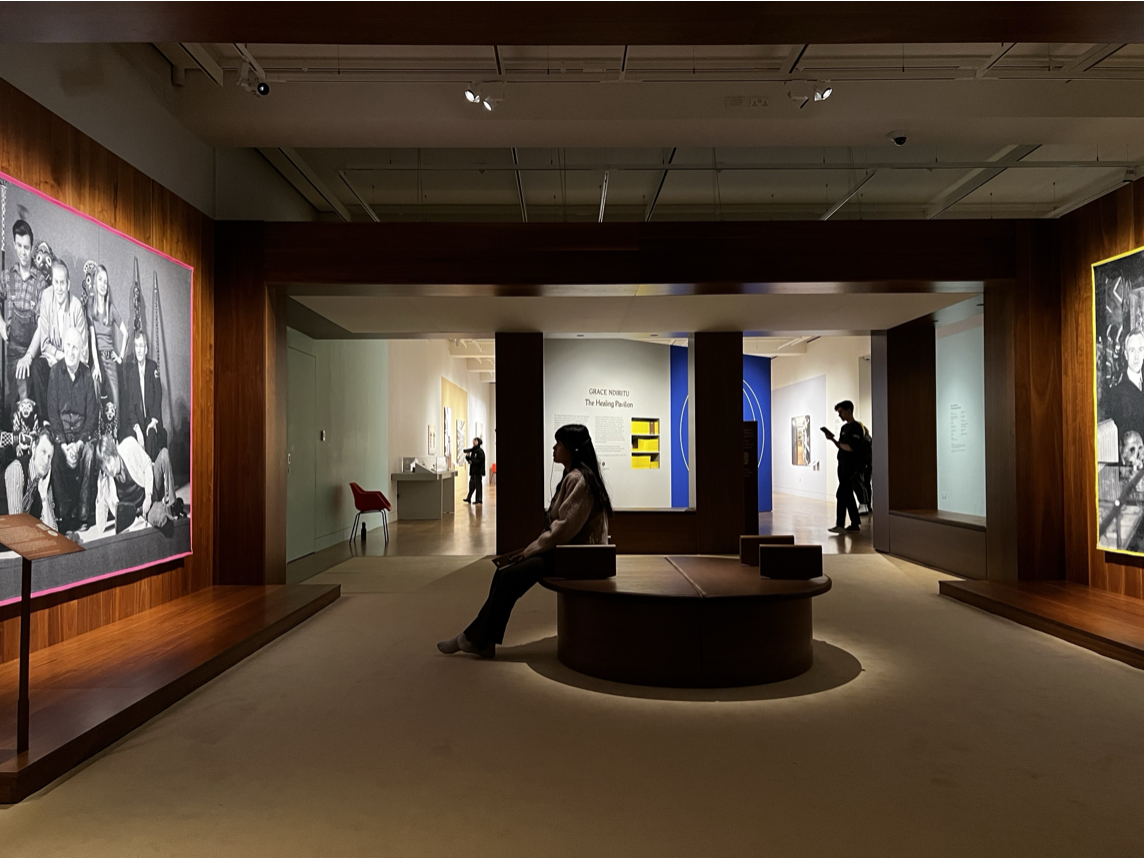
Figure 1. Divya Kishore, Wellcome Collection photograph 1 (2023). Photograph.
Grace Ndiritu, a British-Kenyan artist, whose core artistic concern is the transformation of our contemporary world. Working across mediums like film, painting, textiles, performance and social practices. She began creating a body of work titled Healing the Museum in 2012. A way to re-introduce occult like healing methodologies such as shamanism to re-active art spaces.[2] There is a sense of spirituality and ritualistic quality to her oeuvre, something that is seen in the The Healing Pavilion. The intention behind this Zen Buddhist temple inspired structure was to re-active the museum space. To encounter, contemplate, ask questions and meditate.
The Healing Pavilion is a dimly lit, plushy carpeted room with rich walnut panelling holding ‘Repair (1915)’ and ‘Restitution (1973).’ Two site specific large scale tapestries on the right and left walls. The walnut panelling used to line the structure is repurposed panelling from the Medicine Man show. Instead of commenting on repatriation and the provenance complications of the items in Wellcome Collections’ possession, Grace Ndiritu’s objective was to create a space to meditate. To allow for a space to sit with the power dynamics created inside the museum between the people and the objects through these two tapestries.
‘Repair (1915)’ and ‘Restitution (1973)’ are two group portrait archival images from Wellcome Collection, London and the Ethnologisches Museum, Berlin. In the photograph ‘Repair (1915)’ junior members of staff were staged in the Hall of Primitive Medicine Gallery. Staff posed with human remains and objects from collections of the global south. A possessive, authoritative, protective, maybe even an intimate quality to their hold on the items. A threaded yellow border was added to this tapestry. The colour, to Ndiritu, signified sunshine and courage, with danger and toxicity. ‘Restitution (1973)’ on the other hand felt downright like a mockery. An informal theatrical group portrait that was believed to be a record of museum staff posing on a display plinth on a random day after work. The playfulness of the staff with and around the objects giving a rare glimpse into what relationships between staff members and objects in collections might have been and still continue to be. This photograph has a pink threaded border which correlated to feelings of good fortune and open-mindedness sensed in the sitters, while insinuating a passivity and referencing the pink triangle used to identify homosexual prisoners in Nazi Germany.[3]
Personal feeling surrounding the encounter with these two tapestries were complex and overwhelming. Made more convoluted when accompanied by guided meditations by Ndiritu. She speaks of why specific artistic choices were made while asking us to breathe through the experience. Leaving one agitated especially because Ndiritu did not intend to throw blame but to ask what restitution for a labyrinthine history like this would look like. Not a forced reconciliation between the oppressed and the oppressor(s), but an understanding of how and why we are where we are today. Poetic, maybe even a forgiving voice that takes on the burden of recognition that legacies are hard to confront, taking time to unravel. Leaving more questions than answers. Perhaps even asking the audience to have patience for the metamorphosis of a museum as it grapples with its colonial inheritances. Which makes more sense when one moves towards the opposite side which holds Jim Naughten’s large scale stereoscopy photographs of Wellcome Collection’s previous stores.
On the right side Objects in Stereo is displayed, taking up the dominant amount of space. This exhibition consists of stereoscopic and large scale photography of museum objects stored in Blythe House. Giving a very brief but telling glimpse of what and how a gallery categorises items that might never see the light of day. Blythe House was previously the headquarters for the Post Office Savings Bank. The government later acquired the building as a storage facility for the British Museum, the V&A and the Science museum Group. Announcement of its closure was made in 2015 leading to the museums moving their collections to a new purpose built storage facility. Until recently, Blythe house, housed much of Henry Wellcome’s collection and the objects that were on long-term loan to the Science Museum Group by the Wellcome Collection. Naughten was one of the last people to access Blythe House to create this series of photography.[4]
Jim Naughten, a British artist, who through the medium of photography, stereoscopy and painting explores concepts relating to history and natural history.[5] His art holding a mystical quality to it. Which is seen in the photographs that were taken for this art show. Exploring themes of storage, care, restoration and conservation of museum objects, the images in the exhibition were de-mystifying, but the labels were the ones that truly highlighted prejudices. Discriminations that were institutionalised through inherited categorisation methodologies. In the below exhibition label the curators Emily Sargent and Ruth Horry of the exhibition articulate how the storage facility becomes a place of intertwining histories, narratives shaped by historical and geo-political power dynamics. A critical self evaluation of what the curators have inherited through the way storage has been historically handled.
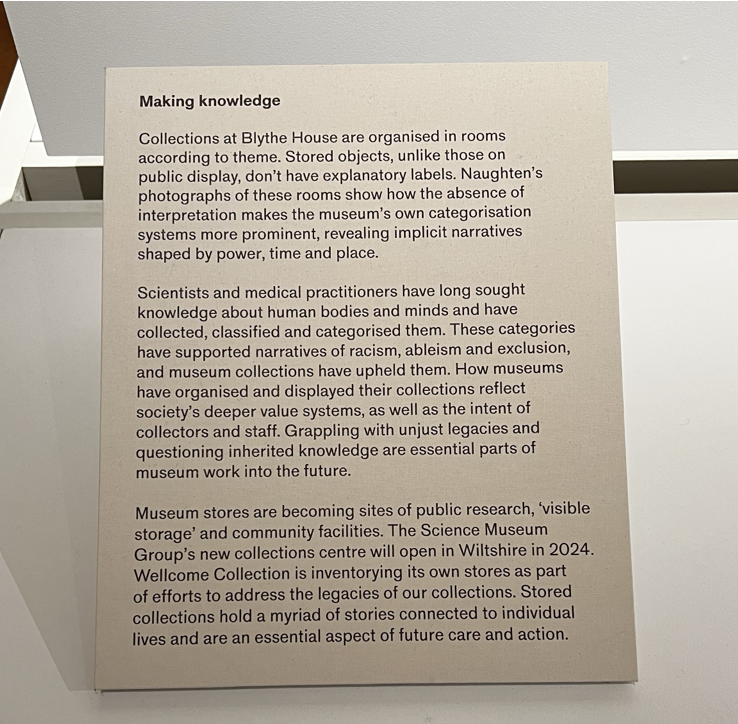
Figure 2. Divya Kishore, Wellcome Collection photograph 2 (2023). Photograph.
Objects in Stereo doesn’t only force audiences to confront that museums are more than pretty pictures, it is also a complex mystification of the art object through its demystification. Carol Duncan in ‘The Art Museum as Ritual’ talks about the aesthetising effect of the museum. A site where everything, even the most mundane of objects might become an “art” object. Not because they are one, but because they are placed in the liminal space that is the museum.[6] This space where time, meaning and narratives are manipulable and constantly in flux. This separation between what is not shown (storage, where meaning is created) and what is shown (the museum, where meaning is communicated without the how and why being told) is being questioned and reflected on through this exhibition. The act of showing what is behind this facade of aesthetisation is a form of demystification. Stating clearly where and how the muddling happens is a form of demystification. Being able to see drawers with post-it notes, handwritten labels, tags around the neck of Christian saints, signs to air out rooms before entering for the safety of staff: there is a very real tangibility to objects that is being showcased. A making of mundanity.
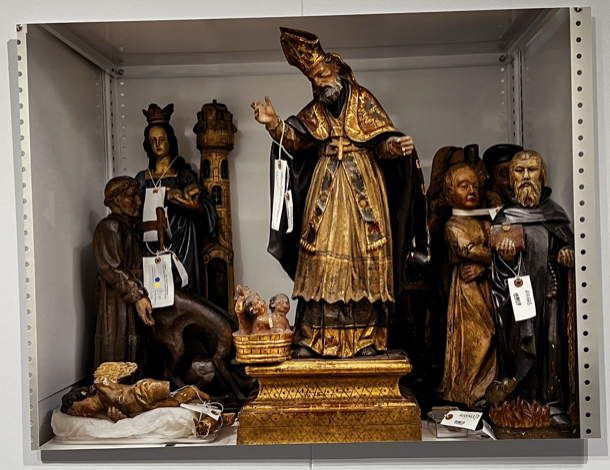
Figure 3. Divya Kishore, Wellcome Collection photograph 3 (2023). Photograph.
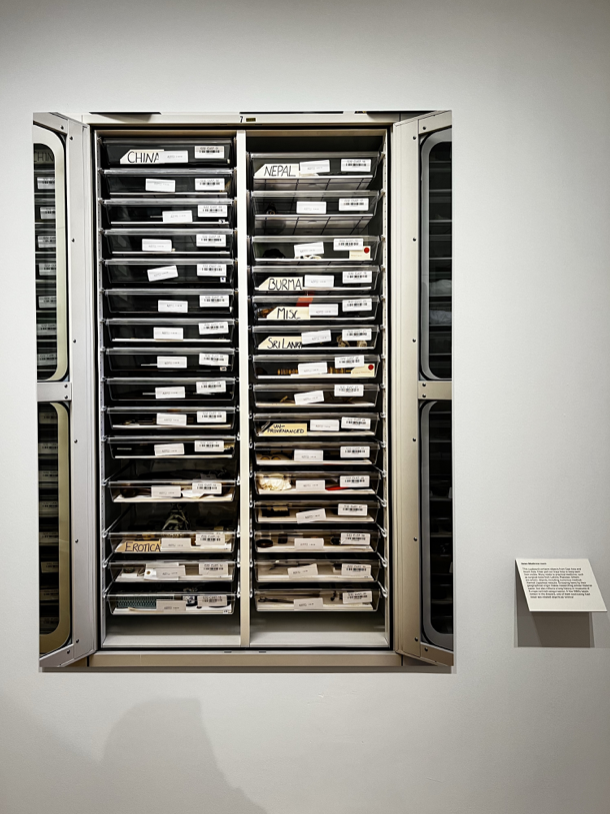
Figure 4. Divya Kishore, Wellcome Collection photograph 4 (2023). Photograph.
However, taking clean, polished photographs of the space and the objects deemed too fragile to bring out of the stores is still a mystification of the process. Recreating stereoscopic images to see them in perfect 3D is a form of creating a very physical boundary between the audience, the warden of the stores and the objects.
The Healing Pavilion begins the questioning, a moment to ground. While the Objects in Stereo shows the museum critically engaging with their bequeathed legacy of authority. Forcing the same onto the audience. Or at least that is the interpretation drawn from the way the space was personally navigated.
Nicholas Thomas, in ‘What are museums for?’ explores the idea of museums as networks, “they are made up of relationships, as well as of physical sites and stuff.” Through the process of sharing academic knowledge, international collaborative practices and exhibition loans they become active centre points of cultural sharing across the globe. Though, this sharing is not devoid of power dynamics which Thomas seems to not recognise or explore.[7] Wellcome Collection, through demystification and mystification, maybe, just maybe, recognises this power dynamic it has been devised into through centuries of colonial violence.
“What is the point of the museum?” Maybe it is to explore these relationships. Between nations, objects, power dynamics, through reflection, restitution, repatriation. Reflecting on Coloniality perpetuated through euro-centricity in categorisation of objects collected. Their inheritance of the power to shape narratives of and around the objects, inside and outside storage. Even if the museum is only being used as a mode of mass communication. What Wellcome Collection is dealing with now is de-colonisation, as heavy as the word is and also as something that they themselves do not proclaim to be doing. It is, nonetheless, something they are doing in various different manners. While challenging what a museum was, is and can become. Something more than pretty pictures.
Footnotes
[1] Wellcome Collection, “About us.”
[2] Kate MacGarry, “Grace Ndiritu.”
[3] Janice Li, “Collective Healing through Confrontation in Safety."
[4] Wellcome Collection, “Jim Naughten, Objects in Stereo”
[5] Jim Naughten, “About Jim Naughten.”
[6] Carol Duncan, “The Art Museum as Ritual.”
[7] Nicholas Thomas, “What are museums really for?”
List of Images
Figure 1. Kishore, Divya. Wellcome Collection photograph 1. 2023. Photograph. Source: Picture of The Healing Pavilion taken by Divya Kishore when attending the exhibitions.
Figure 2.Kishore, Divya. Wellcome Collection photograph 1. 2023. Photograph. Source: Picture of Objects in Stereo taken by Divya Kishore when attending the exhibitions.
Figure 3. Kishore, Divya. Wellcome Collection photograph 1. 2023. Photograph. Source: Picture of “Classical and medieval medicine room. Figures of Christian Saints” part of Objects in Stereo taken by Divya Kishore when attending the exhibitions.
Figure 4. Kishore, Divya. Wellcome Collection photograph 1. 2023. Photograph. Source: Picture of “Surgery room” par of Objects in Stereo taken by Divya Kishore when attending the exhibitions.
Bibliography
Cumming, Laura. 2022. “Grace Ndiritu: The Healing Pavilion; Jim Naughten: Objects in Stereo Review – What next at the Wellcome?” The Observer, December 11, 2022, sec. Culture. https://www.theguardian.com/culture/2022/dec/11/jim-naughten-objects-in-stereo-grace-ndiritu-the-healing-pavilion-wellcome-collection-london-review-closure-medicine-man-exhibition.
Duncan, Carol. “The Art Museum as Ritual.” In Civilising Rituals Inside Public Art and Museums, 7-20. London: Routledge, 2005.
Grace Ndiritu. “About Grace Ndiritu.” Accessed April 10, 2023. https://www.gracendiritu.com/CV/About-Grace-Ndiritu.
Jim Naughten. “About Jim Naughten.” Accessed April 10, 2023. https://www.jimnaughten.com/about.
Kate MacGarry. “Grace Ndiritu.” Accessed April 10, 2023. https://www.katemacgarry.com/artists/202-grace-ndiritu/.
Li, Janice. 2022. Collective Healing through Confrontation in Safety. Wellcome Collection. 2022. https://wellcomecollection.org/pages/Y2pruxEAAP-0fgBZ.
Lunn, Max. 2023. “Art in an Emergency.” Perspective Magazine. February 10, 2023. https://perspectivemag.co.uk/art-in-an-emergency/.
Ndiritu, Grace. 2021. Review of Ways of Seeing: A New Museum Story for Planet Earth. Gropius Bau. https://www.berlinerfestspiele.de/en/gropiusbau/programm/journal/2021/grace-ndiritu-ways-of-seeing.html.
Thomas, Nicholas. 2019. “What Are Museums Really For?” Apollo Magazine. September 23, 2019. https://www.apollo-magazine.com/defining-museums-in-the-21st-century/.
Wellcome Collection. “About Us.” Wellcome Collection. https://wellcomecollection.org/about-us.
Wellcome Collection “Jim Naughten, Objects in Stereo.” Wellcome Collection. Accessed February 20, 2023. https://wellcomecollection.org/pages/Y0fcjREAAImM42e8.
Wellcome Collection. “Objects in Stereo.” Wellcome Collection. Accessed February 20, 2023. https://wellcomecollection.org/exhibitions/Y0QhIxEAAA__0sMb.
Wellcome Collection. “The Healing Pavilion.” Wellcome Collection. Accessed February 20, 2023. https://wellcomecollection.org/exhibitions/Yzv9ChEAABfUrkVp.
Grades and Feedback
Note: This grade and feedback are for two separate pieces, the first of which is an Archive Report, and the second is an exhibition review. The essay above is the Exhibition Review section of the assessment.
Grade: 82/100
Graded on: Sunday, 8 October 2023, 9:14 PM
Graded by: Emma Wingfield
Feedback comments: Congratulations on your outstanding work! Both of your texts provide excellent overviews of your chosen archive and exhibition, while also demonstrating your ability to incorporate feedback from your formatives, critically reflect on the Seeing & Showing module, and conduct additional contextual research using diverse sources to enrich your critique (fulfilment). It's particularly commendable how you highlighted the Welcome Collection as an institution that functions both as a collection and an archive.
Throughout your report, you effectively allowed the archive materials to inform your critique, and your close reading of these materials, combined with external research and themes/ideas from the Seeing & Showing module, resulted in a captivating report that delves into the fragmented nature of archives and how we engage with histories from different perspectives and positions of power and privilege (research & analysis).
In your exhibition review, it was impressive to see that you incorporated feedback from the formative assessment, especially in terms of approaching these two exhibitions as separate yet connected entities—one opening up a field of inquiry while the other attempts to critically engage with that legacy (analysis). Your observation regarding the tensions between demystifying museum collections by photographing them for display, while the objects remain in storage, was astute. It highlighted the continued boundary between the object and the audience.
The only aspect to be mindful of is your use of images. Just remember that if you include images, you must reference them in the body of your text to explain why they were included and to provide context (ref. & bib.)
Overall, your work is exceptional, and you should be congratulated on your achievements!
My Reflections
This essay was perhaps the only one I wrote like a summative for the formative submission in my three years of study. The disappointment I felt when it did not get a “good” grade. My definition and understanding of a good grade underwent significant changes over the course of my three years, particularly when I recognised my own strengths and weaknesses and viewed help as something beneficial rather than a negative. It was also a moment when I realised that I needed to partition my time well. The academic year and the course as a whole are a marathon, not a sprint. When one has chronic illnesses, overtaxing can be fatal for the educational growth of the entire year.
I exhausted myself working on the formative for this assessment and ended up falling sick for the next few weeks. That is when I started utilising formatives as formatives. I became more aware of their role and what I needed from them. Uni is a life lesson in measured steps towards a goal.
I use formatives as a starting place, where I mind-map my thought process, laying a significant part of my brain out for the tutors to understand. They provide me with feedback and reading materials. I have stopped expecting them to tell me if the idea is good or not; it is my role as a researcher and writer to convince them of my thought process, theorisation, and ideas. What I am sincerely seeking when I approach them is an exercise in critical thinking, where they open up orientations that have gone unexplored in relation to the questions I am asking and the theory I am positing. And reading materials, of course.
For this essay, what I needed was not reading materials, but better writing skills and a stronger citational foundation, which Emma provided me with.