Am I “Urbanidad” enough?; The Making of a “Good Indian”: perpetuation of colonial practices
This is the Essay I submitted for the module ‘Modernities’ in the academic year 2022-2023. Grades, feedback, and my reflections are at the end.
Preamble
This paper is heavily inspired by, and takes from, Stephenie Marie R. Coo’s dissertation ‘Clothing and the Colonial Culture of Appearance in the Nineteenth Century Spanish Philippines (1820-1896)’. Deriving its title from Coo’s text as well. “Urbanidad” is a Spanish terminology for Urbanity.[1] The Indian part of “Good Indian” because Filipinos were referred to as Indio/India according to archival materials Coo discusses in the paper. Indio (male) /India (female) referring to natives of the Philippines.[2] The term Filipino holding a contentious history as it referred to the Spaniards born and raised in Philippines.[3] The Good of “Good Indian” is a reference to the archival materials that Coo presents in which the making of a “good” Indian (“good” native woman of Philippines) is spoken about. Though, the term Indian is complex in who it is referring to especially because in Carl C Plehn’s ‘Taxation in the Philippines,’ the term Indian is used as a blanket term.[4]
The standard of good wasn’t only placed on women, or specifically “Indias”. It was on all the natives. Disproportionately so on women. However, when this paper says “Good Indian”, it is referencing the stairs of urbanity; A ladder in which the oppressed natives of previously colonised countries hold the least amount of global privilege but fall into the pattern of asking “Am I “Urbanidad” enough?” Trying to elevate where elevation was but just a myth enforced, only creating further disparity. Trying to elevate from a place where nuance was forcefully erased as noticed by usages of terms like Indian and Indio to refer to Filipinos.
Introduction
“Although the sun may have set upon the British Empire and other colonial empires, they continue to cast long shadows which distort and obscure global relationships.” (Colon, Gristwood, Woolf 2021, 21)[5]
The intention of this essay is to question the possibility of de-colonisation in a system that still functions under the bondage of coloniality. More specifically, ponders on how deep the reach of colonisation is. How do we begin to de-colonise if our impulse is to ask the question, “am I “Urbanidad” enough to colonial soft powers?
In Anibal Quijano’s essay ‘Coloniality and Modernity/Rationality,’ there is a distinction drawn between Colonisation and Coloniality. Colonisation is the physical occupation of foreign land. Coloniality is the institutionalisation of racist, exploitative generalisation created, the labour and knowledge extracted, as the fundamentals of the current systems of daily operations, globally.[6]
To simplify, Coloniality is the current occupation of the minds of the colonised. It is still very must present in the form of soft powers. Not a remnant, but a continuation of colonisation that is rarely acknowledged in its global capacities.
There is a clarification that must be made. When the term coloniser is used, it refers to the upper echelons of coloniser countries. The upper classes that devised and sustained colonial apparatuses, not only in colonised countries, but in their own as well. However, it also wants to make clear that the progression of coloniser societies was still in opposition to- and at the cost of - colonised societies.[7] The wealth and knowledge that coloniser countries stand on (and continue to extract) is from colonised countries. Even if it is hoarded by a very few.
One of the arguments made by this essay is that the engendered onerous legacy of the impulse to be “Urbanidad” is a cumulative effect of colonisation. A choke hold soft power that is the centre of coloniality’s exertions.
This essay explores the theme of Coloniality, the remnant of Modernity and Rationality. Within the context of the responsibility of the colonising powers in the act of de-colonisation abroad. Very specifically when it pertains to Culture and Education. The research is undertaken through the analysis of the artwork Una Mestiza 1887 by the Filipino artist Granada Cabezudo (b. 1865, Philippines; d. Around 1900, Philippines).
Through this artwork, this essay aims to analyse race classifications, which had rapidly changed by the 1887. Sartorial clues that hinted towards political, social, racial and economic dynamics. Finally, the role of christianity in making the barbaric natives appear civilised and educated, i.e. good and Urbanidad.
Introducing the concept of “the stairs of urbanidad” in the conclusion. Suggesting that this ladder is pernicious, encapsulating every interaction within and with other nations.
Body
“… any historical narrative is a particular bundle of silences, the result of a unique process, …” (Trouillot, 1995, 27)[8]
Una Mestiza 1887,[9] speculated to be the only painting to have been exhibited, ever, by Granada Cabezudo.[10] It is theorised to have been a practice piece that Cabezudo worked on during her education under Augstin Saez,[11] then director of the Academia de Dibujo y Pintura. However, she might have been personally tutored by Saez at home due to women not being accepted into the Academy as art students yet.[12]
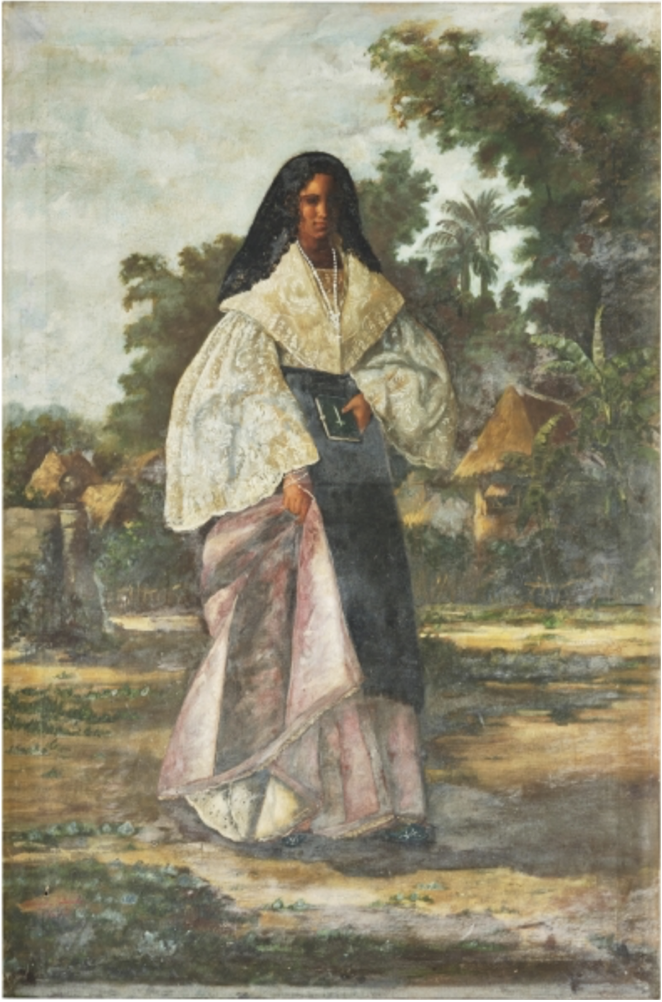
Figure 1. Granada Cabezudo, Una Mestiza (1887). Oil on canvas 124 x 82 cm.
The painting shows a dark skinned woman wearing elaborate clothing that does not look utilitarian or appropriate for the weather in Philippines. Her head is covered with a black lace veil (mantilla). Delicate embroidery is seen on the shirt (pañuelo), a voluminous skirt (saya) that has red and blue stripes along with a dark, possibly black, overskirt (tapís). A hint of what might be considered undergarments, or “private dressing” during that time period is seen by the bunching of the skirt with the sitter’s right hand. This peek of private garments was considered scandalous to christian sentiments of modesty.[13] Dark blue slippers (chinelas) with delicate embroidery peeks out due to this bunching of the fabric.
The woman in the painting must have been on her way to church in her Sunday best as she adorns a bible in her left hand and a rosary around her neck. The bible is also an indication that she is literate and religious. Her clothing an indication of her monetary status in society.[14]
The background, a landscape consisting of the local flora and fauna. One can see evidence of the inhabitation style of the locals, the attap huts.[15] The rich tropical foliage that the islands were lush with.
In Coo’s dissertation, she talks about how clothing and other adornments asserted socio cultural dynamics in Philippines under Spanish rule. Confronting a very complex dynamic in between race, class and culture that were perpetuated by various factors, internally and externally. An intricate network that would establish the way society would organise itself allowing for a particular form of progression of culture. Racial dynamics did not always remain as rigid. However, this further deepened the significations attached to sartorial cues. Forming unyielding moral judgements attached to clothes, the way the locals dressed, calling them vain and lavish, so on and so forth. Particularly towards the second half of the 1800s.[16]
A few examples of these signifiers attached to particular garment are the stripes of the skirt and the way the Tapis is tied.
During the later part of the 1800s two groups began to form. Escuadra Americana and Escuadra Española. Escuadra Americana had blue and red stripes on their sayas: like the saya worn by Cabezudo’s Una Mestiza. Escuadra Española had red and yellow stripes on their sayas. The colours of the sayas hinted at the wearer’s political affiliations.[17]
Tapis, during this particular period, became a representation of patriotism towards the Philippines. Even though going without a tapis represented the europeanisation of the public, which meant a more elite and educated crowd.[18]
There were other subtle ways of showcasing status and race through clothing. For examples, who and how the tapis was worn. The Tapis were necessary for the lower classes as the sayas were thinner, less embroidered, transparent. However, for the upper classes, the tapis was a showing of wealth because of the more vibrate print and thicker material of the saya. The way Tapis was tied was a more subtle but obvious distinction of class. Tapis is traditionally tied in the front, however, “the tapís with back opening (con la abertura atrás) was an innovation associated with the urbanized elite.”[19]
This draws on a particular line of discourse that proposes that the tapis was an indication of race and class. A war fought through tapis between the Indias and the Mestizas-españolas. The Indias never letting go of the tapis, a sign of their pure blood. While the Mestizas never even hinted at a tapis because of their superiority in the racial hierarchy. But what the tapis represented was never stable. For example, authors claimed in the later part of the early 1800s that the elite Mestizas started to associated the knee length tapis with maidservants. While other mestizas wanted to look more European doing away with the tapis. What the tapis marked and how it evolved is highly debated as noticed in Coo’s paper.[20]
Markers of wealth remained. A trend was set by the wealthiest. The lower classes ran to chomp at this illusive bit. Now the quality of the fabric, how many times the same clothing was worn so on and so forth became a marker of wealth, morality and civilisation.
Garments weren’t the only indication of Urbanidad. Other adornments like the rosary and bible became necessary elements to being seen as civilised as noticed in the below quotes:
“At church, where they went to see and be seen, well- bred women were conspicuous with objects that spoke of their literacy, their wealth, and of course, their religion.”[21]
“Books and rosaries denote that urbanidad was not based solely on dress, but also on how women embodied the Catholic and hispanized virtues of piety, modesty and literacy.”[22]
The christian element is a necessary component as in 1501 Pope Alexander VII granted Ferdinand, Isabella and successors, the right to collect and retain taxes (tithes and church dues), "in all their possessions beyond the seas.” In exchange for the crown footing the expenses of the Church in christianising the conquered people.[23]
When the Spanish colonised the Philippines, there were many taxation policies enacted over the course of their 327 year rule. Though, one never changed. The Spanish never paid taxes. Many were modified and continued by the Americas during their occupation in the late 1800s into the early 1900s. The foremost reasoning for the way the classes were taxed was based on the racial stereotyping that was made by the Spanish.[24] As well as how much the Spanish aristocrats favoured the locals.
One of the incentives of becoming christian was tax exemptions.[25] Christianity was incentivised and standardised by making it the embodiment of civilised.
In ‘The Exhibitionary Complex’ by Tony Bennet, an essay that explores the association between spectacle and surveillance, in the context of discipline and punishment through culture and self surveillance.With respect to 1800s and 1900s British society. There are a few different topics that were explored by Bennet here. Two of which are the ones that this essay aims to pay specific attention to. One is the way history is organised in universal expositions. The narrative that is created. The second is the way that the subject is formed in opposition to the other.[26]
In their earlier versions, the universal exhibitions were organised in a way that showed the progress of civilisation. The creating of a past and a present. Making of a story of progress. In this narrative, machinery and industrial process were considered the epitome of civilisation. The problematic here is that objects became signifiers of whole races and countries. Distilling down cultural nuances to pitting nations against each other in the race of the Urbanidad. Becoming especially relevant when civilised behaviour entangles with creating culture to entrench national pride. Which was the goal of universal expositions. It created the self (coloniser lower classes) in relation to the other (the colonised). Instilling national pride in the lower classes in the coloniser societies through the progression of the nation.[27]
One of the similarities seen in the Exhibitionary Complex (for museum goers) and the sartorial cues (of colonised Philippines) that Coo elaborates on is the way all that is the body (the way it is adorned and behaves) is a signifier of how civilised one is. The parallel is astonishing as these are two very different societies, and opposite to each other.
Even though colonisation was a project that was taken up and carried out by the elite upper class of European countries, the making of the lower classes was still in opposition to the colonised. That is to say that the national pride of the European countries and their progress came at the cost of showing and institutionalising how not Urbanidad the colonised were. Simultaneously telling the colonised that if they work hard enough (under the instructions of the coloniser), they could climb up the stairs of enlightenment. This is perhaps the distinction that breaks the illusion of similarity amongst the lower classes in colonising societies and the colonised societies.
In the essay, ‘Indigenous art at the Philippines Exposition of 1887,’ by Luis Angel Sanchez Gomez, an examination of the critiques made of the 1887 exposition in Madrid. The Exposition was used to showcase the benefits of the Spanish presence in the Philippines to maintain their hold of the territories. A kind of advertisement of their civilising deeds and the civilised’s abilities that have massively improved under the rule of the civilising agent. Una Mestiza, an artwork that was chosen to participate in this exposition.[28]
What is noticed in this essay is the institutionalisation of racial stereotypes, complete ignorance of the role the Spanish played in the lack of development in the country and further justification of said racial stereotypes through the artworks put on display.[29]
The items displayed in this exposition were specifically chosen to show the civilised yet the inferior position of Philippines. The artworks, their technical shortcoming- by European standards -were blamed on the participating persons’ race. Some of the critics did blame the corruption and ignorance of the Spanish in the Philippines, though, they also blamed the race of the creators of the items presented for their inferior quality.[30]
All of this literature is a form of institutionalisation. All of these critics are the definition of gatekeeping. They are standardising what is to be considered civilised, educated. One can go as far as to say, this is institutionalising what (culture) and who (people) are allowed to be free versus who must be a slave.
Conclusion & Postamble: A direct response to Modernities the module.
“It is evidence of the arrogance of the occidental culture and discourse that even the concept of history should be turned into a colony… .”(Quijano, 2007, 1171)[31]
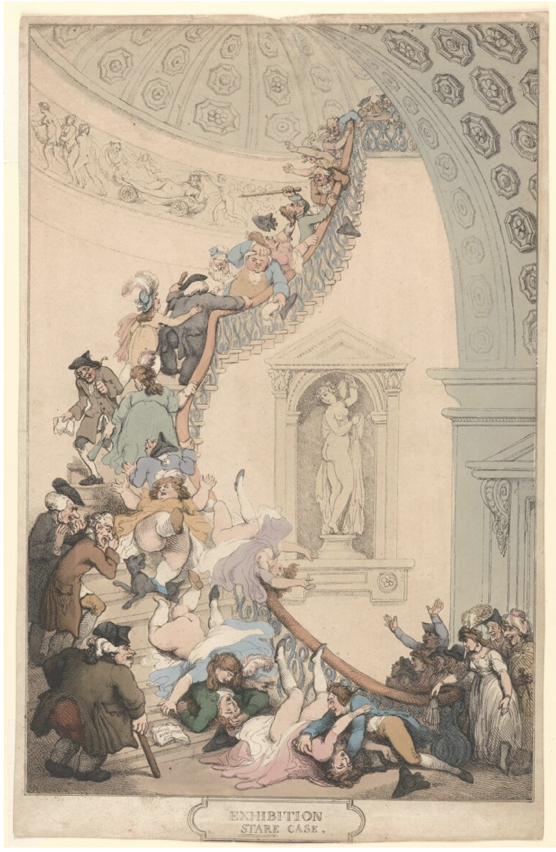
Figure 2. Thomas Rowlandson, The Stare Case (1811). Etching, 47.6 × 33.2 cm.
The Stare Case, an illustration by Thomas Rowlandson mocking Sir William Chamber’s design of the Courtauld Gallery. A design that symbolised a metaphorical journey towards enlightenment. The higher you climbed, the more you moved towards light, the epitome of knowledge.[32] As sexist as this caricature is, it does demonstrate a pertinent point. That of who is considered Urbanidad and the standards of the same.
This essay wants to propose that the entire globe is set up to represent the staircase to enlightenment, the stairs of Urbanidad. It wasn’t only the universal exhibition that was organised, it was also the very universe itself.
There are two issues that the conclusion wants to tackle. One is that of the international standard. Second is the lack of access to local narratives of communities that perpetuates colonial mindsets even when that is not the intention.
De-colonising the curriculum in a university that is situated in Europe carries a set of hurdles. One is that of the institutional set up, who gets access to the institution and in what capacities. Second is that of the people in the institution and what they have access to.
The issue of the international standard is of who is allowed in at all. To get into a university like Goldsmiths there is a criteria that needs to be met as an international student. English proficiency (assessed by a standardised test, or equivalent that is set and approved by various apparatuses of the state) and wealth. If both aren’t adequate then visas aren’t granted. Allowing for only a select few students to enter. The same filtering happens with lecturers. Work visas, sponsorships, so on and so forth. Made worse by how it is harder to gain a visa if one comes from certain countries.
The institution isn’t set up to allow for all, it only allows for few to gain (student), even fewer to give (lecturer).
Setting of the international standard. Developed countries do it first, developing countries follow suit. But the person is allowed to advance, only a select few, if they are just the right type of urbanidad, from the under-developed, to the developing, to the developed.
The student and the teaching staff take from literature that was colonially deemed “up to standard.” A standard that was rife with various isms. Not to mention that the student and the teacher both are not isolated from the stratifications of society. They hold their own prejudices, internalised and externalised. Which does translate into what is uncovered and spread.
Academia is a confrontation of the person in society, the literature that was written in response to a very specific period in time (holding and perpetuating its silences), and privilege. Academia itself is a part of the staircase.
The question of de-colonisation, specifically that of academia, can it be done in isolation in the global north by the global north? No. That is the simplest answer.
The state just does not have the tools to. Not with it’s current set up. It only perpetuates for it doesn’t completely fathom its depths. It doesn’t understand the languages, the legacies, the local narratives of the colonised countries. If anything it has actively sought to erase it by understanding itself to be culturally superior and imposing it as such on all.
It understands the state of the colonised in the coloniser countries. But doesn’t understand that there is such a thing as being closer to the coloniser than the colonised even in colonised countries.
If anything, it always errs on the side of perpetuation of colonial ideas. For instance, the very name Modernities. Modernities infers comparison. It infers a necessity for Modernity to happen all over. It asks for more narratives and stories, but also does not allow enough space for it to unfurl in its own language and space, with its local legacies.
Footnotes
[1] Glossary, “Urbanidad - refers to the characteristics and traits associated with urban life; connotes refinement and elegance in dress, manners, etc.” Coo, Clothing and the colonial culture of appearances in nineteenth century Spanish Philippines (1820-1896), 537.
[2] “Unlike neighboring nations like China, Vietnam and Siam, the very nature of the archipelago, with more water than land, meant the existence of numerous tribal groups with a few dominant ones – Tagalogs, Kapampangans, Ilocanos, Bikolanos, Cebuanos, Ilonggos, Warays, and the Mindanao tribes. The term indios was used to refer collectively to the different tribes.” Cruz. “From Indio to Filipino.”
[3] “The native inhabitants were referred to as indio/india, naturales or Tagals, Tagalogs.” Coo, Clothing and the colonial culture of appearances in nineteenth century Spanish Philippines (1820-1896), iv.
[4] Plehn, “Taxation in the Philippines. I.,” 680-711.
[5] Colon, Catherine. Gristwood, Anthony. Wolf, Micheal., "Introduction: Empires of the Mind? Empire, Colonialism, and Education Abroad.” 21.
[6] Quijano, “COLONIALITY and MODERNITY/RATIONALITY,” 168-78.
[7] Bennett, Tony. “The Exhibitionary Complex,” 82–98.
[8] “To put it differently, any historical narrative is a particular bundle of silences, the result of a unique process, and the operation requires to deconstruct these silences will vary accordingly.” Trouillot, “The Power in the Story”, 27.
[9] Translation of “Una Mestiza”- A Mixed Race. However when the Museo Nacional del Prado’s (The Prado Museum) website is translated to English, the artwork’s title is translated to “a mongrel." “Una Mestiza - Colección - Museo Nacional Del Prado,” accessed January 3, 2023, www-Museodelprado-Es.translate.goog.
[10] Hernandez, Homebound, 55-56.
[11] Nelson, “Women Making Art in the Long 19th Century: Some Glimpses.”
[12] Hernandez, Homebound, 55-56.
[13] Coo, “Clothing and the colonial culture of appearances in nineteenth century Spanish Philippines (1820-1896),” 140-146.
[14] Hernandez, Homebound, 55-56.
[15] Nelson, “Women Making Art in the Long 19th Century: Some Glimpses.”
[16] Coo, Clothing and the colonial culture of appearances in nineteenth century Spanish Philippines (1820-1896), 1-606
[17] Coo, Clothing and the colonial culture of appearances in nineteenth century Spanish Philippines (1820-1896), 105-120.
[18] Coo, Clothing and the colonial culture of appearances in nineteenth century Spanish Philippines (1820-1896), 105-120.
[19] Coo, Clothing and the colonial culture of appearances in nineteenth century Spanish Philippines (1820-1896), 105-120.
[20] Coo, Clothing and the colonial culture of appearances in nineteenth century Spanish Philippines (1820-1896), 105-120.
[21] Coo, Clothing and the colonial culture of appearances in nineteenth century Spanish Philippines (1820-1896), 54.
[22] Coo, Clothing and the colonial culture of appearances in nineteenth century Spanish Philippines (1820-1896), 142.
[23] Plehn, “Taxation in the Philippines. I.,” 683.
[24] The Chinese and Chinese mestizos were taxed the highest due to the stereotype that the Chinese were businessmen and thus brought in the highest income. This was considered unfair and later modified. But this is a good example of the racial stereotyping mentioned in the essay. Plehn, “Taxation in the Philippines. I.,” 695-699.
[25] “Thus, for example, it was provided that the " Indians " who were " in rebellion " should be conciliated by all good means, even by the remission of all taxes, to come into obedience. The acceptance of baptism was rewarded by exemption, and in any case conversion to the sacred faith of the Spaniards carried with it ten years of exemption from tribute.” Plehn, “Taxation in the Philippines. I.,” 690.
[26] Bennett, “The Exhibitionary Complex,” 82–98.
[27] Bennett, “The Exhibitionary Complex,” 82–98.
[28] Bennett, “The Exhibitionary Complex,” 82–98.
[29] Gomez, “Indigenous Art at the Philippine Exposition of 1887: Arguments for an Ideological and Racial Battle in a Colonial Context,” 286-293.
[30] Gomez, “Indigenous Art at the Philippine Exposition of 1887: Arguments for an Ideological and Racial Battle in a Colonial Context,” 286-293.
[31] “…whose borders, validities, structures and configurations, even life tenure are solely and entirely decided by the west.” Oguibe,“13. Olu Oguibe (b.1964) ’In the ‘Heart of Darkness’.” 1171.
[32] D’Antone, “Dusty Frames: Looking at 19th and 20th Century Art in the Courtauld Gallery,” 2022.
List of Images
Figure 1. Cabezudo, Granada. Una Mestiza. 1887. Oil on canvas. Source: Museo Nacional del Prado’s website: https://www- museodelprado-es.translate.goog/coleccion/obra-de-arte/una-mestiza/85829d55-1b6f-4cdb-82f1- fcfbb7e97400?_x_tr_sl=es&_x_tr_tl=en&_x_tr_hl=en&_x_tr_pto=sc [Accessed: January 1, 2023]
Figure 2. Rowlandson, Thomas. The Stare Case. 1811?. Etching, hand coloured. Source: The Metropolitan Museum of Art: https://www.metmuseum.org/art/collection/search/388768 [Accessed: April 15, 2023]
Bibliography
Bennett, Tony. “The Exhibitionary Complex .” New Formations 4, no. Spring (1988): 82–98.
Colon, Catherine. Gristwood, Anthony. Wolf, Micheal., "Introduction: Empires of the Mind? Empire, Colonialism, and Education Abroad” in EMPIRES OF THE MIND? (POST)COLONIALISM AND DECOLONIZING EDUCATION ABROAD, edited by John Christian, 19-35. CAPA: The Global Education Network, 2021.
Coo, Stephanie Marie R. “Clothing and the colonial culture of appearances in nineteenth century Spanish Philippines (1820-1896)” PhD diss., UNIVERSITÉ NICE SOPHIA ANTIPOLIS, 2014.
Cruz, Elfren S. “From Indio to Filipino.” Philstar. Accessed April 15, 2023. https://www.philstar.com/opinion/2018/07/29/1837622/indio-filipino.
D’Antone, Ambra. “Dusty Frames: Looking at 19th and 20th Century Art in the Courtauld Gallery.” BILDERFAHRZEUGE, October 1, 2022. https://bilderfahrzeuge.hypotheses.org/5650.
Gomez, Luis Angel Gomez. 2002. “Indigenous Art at the Philippine Exposition of 1887: Arguments for an Ideological and Racial Battle in a Colonial Context.” Journal of the History of Collections 14 (2): 283–94. https://doi.org/10.1093/jhc/14.2.283.
Hernandez, Eloisa May P. 2004. Homebound:Women Visual Artists in Nineteenth Century Philippines. University of the Phillipines Press, 2004.
Johnson, Martha, “The Decolonizing of Study Abroad” in EMPIRES OF THE MIND? (POST)COLONIALISM AND DECOLONIZING EDUCATION ABROAD, edited by John Christian, 189-207. CAPA: The Global Education Network, 2021.
Morley, Ian. 2011. “America and the Philippines: Modern Civilization and City Planning.” Association for Asian Studies. Accessed January 3, 2023. https://www.asianstudies.org/publications/eaa/ archives/america-and-the-philippines/.
Nelson, Roger. 2020. “Women Making Art in the Long 19th Century: Some Glimpses.” n.d. National Gallery Singapore. Accessed January 3, 2023. https://www.nationalgallery.sg/ magazine/women-making-art-long-19th-century-some-glimpses.
Plehn, Carl C. 1901. “Taxation in the Philippines. I.” Political Science Quarterly 16 (4): 680. https://doi.org/10.2307/2140422.
Oguibe, Olu. “13. Olu Oguibe (b.1964) ‘In the “Heart of Darkness” ’.” in Art in Theory 1900-2000: An Anthology of Changing Ideas, edited by Charles Harrison and Paul Wood, 1170–75. Oxford: Blackwell, 2002.
Quijano, Aníbal. 2007. “COLONIALITY and MODERNITY/RATIONALITY.” Cultural Studies 21 (2-3): 168–78. https://doi.org/10.1080/09502380601164353.
Rowlandson, Thomas. “Exhibition “Stare” Case.” The Metropolitan Museum of Art. Accessed April 15, 2023. https://www.metmuseum.org/art/collection/search/388768.
Trouillot, Michel-Rolph. “The Power in the Story. ” in Silencing the Past: Power and the Production of History, 1–30. Boston, MA: Beacon Press, 2015.
“Una Mestiza - Colección - Museo Nacional Del Prado.” n.d. www-Museodelprado- Es.translate.goog. Accessed January 3, 2023. https://www-museodelprado- es.translate.goog/coleccion/obra-de-arte/una-mestiza/85829d55-1b6f-4cdb-82f1- fcfbb7e97400?_x_tr_sl=es&_x_tr_tl=en&_x_tr_hl=en&_x_tr_pto=sc.
Unkule, Kalayani, “Homogenize and Rule: Empires of the Mind in 21st Century Higher Education” in EMPIRES OF THE MIND? (POST)COLONIALISM AND DECOLONIZING EDUCATION ABROAD, edited by John Christian, 64-70. CAPA: The Global Education Network, 2021.
Grades and Feedback
Grade: 72/100
Graded on: 8 October 2023, 3:56
Good job on developing an intriguing topic for your essay!
The introduction presents the object of study, contextualises it, and depicts the approaches you will be taking to argue for your thesis.
You have found a way to provide a greatly illuminating visual analysis of the chosen work, guiding the reader through the main components of the work as well as placing attention to the details that otherwise might have been overseen. The visual details are tied well to the readings of the colonial race relations, dynamics, and representations addressed in your thesis. However, it would be interesting to know more about how the racial dynamics were not always rigid in the Philippines under the Spanish rule, as it is suggested as per Coo in p.5. This argument seems to be important for the further development of your thesis, and it would be best to equip the reader with appropriate information on it.
You have gathered extensive research that is presented in a convincing way, and your personal investment is evident, urging the reader to follow you through the essay. However, more space could be given to your own arguments that would highlight your own perspective on the topic. For example, in p.5 you rely heavily on references to Coo’s work. While you have mentioned that you will read the chosen painting through this researcher’s work, the flow of writing could be made more nuanced and open by providing more of your own argumentation in between the references, and really exploring each proposal made in the reference. It could be done following an example in p.5, or exploring more the sentence in p.6 on how specific items of clothing could become a marker of wealth, morality, and civilisation under the colonial rule.
Your arguments could shine more with a more meticulous structuring of the academic essay: that is, providing a point at the beginning of each paragraph and section, and then providing source-backed arguments for the point. For example, in p.6 you could start a new line of thought and propose a new argument on how the economic policies were factoring in the colonial rule of religion, and then continue with the arguments you made and draw out the references useful for your thesis. In p.6, a new section could start with your point on the association between spectacle and surveillance in relation to the constitution of the Other through the colonial gaze, and how you will explore this point though analysis of the Philippines Exposition in Madrid in 1887 as an exhibition showing the Spanish colonial hold over the Philippines. Then, you could continue with the arguments you already made but making sure to present a concise point in each paragraph aiding the larger point on the spectacle and surveillance.
The conclusion is well-rounded, gathering the arguments made throughout the essay. It brings out an important discussion on the perpetuation of colonial stereotypes and possibilities to decolonise the institutions in today’s society and the Western academic environment and Goldsmiths.
My Reflections
This essay was such a personal journey for me. This was perhaps the only assignment that I spent the majority of the academic year researching for. The essay writing and structuring process was a real struggle. I learnt during this time that the more I spend time researching, the more I build it up in my mind, which makes the actual writing of it a lot harder. Even then, what came out of it was something I am okay with.